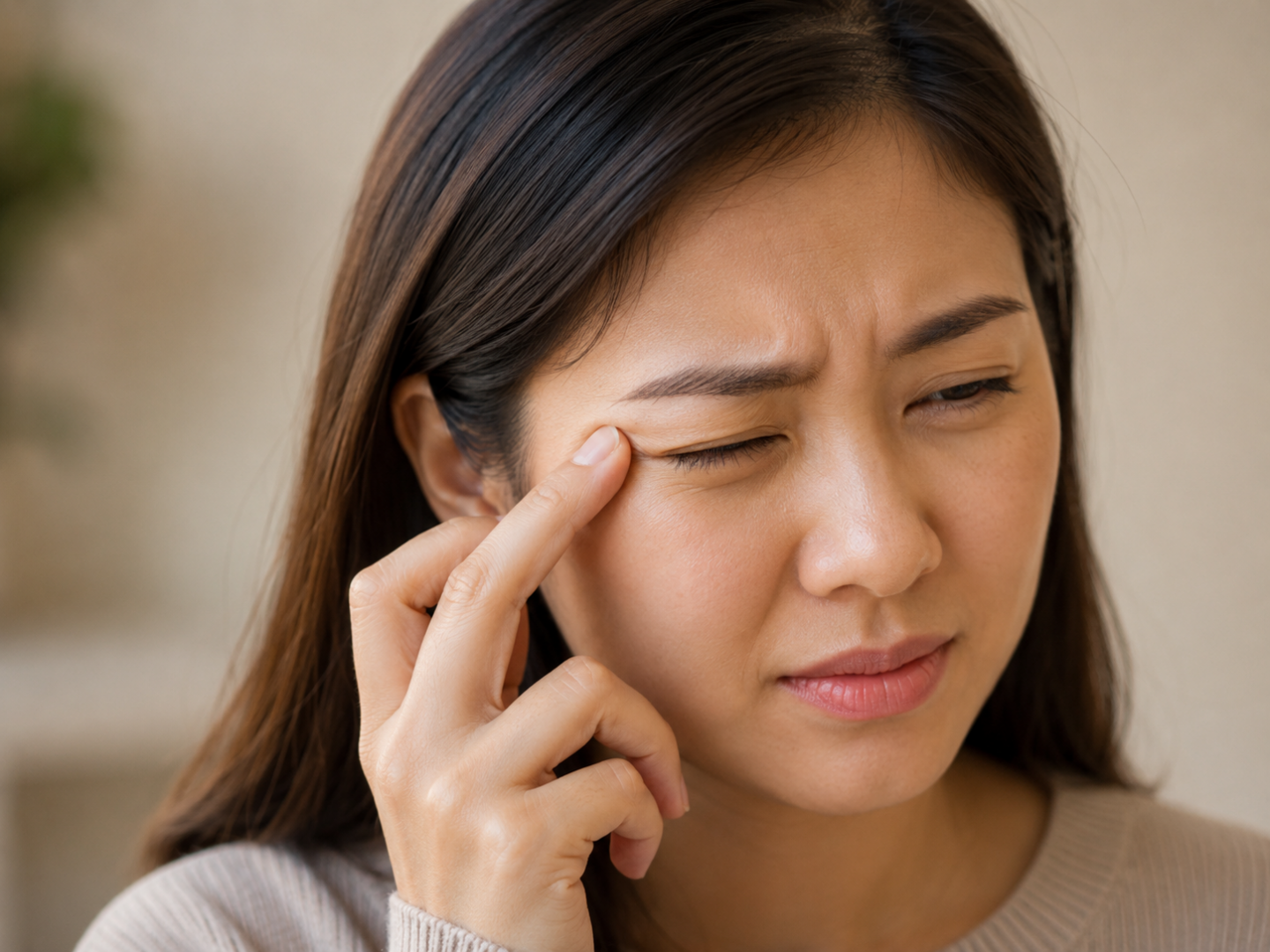
Burning, stinging, or gritty eyes are most commonly caused by dry eye disease, digital eye strain, environmental irritants, or an underlying eyelid condition. These symptoms often get worse throughout the day and can signal that your tear film is not functioning properly. A functional eye assessment can identify the root cause and guide effective treatment.
Key Takeaways
- Burning and gritty sensations in the eyes are classic signs of tear film instability, often linked to dry eye disease or meibomian gland dysfunction.
- Screen use, low humidity, air conditioning, and contact lens wear are common triggers that make symptoms noticeably worse.
- Over-the-counter artificial tears provide temporary relief, but they don’t address the underlying cause of chronic irritation.
- Certain medications, hormonal changes, and systemic health conditions can directly affect how well your eyes stay lubricated.
- If symptoms are persistent, worsen during screen use, or affect your ability to read comfortably, a professional evaluation is the most reliable next step.
- Standard eye exams don’t always assess tear quality or eyelid function in depth, which means the root cause can go undetected.
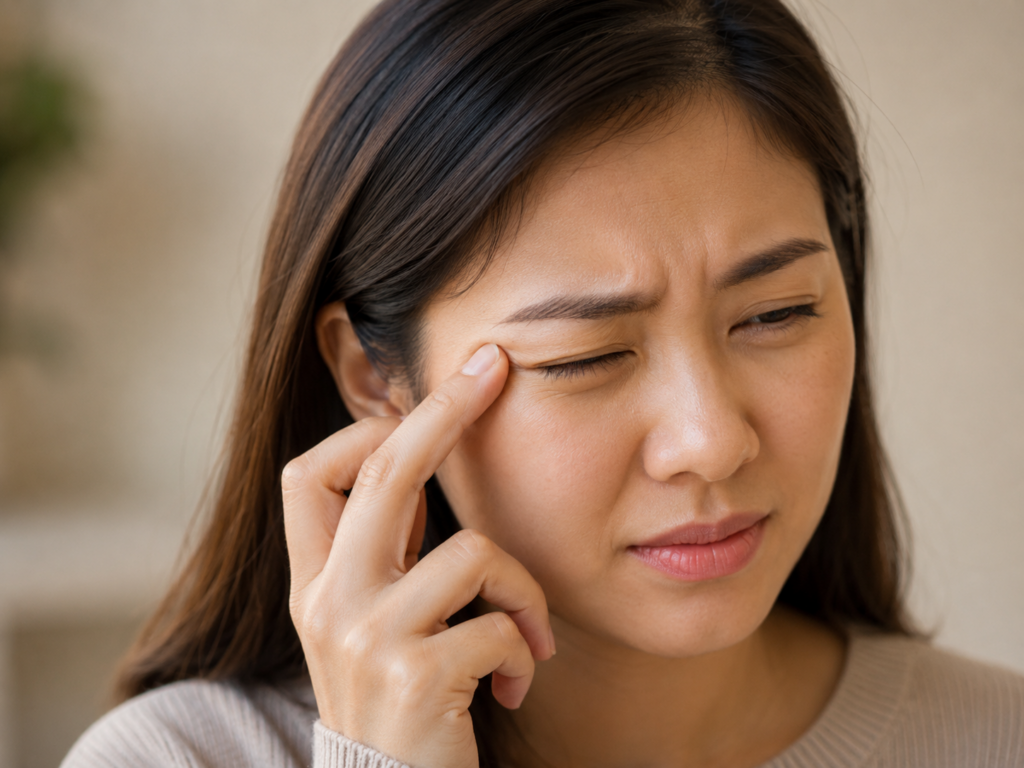
That persistent burning feeling, the occasional sting out of nowhere, the sense that something is trapped in your eye even when nothing is there. These are symptoms a lot of people dismiss as tiredness or allergies, only to find they keep coming back. They’re worth taking seriously, because they usually point to something specific happening with your eyes.
Things You Must Know
1. Dry Eye Is Frequently Underdiagnosed
Most people think dry eye just means your eyes water less than they should. In reality, you can have perfectly normal tear volume and still experience burning or grittiness if your tear quality is poor. Meibomian gland dysfunction (a blockage in the oil-producing glands along your eyelid margin) is one of the most common culprits, and it rarely gets assessed in a routine eye exam. If you’ve been told your eyes look “fine” but symptoms persist, this is worth exploring further.
2. Symptom Timing Tells You a Lot
Pay attention to when your eyes feel worst. Symptoms that build gradually over the course of a day often point to evaporative dry eye, blink rate reduction from screen use, or gland dysfunction. Symptoms that spike in specific environments (dry office air, outdoors on a windy day, after a flight) suggest an environmental component. Sudden stinging after contact lens wear points to a different issue entirely. That pattern is clinically useful and worth noting before your appointment.
3. Artificial Tears Are Not a Long-Term Fix
Over-the-counter drops can make your eyes feel better in the short term, but relying on them repeatedly without understanding the cause is like putting a bandage over something that needs proper treatment. Some artificial tears also contain preservatives that can irritate the ocular surface with frequent use. If you’re reaching for drops more than a few times a day, that’s a signal that something more targeted is needed.
What Causes That Burning or Gritty Sensation?
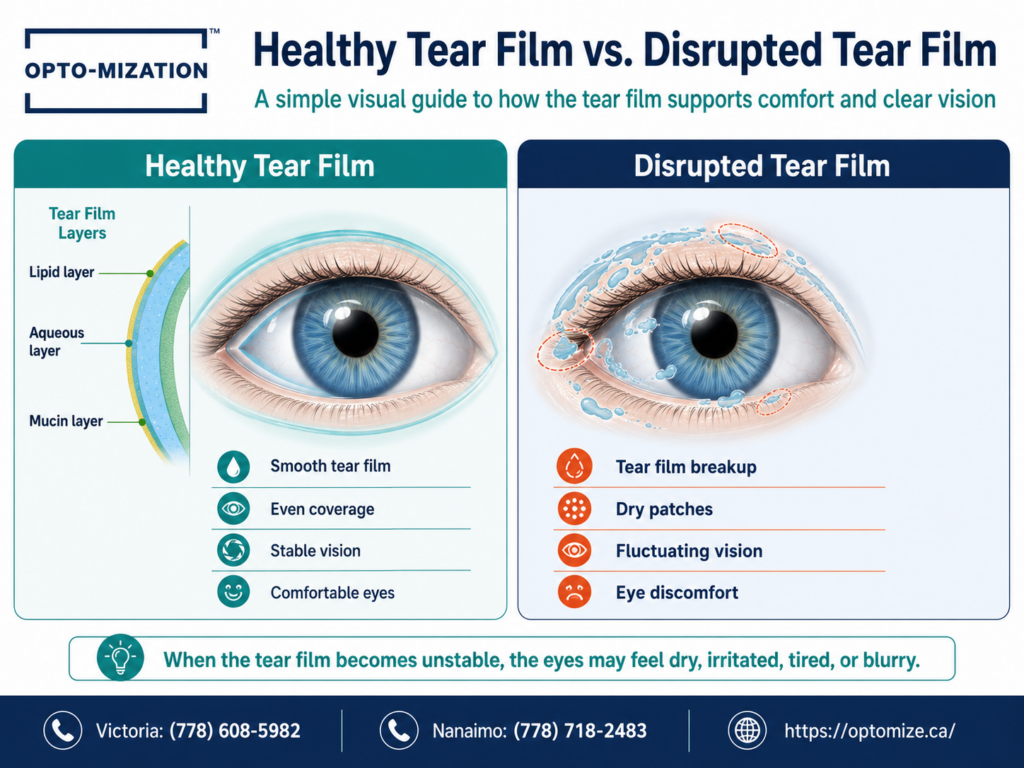
The sensation of burning or grittiness in the eyes comes from irritation of the ocular surface, specifically the cornea and conjunctiva, which are densely packed with nerve endings. When the tear film breaks down or something disrupts the surface, those nerves fire and you feel it as discomfort, stinging, or the sensation of foreign material in the eye.
Several different conditions can produce this same feeling, which is why the symptom alone doesn’t tell the whole story.
Dry Eye Disease
This is the most common cause. Dry eye can result from either insufficient tear production or, more often, poor tear quality. The tear film is a three-layer structure (oil, water, and mucus), and a breakdown in any layer causes instability and rapid evaporation. When the film collapses too quickly between blinks, the exposed surface becomes irritated.
Dry eye disease affects an estimated 16 to 49 percent of adults worldwide, with prevalence increasing significantly in people who spend more than six hours per day on digital screens.
Meibomian Gland Dysfunction (MGD)
The meibomian glands line the upper and lower eyelid margins and produce the oily layer of the tear film. When these glands become blocked or atrophy, the oily layer thins and tears evaporate too quickly. The result is that characteristic end-of-day burning that gets worse the longer you’re awake and active. MGD is often visible during a slit-lamp examination, but it requires a practitioner who is specifically looking for it.
Blepharitis
Blepharitis is an inflammation of the eyelid margins, often caused by bacterial overgrowth or a skin condition such as seborrheic dermatitis or rosacea. It produces crusting, redness along the lash line, and a chronic burning or itchy sensation that tends to be worse in the morning. Many people have it for years without a clear diagnosis.
Digital Eye Strain
When you focus on a screen, your blink rate drops significantly. Reduced blinking means the tear film breaks down faster and the surface of the eye dries out between blinks. Stinging, burning, and blurred vision that come on after an hour or two of screen use are hallmark signs. If you notice your eyes feel worse as the day goes on, screen-related blink suppression is a likely contributor.
Environmental and Lifestyle Triggers
Dry or forced-air environments, exposure to smoke, wind, allergens, chlorinated water, and extended contact lens wear all compromise the tear film and irritate the ocular surface. These factors rarely cause chronic symptoms on their own, but they commonly amplify an underlying condition that’s already present.
How Do You Know Which Cause Is Yours?
Because several different conditions produce similar symptoms, identifying the source requires more than a symptom description. A practitioner needs to assess tear film stability, blink rate, eyelid margin health, gland function, and the ocular surface itself. Standard vision testing doesn’t cover most of this, which is why people can pass a routine eye exam and still have a significant dry eye or lid disease problem.
If your symptoms are affecting your ability to read, work on a screen, or concentrate on close tasks, it’s also worth considering whether there’s a functional visual component involved. Some people find that a functional eye exam differs from a regular eye exam in ways that make it more likely to identify the contributing factors.
| Symptom Pattern | Likely Contributor | What to Look For |
| Worse by end of day | MGD or evaporative dry eye | Eyelid margin health, gland expressibility |
| Worse in the morning | Blepharitis or nocturnal lagophthalmos | Eyelid crusting, incomplete lid closure |
| Worse after screen use | Reduced blink rate, digital strain | Blink rate assessment, tear break-up time |
| Stinging in specific environments | Environmental trigger amplifying existing issue | Tear film osmolarity, surface staining |
| Burning with contact lens wear | Lens fit, material compatibility, dry eye | Lens assessment, ocular surface health |
Medications and Health Conditions That Affect Eye Comfort
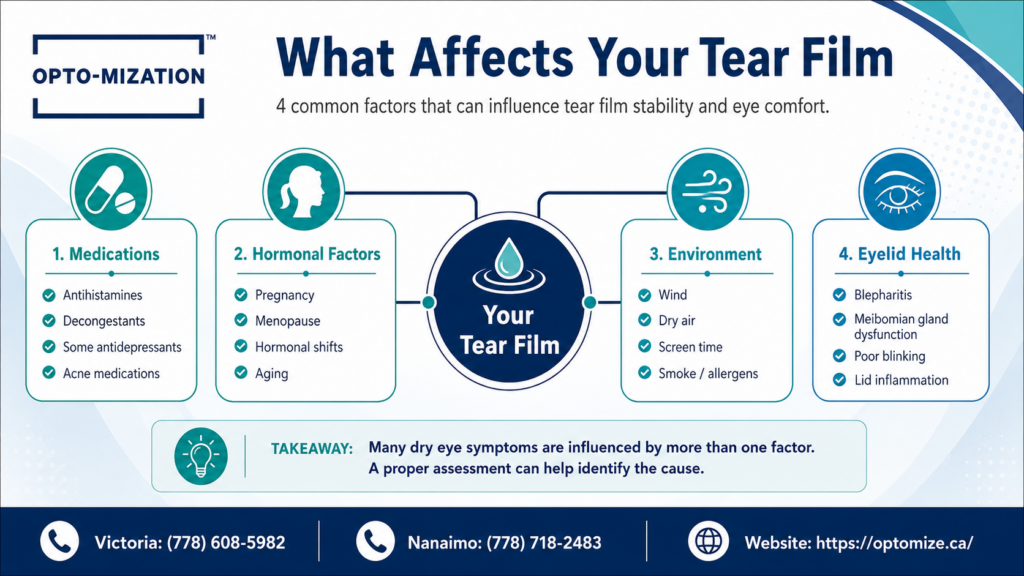
Several commonly prescribed medications are associated with reduced tear production, including antihistamines, antidepressants, diuretics, beta-blockers, and hormonal contraceptives. Patients on these medications are at higher risk of developing or worsening dry eye symptoms.
Systemic health conditions can also have a direct effect on ocular surface health. Thyroid disorders, lupus, rheumatoid arthritis, and Sjögren’s syndrome all affect tear gland function. Hormonal fluctuations during perimenopause and menopause are a particularly well-documented driver of dry eye onset in women over 40.
Common Mistakes People Make When Dealing with Eye Discomfort
- Assuming it’s just allergies. Allergy-related eye irritation typically involves itching more than burning, and it responds to antihistamine drops. If drops for allergies aren’t helping, the cause is likely something else.
- Using preserved artificial tears too frequently. Some preservatives (particularly benzalkonium chloride) can damage the ocular surface with repeated use. If you’re using drops more than four times a day, preservative-free formulations are a safer option.
- Stopping contact lens wear without investigating why. Discomfort during lens wear often signals an underlying dry eye issue that won’t improve on its own just because you switch to glasses.
- Waiting too long to seek assessment. Chronic irritation can lead to surface changes in the cornea and conjunctiva over time. Early intervention consistently produces better outcomes.
- Relying on a normal vision test as reassurance. Clear visual acuity doesn’t mean the ocular surface is healthy or that your tear film is functioning well.
What Does the Assessment Process Look Like?
When eye discomfort is assessed properly, the practitioner goes beyond a basic acuity test. Here’s a general overview of what a thorough evaluation might involve:
- Symptom history: When symptoms occur, what makes them worse, relevant medications, screen habits, and environmental factors.
- Slit-lamp examination: A close look at the eyelid margins, lash line, conjunctiva, and corneal surface for signs of inflammation, staining, or structural changes.
- Tear film assessment: Tear break-up time, which measures how quickly the tear film destabilizes between blinks, is a core test for dry eye and evaporative loss.
- Meibomian gland evaluation: Assessment of gland expressibility and, in some clinics, meibography imaging to visualize gland structure and atrophy.
- Ocular surface staining: Fluorescein or lissamine green dyes reveal damage to the corneal and conjunctival epithelium that isn’t visible without staining.
- Treatment planning: Based on findings, the practitioner recommends a targeted approach, which may include lid hygiene, prescription drops, in-office treatments, or lifestyle adjustments.
| Treatment Approach | Best Suited For | Notes |
| Preservative-free artificial tears | Mild, infrequent symptoms | Symptomatic relief only |
| Warm compresses and lid hygiene | Blepharitis, MGD | Requires consistent daily routine |
| Prescription anti-inflammatory drops | Moderate to severe dry eye | Addresses inflammatory component |
| In-office thermal/expression treatment | MGD with blocked glands | Performed by trained practitioners |
| Nutritional supplementation (omega-3s) | Evaporative dry eye | Evidence-based adjunct therapy |
Clinical research supports the use of high-quality omega-3 fatty acid supplementation as an adjunct treatment for evaporative dry eye, with some studies showing improvements in tear break-up time and meibomian gland secretion quality after consistent use over 3 to 6 months.
Frequently Asked Questions
Why does my eye feel gritty and burn?
The gritty sensation comes from irritation of the corneal surface, which is extremely sensitive. When the tear film breaks down too quickly or the ocular surface is inflamed, the cornea’s nerve endings register it as a foreign body sensation even when nothing is physically in the eye. Dry eye disease, meibomian gland dysfunction, and blepharitis are the most common underlying reasons. A thorough ocular surface assessment can identify which mechanism is driving your specific symptoms.
Can cortisol affect your eyes?
Yes, stress-related cortisol elevation can affect eye comfort, though the relationship is indirect. Elevated cortisol is associated with systemic inflammation, which can worsen inflammatory dry eye conditions. Stress also affects sleep quality and screen habits, both of which compound ocular surface issues. Some research also suggests that the autonomic nervous system changes associated with chronic stress may reduce baseline tear secretion. If your symptoms worsen during high-stress periods, this connection is worth discussing with your eye care provider.
Why do my eyes randomly start stinging and burning?
Sudden, unpredictable stinging episodes are a recognized feature of neuropathic ocular pain, a condition in which the corneal nerve fibers become sensitized and fire more easily, sometimes without an obvious environmental trigger. It can develop after ocular surface inflammation, prolonged dry eye, or laser eye surgery.
Other causes of random stinging include exposure to airborne irritants, transient blink reflex suppression during concentration, and fluctuating humidity levels in climate-controlled spaces. Keeping a brief symptom log noting time of day, activity, and environment can help your practitioner identify a pattern.
Why do my eyes burn and feel like sandpaper?
The sandpaper sensation is a classic description of evaporative dry eye with ocular surface staining. When the corneal epithelium becomes roughened from tear film instability, every blink creates friction across an already-irritated surface. This is most common in people with MGD, heavy screen use, or those who sleep with their eyes slightly open. It tends to worsen progressively if untreated. If you also notice your vision becoming unstable during reading, that’s an additional sign that tear film quality is affecting your visual function.
What illness starts with burning eyes?
Burning eyes can be an early sign of several systemic conditions. Viral infections, including conjunctivitis, influenza, and COVID-19, commonly present with ocular burning as an early symptom. Autoimmune conditions like Sjögren’s syndrome and lupus often manifest with ocular surface symptoms before a formal diagnosis is made. Thyroid eye disease and rosacea can also begin with eyelid and ocular surface irritation. If burning eyes are accompanied by systemic symptoms (fatigue, joint pain, dry mouth, or fever), your GP or a specialist should be involved alongside your eye care provider.
Ready to Find Out What’s Actually Causing Your Eye Discomfort?
Burning, stinging, and gritty eyes don’t have to be something you manage indefinitely with drops. In most cases, there’s a specific, identifiable cause and a targeted way to address it. The challenge is that finding that cause requires a more thorough evaluation than a standard prescription check provides.
If standard assessments haven’t given you clear answers, it’s worth exploring whether your vision problem is being missed in a standard eye exam. Opto-mization takes a functional approach to eye care, looking at the full picture of how your visual system and ocular surface are performing, not just how clearly you can read a letter chart.
If your symptoms are persistent or getting in the way of your daily comfort, reach out to the team at Opto-mization. Call (778) 608-5982 to book an assessment and get a clearer answer about what’s going on with your eyes.