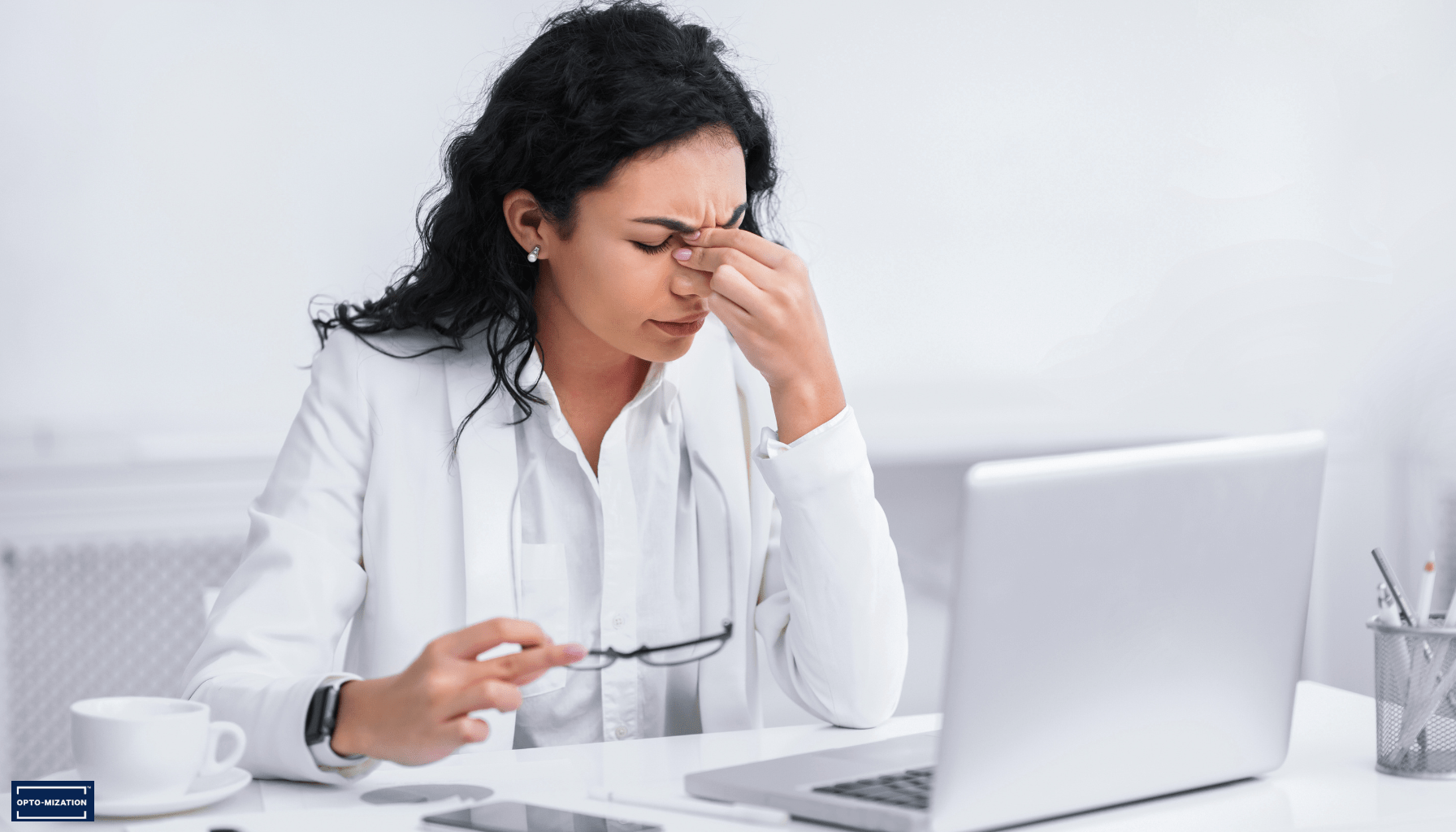
Many people notice a consistent pattern in their vision. At the beginning of the day, reading may feel manageable, screens are easier to tolerate, and visual tasks do not require much effort. As the day progresses, however, things can change. The eyes may begin to feel tired, focus may become less stable, and tasks that were previously comfortable can feel more demanding.
This change is often gradual. It is not always obvious at first, but over time it can affect comfort, concentration, and overall visual performance.
Understanding this pattern requires looking beyond clarity alone and considering how the visual system performs over time.
Visual Performance Is Not Constant Throughout the Day
Vision is often thought of as fixed. In reality, visual performance can vary depending on demand, duration, and fatigue.
Tasks such as reading, computer work, and other forms of near focus place continuous demand on the visual system. These tasks require the eyes to:
- Maintain clear focus at close distances
- Coordinate accurately with each other
- Sustain performance without interruption
When these systems are working efficiently, visual tasks remain comfortable.
When they require more effort, performance can change as the day progresses.
In many cases, this shift is not due to a sudden problem but rather the accumulation of visual effort over time. The longer the system is engaged, the more noticeable underlying inefficiencies can become.
Eye Strain and the Effect of Sustained Visual Demand
As explained in Opto-mization’s overview of eye strain and visual fatigue, visual discomfort often develops during or after prolonged visual activity such as reading or screen use.
Symptoms commonly include:
- Tired or sore eyes
- Reduced ability to maintain focus
- Blurred or fluctuating vision
- Headaches after visual tasks
A key feature of eye strain is that symptoms tend to increase with duration. The longer the visual system is under demand, the more noticeable the discomfort can become.
This explains why vision may feel stable in the morning but less comfortable later in the day.
It also explains why short breaks can temporarily improve symptoms, while returning to the same task often brings the discomfort back.
Why Symptoms Can Progress Over Time
The visual system relies on endurance, not just accuracy.
At the beginning of a task, the eyes may track accurately and maintain stable coordination. As time passes, even small inefficiencies can become more noticeable. The visual system may need to work harder to maintain clarity and alignment.
This increased effort can lead to:
- Reduced stability of focus
- Increased visual fatigue
- Difficulty sustaining attention
Over time, this can make visual tasks feel less controlled and more demanding.
In practical terms, this means that a task that feels easy for ten minutes may feel significantly more difficult after an hour, even though the visual demand has not changed.
The Connection Between Blurred Vision and Headaches
Another common pattern is the combination of blurred vision and headaches, particularly during prolonged visual activity.
As outlined in Opto-mization’s explanation of the connection between blurred vision and headaches, these symptoms can be related to how much effort the visual system is using to maintain clear and stable vision.
When the eyes are required to work harder to maintain focus and coordination, this increased demand can contribute to both visual discomfort and headaches.
In many cases, the blur is not constant. It may appear intermittently, especially as fatigue increases, and may improve with rest.
For some individuals, the headache is not immediate but develops gradually, often appearing later in the day after extended periods of visual activity.
The Role of Previous Injury or Long-Term Compensation
In some cases, symptoms that worsen throughout the day may be influenced by past events such as injury or trauma.
Opto-mization also describes cases where patients experience a pulling or tension sensation around the eyes after an injury, sometimes long after the original event.
This type of discomfort can be related to how the eye muscles are functioning and compensating during visual tasks.
After an injury, the visual system may adapt in ways that allow it to continue functioning, but with increased effort. Over time, this can lead to:
- Localized discomfort around the eyes
- Increased fatigue during visual tasks
- Symptoms that become more noticeable as demand continues
This reinforces the idea that visual performance is not only about structure, but also about how the system functions over time.
In some cases, individuals may not connect current symptoms to a past injury because the symptoms develop gradually rather than immediately.
Why Standard Eye Exams May Not Fully Explain the Pattern
Many people experiencing these symptoms have already had an eye exam and were told their vision is normal.
Standard eye exams focus on visual clarity and eye health. These are essential, but they do not always assess how the visual system performs during sustained, real-world tasks.
At Opto-mization, examinations also evaluate how the eyes function during activities such as reading and screen use. This includes assessing:
- How the eyes track across text
- How they coordinate at near distances
- How performance is maintained over time
This broader approach helps determine whether visual function may be contributing to symptoms that develop throughout the day.
It also helps explain why some people can see clearly during a brief test but still struggle with comfort and endurance in everyday situations.
How This Affects Daily Life
When visual performance declines over time, the effects can extend into many areas of daily life.
For adults, this may include:
- Reduced productivity during computer work
- Increased fatigue during reading
- Difficulty maintaining focus in the afternoon or evening
For children, it may appear as:
- Homework becoming more difficult later in the day
- Increased frustration with reading tasks
- Reduced attention during sustained visual activities
These patterns are often attributed to general fatigue, but in some cases, visual effort may be one contributing factor.
Over time, this can influence habits, such as avoiding reading, taking more frequent breaks, or relying on strategies that reduce visual demand.
When It May Be Worth Looking Deeper
It may be appropriate to explore further when there is a consistent pattern such as:
- Vision feeling worse later in the day
- Increased discomfort during reading or screen use
- Headaches associated with visual tasks
- Fluctuating clarity or focus
In these situations, evaluating how the visual system performs over time can help determine whether visual factors may be contributing.
Recognizing the pattern itself is often the first step, especially when symptoms have been present for a long time without a clear explanation.
A More Complete Understanding of Visual Comfort
Comfortable vision is not only about seeing clearly. It also depends on how efficiently the visual system maintains performance during sustained tasks.
When the system is working efficiently, visual tasks remain stable throughout the day.
When additional effort is required, symptoms may increase over time, leading to fatigue, discomfort, and reduced performance.
Understanding this distinction provides a clearer explanation for why vision may feel different at different times of the day.
It also shifts the focus from simply asking “Can I see clearly?” to asking “How much effort does it take to see comfortably over time?”
Book an Eye Exam in Victoria or Nanaimo
If your eyes feel worse as the day goes on, or if visual tasks are becoming more effortful than expected, it may be worth taking a closer look.
Opto-mization offers comprehensive eye exams and functional vision assessments in both Victoria and Nanaimo, focused on understanding how your visual system performs during everyday activities like reading, screen use, and sustained focus.
Booking an exam is a practical next step toward understanding what may be contributing to your symptoms and improving long-term visual comfort.