Most people assume that if they can see clearly, their vision is working properly. They attend a routine eye exam, read letters on a chart, receive a prescription if needed, and are told their eyes are healthy. For many individuals, this is sufficient.
However, there is a group of patients who leave these exams with a different experience. They may be told everything looks normal, yet continue to struggle with symptoms such as:
- Headaches during reading or screen use
- Visual fatigue
- Difficulty concentrating
- Dizziness in visually busy environments
- Reduced endurance for near tasks
This gap between what is measured and what is experienced is where the difference between a regular eye exam and a functional eye exam becomes important.
What a Regular Eye Exam Is Designed to Do
A standard eye exam focuses on two essential areas: visual clarity and eye health.
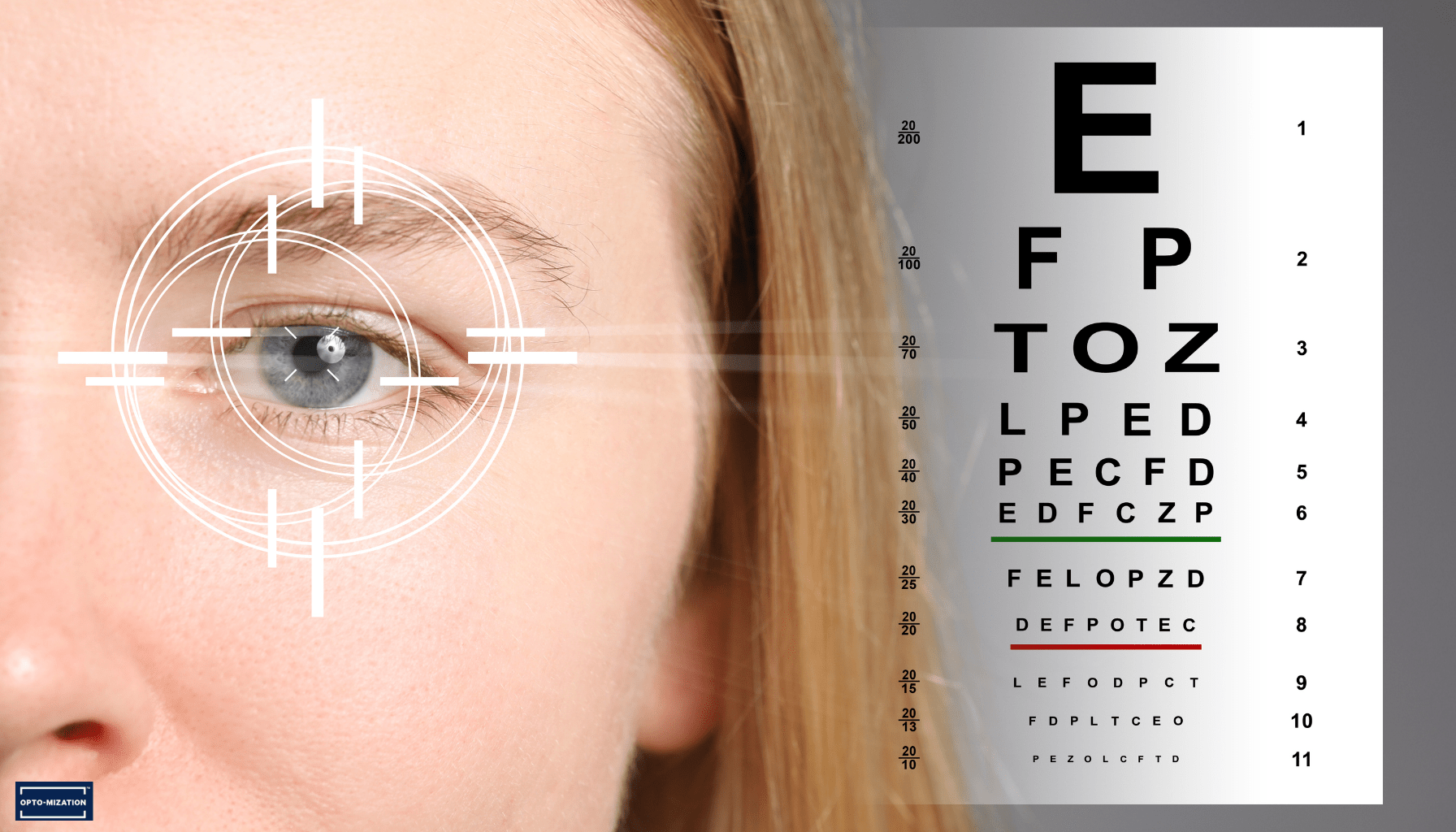
Visual clarity is measured using tools like the eye chart. This determines how well you can see at distance and near, and whether a prescription is needed.
Eye health assessments evaluate the physical structures of the eye to ensure there are no signs of disease or underlying medical concerns.
These components are fundamental and necessary. They provide important information about how the eyes are functioning in a clinical setting.
However, they primarily assess vision in a static and controlled environment.
They do not always reflect how the visual system performs during real-world tasks.
The Limitation: Clarity Does Not Equal Performance
One of the most important distinctions highlighted in Opto-mization’s approach is that clear eyesight does not necessarily mean the visual system is working efficiently.
As explained in why functional eye exams are essential for adults, many individuals experience symptoms in daily life that are not detected during standard testing.
These symptoms often appear during tasks that require sustained visual effort, such as:
- Reading
- Computer work
- Studying
- Navigating busy environments
A person may perform well on a brief vision test but still struggle when the visual system is under continuous demand.
What a Functional Eye Exam Evaluates
A functional eye exam expands the scope of evaluation beyond clarity and health.
As outlined in why a functional vision exam matters, the goal is to assess how the visual system works as a coordinated system during real-world tasks.
This includes evaluating how the eyes:
- Move across text and shift between targets
- Maintain focus at near distances
- Work together as a team
- Sustain performance over time
- Interact with balance and spatial awareness systems
Rather than focusing only on whether the eyes can see clearly, the exam looks at how efficiently they function during activities that people perform every day.
Vision as a System, Not Just the Eyes
A key concept behind functional vision testing is that vision is not limited to the eyes alone.
It involves coordination between:
- Eye movements
- Focusing systems
- Binocular coordination
- Visual processing in the brain
- Interaction with balance systems
When any part of this system is inefficient, it can increase the effort required to perform visual tasks.
This increased effort is often what patients experience as fatigue, discomfort, or difficulty maintaining focus.
Why Symptoms Often Appear Over Time
Another important distinction is that many visual symptoms are not immediate.
They tend to appear during or after sustained activity.
For example:
- Reading may feel manageable at first, then become tiring
- Screen use may be comfortable initially, then lead to headaches
- Focus may decrease as the day progresses
This happens because functional issues often relate to endurance and efficiency, not just momentary performance.
Standard exams, which are relatively brief, may not capture these changes.
The Role of Functional Testing in Reading and Learning
Functional vision is especially relevant in reading.
As described in how vision therapy can improve reading skills in children, reading requires multiple visual skills working together:
- Accurate eye movements across lines of text
- Stable focus at near distances
- Coordination between both eyes
- Sustained visual attention
When these systems are inefficient, reading can become more effortful.
This may present as:
- Losing place while reading
- Skipping lines or words
- Rereading frequently
- Reduced reading endurance
These challenges are not necessarily related to intelligence or effort. They often reflect how much work the visual system is doing to support the task.
Why Functional Exams Focus on Real-World Tasks
One of the defining features of a functional eye exam is that it evaluates vision in the context of everyday activities.
Instead of asking only “Can you see clearly?”, the exam explores questions such as:
- How do your eyes perform when reading for extended periods?
- Can your visual system maintain stability over time?
- Are your eyes working together efficiently during near tasks?
- Does visual input remain consistent and comfortable?
This shift in focus allows for a more complete understanding of how vision may be contributing to a patient’s experience.
The Discovery-Based Approach
At Opto-mization, functional eye exams are positioned as a process of discovery.
The goal is not to assume a diagnosis, but to investigate whether visual function may be part of the picture.
This approach follows a clear progression:
- Identify the symptoms the patient is experiencing
- Evaluate how the visual system is functioning
- Determine whether visual factors may be contributing
This method supports both accuracy and clarity, helping patients better understand what is happening and why.
What Happens After the Exam
Once the evaluation is complete, the next step is explanation.
Patients are guided through the findings using clear, non-technical language. The focus is on connecting the results back to the symptoms that brought them in.
If visual inefficiencies are identified, different approaches may be considered depending on the findings.
These can include:
- Specialized lens prescriptions designed to support visual function
- Vision therapy to improve specific visual skills
- Or a combination of both
Importantly, these are not presented as automatic solutions, but as options based on what the exam reveals.
Why This Difference Matters for Patients
The difference between a regular and functional eye exam is not about replacing one with the other.
It is about understanding that they measure different aspects of vision.
A regular eye exam answers:
- Can you see clearly?
- Are your eyes healthy?
A functional eye exam asks additional questions:
- How efficiently does your visual system work?
- Can it sustain performance over time?
- Is it contributing to your symptoms?
For patients experiencing unexplained visual discomfort, this distinction can provide meaningful clarity.
When It May Be Worth Considering a Functional Eye Exam
A functional eye exam may be helpful when symptoms are present but not fully explained by standard testing.
These symptoms may include:
- Headaches related to reading or screen use
- Visual fatigue or discomfort
- Difficulty maintaining focus
- Dizziness in visually busy environments
- Inconsistent performance with visual tasks
In these situations, evaluating how the visual system functions during real-world conditions can provide additional insight.
A More Complete Understanding of Vision
Vision is not only about clarity. It is about performance, comfort, and efficiency over time.
When the visual system is working well, tasks like reading, screen use, and movement through complex environments feel stable and manageable.
When additional effort is required, even simple tasks can become tiring or inconsistent.
A functional eye exam helps bridge the gap between what is measured clinically and what is experienced daily.
Book a Functional Eye Exam in Victoria or Nanaimo
If you are experiencing symptoms that are not fully explained by a standard eye exam, it may be worth exploring how your vision functions during everyday tasks.
Opto-mization offers functional eye exams in both Victoria and Nanaimo, designed to evaluate how the eyes track, focus, and work together over time.
These assessments aim to determine whether visual function may be contributing to symptoms such as fatigue, headaches, or difficulty with sustained visual tasks.
Booking an exam is a practical step toward gaining a clearer understanding of your vision and how it supports your daily performance.