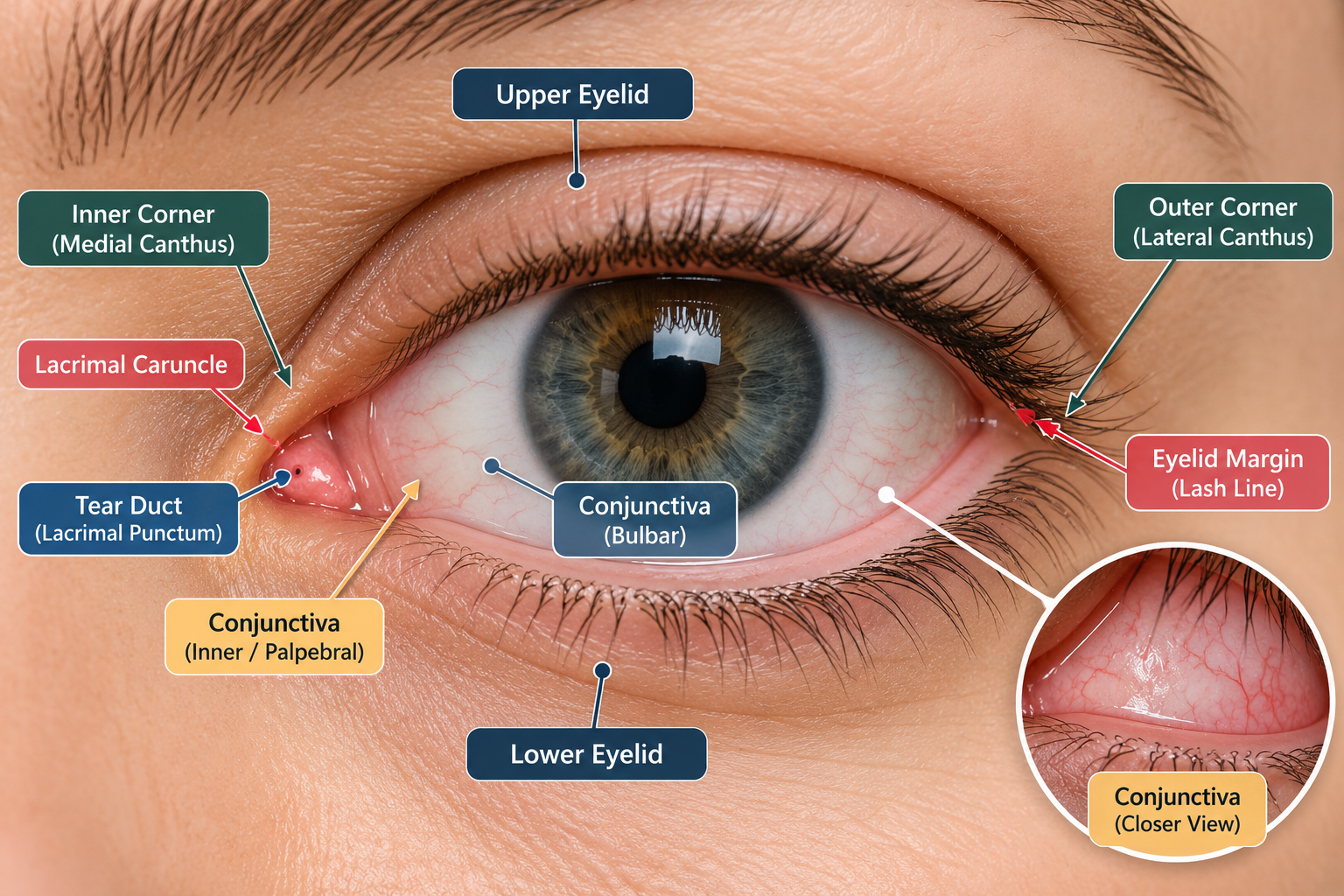
Itchy eyes are most commonly caused by allergies, dry eye, or environmental irritants, but persistent itching in the corners specifically can point to something worth looking into more closely. The inner corner (near the tear duct) and outer corner each have distinct anatomy, so localized itching often has a localized cause. Most cases are manageable, but if the itching keeps returning or comes with other symptoms like headaches, blurred vision, or eye fatigue, a functional vision assessment can help rule out what a routine eye exam might miss.
Key Takeaways
- Allergic conjunctivitis is the most common cause of itchy eyes, particularly in both inner corners at once.
- Dry eye and meibomian gland dysfunction are frequently overlooked causes, especially in screen-heavy adults.
- Itching in a single corner, with discharge or crusting, often points to a blocked tear duct or blepharitis.
- Chronic or recurring itching that standard treatments haven’t resolved may have a functional vision component worth assessing.
- Rubbing itchy eyes temporarily relieves the sensation but can worsen the underlying problem over time.
- Residents in Greater Victoria and Nanaimo often notice seasonal spikes due to pollen from the Pacific coastal environment.
Things You Must Know
1. Corner Itching and General Eye Itching Have Different Causes
General, diffuse eye itching across the whole eye surface is almost always allergy or dry eye. Itching concentrated in the inner corner specifically is more likely tied to tear drainage, a blocked punctum, or nasolacrimal duct issues. Outer corner itching can signal blepharitis or a specific allergic response localized to the lateral eyelid margin. Knowing where the itch lives helps narrow the cause significantly.
2. Chronic Eye Rubbing Creates a Cycle That Gets Harder to Break
Rubbing the eyes releases histamine from mast cells in the conjunctiva, which temporarily relieves itching but triggers more histamine release minutes later. Over weeks and months, this cycle can thin the cornea and worsen dry eye symptoms. Breaking the habit, alongside treating the root cause, matters more than most people realize.
3. Not Every Itchy Eye Problem Resolves With Antihistamine Drops
Antihistamine eye drops work well for allergic itch, but they do nothing for dry eye, blepharitis, contact lens irritation, or any functional vision issue contributing to eye strain and discomfort. If drops help for a day or two and then the itching returns, the underlying cause likely isn’t purely allergic.
What Causes Itchy Eyes? The Main Culprits Explained
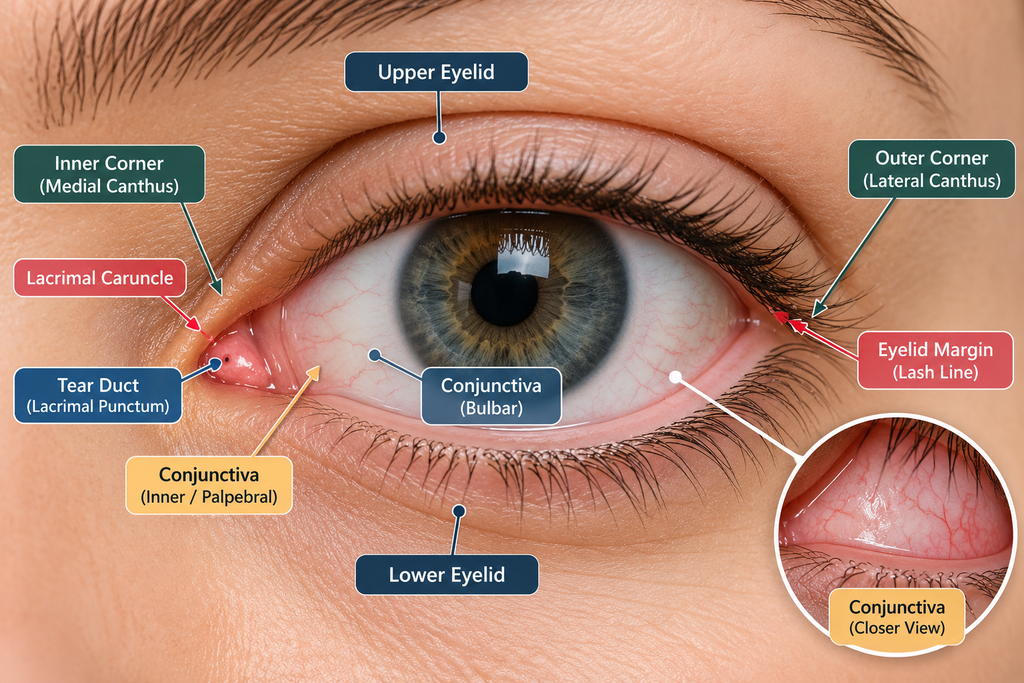
The conjunctiva, the thin clear tissue lining the whites of the eye and the inside of the eyelids, is packed with immune cells. When something irritates or triggers those cells, the itching response begins. Several different conditions can do this, and they don’t all behave the same way.
Allergic Conjunctivitis
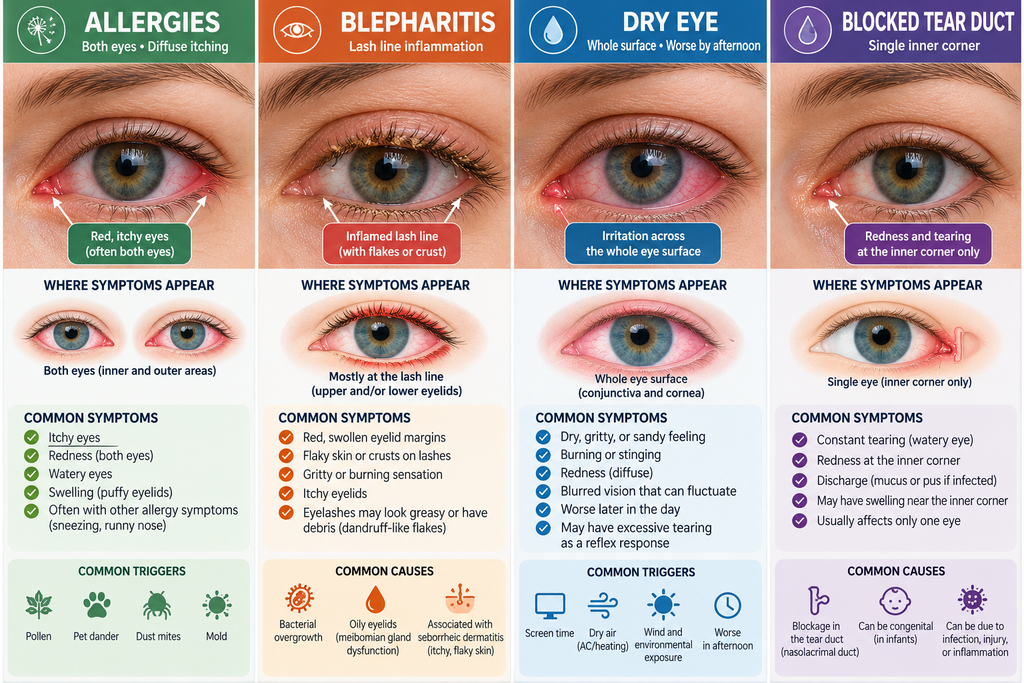
According to StatPearls on NCBI Bookshelf, allergic conjunctivitis is estimated to affect approximately 10% to 30% of the general population and is the leading cause of itchy, watery eyes. Seasonal variants are triggered by pollen, while perennial forms respond to dust mites, pet dander, or mold. Both inner corners typically itch at the same time, often alongside a runny nose and sneezing.
In the Greater Victoria and Nanaimo areas, tree pollen season begins earlier than in many inland Canadian cities, which means residents sometimes notice eye symptoms before they expect allergy season to start. Oral antihistamines or antihistamine eye drops usually manage this well when the trigger is identified correctly.
Dry Eye Disease
Dry eye is less intuitive as an itch trigger, but it’s a common one. When the tear film is unstable, the eye surface becomes mildly inflamed, and that inflammation produces itching alongside burning, grittiness, and fluctuating blur. Screen use, air conditioning, and contact lens wear all accelerate tear evaporation. If you notice the itch worsening by late afternoon or after long periods at a screen, dry eye is worth investigating. The article on eyes feeling worse as the day goes on covers this pattern in more detail.
Blepharitis and Meibomian Gland Dysfunction
Blepharitis is inflammation of the eyelid margins, often caused by a bacterial overgrowth or a skin condition like seborrheic dermatitis. It produces itching along the lash line, crusty debris in the morning, and red, swollen lids. Meibomian gland dysfunction (MGD) is a related condition where the oil-secreting glands in the eyelids become blocked, degrading the tear film’s lipid layer and allowing faster evaporation. Both conditions respond to warm compresses and lid hygiene rather than antihistamine drops, which is why accurate diagnosis matters.
Contact Lens Irritation
Contact lens-related itching can stem from a lens deposit buildup, a solution sensitivity, wearing lenses beyond their recommended schedule, or a condition called giant papillary conjunctivitis (GPC), where the inside of the upper eyelid develops raised bumps in response to lens wear. According to the American Academy of Ophthalmology, GPC produces intense itching, and people who wear contact lenses — especially soft lenses — have the greatest chance of developing it, even after wearing contacts for many years.
Blocked Tear Ducts and Inner Corner Itching
The inner corner of the eye houses the puncta, the small openings that drain tears into the nasolacrimal duct. Partial blockage or chronic inflammation around those openings can cause persistent itching and mild discharge in that specific location. This is more common in older adults and in people with a history of recurrent eye infections. An eye care professional can assess tear drainage function during a proper examination.
Common Causes of Itchy Eyes at a Glance
| Cause | Where It Itches | Key Associated Symptoms | Typical First Step |
| Allergic conjunctivitis | Both eyes, inner corners | Watery eyes, runny nose, sneezing | Antihistamine drops or oral medication |
| Dry eye disease | Whole eye surface | Burning, grittiness, afternoon blur | Preservative-free lubricating drops |
| Blepharitis | Eyelid margins, lash line | Morning crusting, red lids, flaking | Warm compresses, lid scrubs |
| Contact lens irritation / GPC | Under upper eyelid | Mucous discharge, lens discomfort | Lens holiday, solution change |
| Blocked tear duct | Inner corner, one eye | Watering, discharge, occasional swelling | Eye care professional assessment |
| Eye strain / visual stress | Around or behind eyes | Headaches, fatigue, difficulty focusing | Functional vision assessment |
When Itchy Eyes Point to Something Beyond the Eye Surface
Eye strain from binocular vision problems doesn’t cause the same kind of itch as allergies, but it does cause a related discomfort. People describe it as a pulling sensation, a pressure around the eyes, or soreness that builds through the day. This can be mistaken for dry eye or allergic irritation, especially when over-the-counter treatments provide no lasting relief.
Binocular vision dysfunction, a condition where the two eyes have difficulty working together efficiently, is an often-overlooked disorder that can cause significant visual discomfort, headaches, and difficulty performing everyday tasks, yet is rarely screened for in a standard eye exam focused primarily on visual acuity, according to New England College of Optometry.
A binocular vision dysfunction evaluation looks at how well the eyes coordinate during sustained near work, reading, and screen use. When that coordination is off, the visual system works harder than it should, producing fatigue, discomfort, and symptoms that often look like something else entirely. If you’ve treated your eyes for allergies and dry eye without lasting improvement, this is worth exploring.
What Itchy Eyes With Headaches Can Mean
Itchy eyes paired with regular headaches after reading or screen work shouldn’t be assumed to be two separate problems. The combination can point to a functional vision issue where the eyes strain to maintain focus and alignment, generating both discomfort and head pain. The relationship between headaches, eye strain, and poor focus is well-documented but often missed in routine care because standard tests don’t measure how the visual system performs under sustained load.
Common Mistakes People Make With Itchy Eyes
- Rubbing repeatedly. Short-term relief, long-term damage to the cornea and a worsening itch cycle from histamine release.
- Assuming it’s always allergies. Dry eye, blepharitis, and contact lens issues all cause itching but don’t respond to antihistamines.
- Overusing redness-relief drops. Vasoconstrictor drops reduce visible redness but don’t treat the underlying cause and can cause rebound redness with regular use.
- Ignoring one-sided symptoms. Itching in only one inner corner, especially with watering or discharge, warrants a professional look at tear drainage.
- Stopping treatment too early. Blepharitis and dry eye are chronic conditions that require consistent management, not just occasional treatment during flare-ups.
How to Relieve Itchy Eyes: A Practical Starting Point
- Identify the pattern. Note when the itching peaks (morning, evening, during screen use, outdoors) and whether it affects one or both eyes. This points toward the likely cause.
- Try preservative-free artificial tears. These work across multiple causes, won’t harm the eye surface with frequent use, and help confirm whether dryness is a factor.
- Apply a warm compress for 5 to 10 minutes. Helps with blepharitis and MGD by softening blocked oil secretions in the eyelid margin.
- Remove and rest from contact lenses. If lens wear correlates with symptoms, a lens holiday for a few days helps determine whether lenses are the trigger.
- Reduce allergen exposure where practical. Keep windows closed during high pollen periods, use air purifiers indoors, and avoid rubbing eyes after touching pets.
- See an eye care professional if symptoms persist beyond two weeks or include discharge, swelling, or vision changes. Self-treatment works for mild cases; ongoing symptoms deserve a proper examination.
Omega-3 fatty acid supplementation has been studied as a supportive treatment for dry eye disease, with research published in Ophthalmology journal finding that oral omega-3 consumption is associated with a decrease in tear evaporation and an improvement in dry eye symptoms, suggesting it may improve the quality of meibomian gland secretions that stabilize the tear film. Results vary across studies, and supplementation works best as a complement to lid hygiene and artificial tears rather than a standalone treatment.
Symptom Severity Guide
| Symptom Pattern | Likely Urgency | Recommended Action |
| Mild itch, both eyes, seasonal | Low | OTC antihistamine drops, monitor |
| Itch with morning crusting, red lids | Moderate | Warm compresses; see eye care provider if no improvement in 2 weeks |
| Itch with discharge, swelling, or pain | High | See eye care professional promptly |
| Itch unresolved after 2-3 weeks of treatment | Moderate-High | Professional assessment to identify underlying cause |
| Itch plus headaches or vision fatigue | Worth investigating | Functional vision assessment |
Frequently Asked Questions About Itchy Eyes
How do you get rid of itchy eyes?
The approach depends on the cause. Allergic itch responds to antihistamine eye drops and reducing exposure to the trigger. Dry eye and blepharitis respond to warm compresses, artificial tears, and lid hygiene. Avoid rubbing, which worsens the itch cycle. If self-care measures don’t resolve the problem within two to three weeks, a professional assessment helps identify what’s actually driving the symptoms rather than guessing.
When should you worry about itchy eyes?
See a professional promptly if the itching comes with significant discharge, eye pain, noticeable swelling around the eye, or any change in vision. Itching in only one eye that doesn’t respond to standard allergy treatment, or symptoms that keep returning despite treatment, also warrant a closer look. Chronic itching with headaches or reading fatigue can indicate a functional vision issue worth evaluating.
Which diseases cause itchy eyes?
Allergic conjunctivitis is the most common, but itchy eyes also appear in blepharitis, dry eye disease, giant papillary conjunctivitis, viral and bacterial conjunctivitis, nasolacrimal duct obstruction, and some systemic conditions like atopic dermatitis and rosacea. Certain thyroid conditions and autoimmune diseases affecting tear production can produce eye surface irritation as well.
What deficiency causes eye itching?
Vitamin A deficiency is the most clearly documented nutritional cause of eye surface problems, including dryness and irritation. As noted by Eyes on Eyecare, vitamin A deficiency negatively impacts both the composition and secretion rate of the tear film, and can progress to xerophthalmia if left untreated. Vitamin D deficiency has also been associated with dry eye severity in some research, with a large retrospective cohort study finding a significantly elevated risk of dry eye disease among vitamin D-deficient adults. These are relatively uncommon causes in well-nourished adults in Canada, but worth considering if other causes have been ruled out.
Which vitamins help reduce eye itching?
Vitamin A supports healthy tear production and eye surface integrity. Omega-3 fatty acids (from fish oil or flaxseed oil) may help improve the oil layer of the tear film in people with dry eye or meibomian gland dysfunction. Vitamin D has been studied in relation to dry eye. These nutrients work best as part of an overall management approach, not as a replacement for treating the specific cause of the itching.
Persistent Itchy Eyes in Victoria and Nanaimo
Residents across Greater Victoria and Nanaimo deal with a distinct allergy environment. The mild, wet Pacific winters keep mold counts elevated for much of the year, and the temperate spring can bring early tree pollen. Many people manage seasonal symptoms well with standard allergy treatment. For those whose eye discomfort persists year-round, or whose symptoms include fatigue, headaches, or reading difficulty alongside the itch, a functional eye exam through adult eye exams in Victoria can assess dimensions of visual health that a standard prescription check doesn’t cover.
Itchy Eyes That Keep Coming Back
Most itchy eye problems resolve with the right treatment once the cause is identified. The difficulty is that several causes can coexist, and treating one while missing another leads to partial improvement that frustrates people who are trying to do the right thing. A thorough clinical evaluation identifies whether the issue is purely surface-level or whether the visual system needs attention beyond drops and lid hygiene.
At Opto-mization, patients serving Greater Victoria and Nanaimo receive assessments that go well beyond measuring how clearly they see. The clinic evaluates how the eyes and brain function together, which can reveal issues contributing to discomfort that standard care consistently misses. If your eyes keep returning to that uncomfortable itch despite following the usual advice, a more complete picture of your visual health may be exactly what you’ve been missing.
Ready to find out what’s behind your eye discomfort? Book a functional vision assessment with Opto-mization and get a real answer, not just another bottle of drops. Visit optomize.ca to learn more or schedule your appointment.
Sources
- https://www.ncbi.nlm.nih.gov/sites/books/NBK448118/
- https://www.aao.org/eye-health/diseases/what-is-giant-papillary-conjunctivitis
- https://www.neco.edu/binocular-vision-dysfunction-symptoms-causes-management/
- https://www.aaojournal.org/article/S0161-6420(13)00337-0/fulltext
- https://eyesoneyecare.com/resources/latest-on-role-of-nutrition-in-dry-eye/
- https://www.aao.org/education/editors-choice/vitamin-d-deficiency-raises-risk-of-dry-eye-diseas