
A comprehensive eye exam for adults does more than update your glasses prescription. In a single appointment, an optometrist checks your eye health, screens for conditions like glaucoma and macular degeneration, and evaluates how your visual system is actually functioning under real-world demands. For adults in Victoria, BC, where screen-heavy work environments and outdoor lifestyles both put strain on the eyes, getting a thorough exam on a consistent schedule is one of the more practical steps you can take for your long-term health.
Key Takeaways
- A standard adult eye exam covers refraction, eye pressure, and a health assessment of internal and external eye structures.
- Adults with no known eye conditions are generally advised to be examined every one to two years, though individual risk factors may change that frequency.
- Preparing properly, including gathering your health history and avoiding contact lenses before dilation, helps the appointment run more efficiently.
- Some visual problems, including binocular vision issues and early-stage glaucoma, show no obvious symptoms in their early phases.
- Victoria adults covered by BC MSP may have some exam costs covered depending on age and medical status; private insurance often covers the remainder.
What Happens During an Adult Eye Exam?
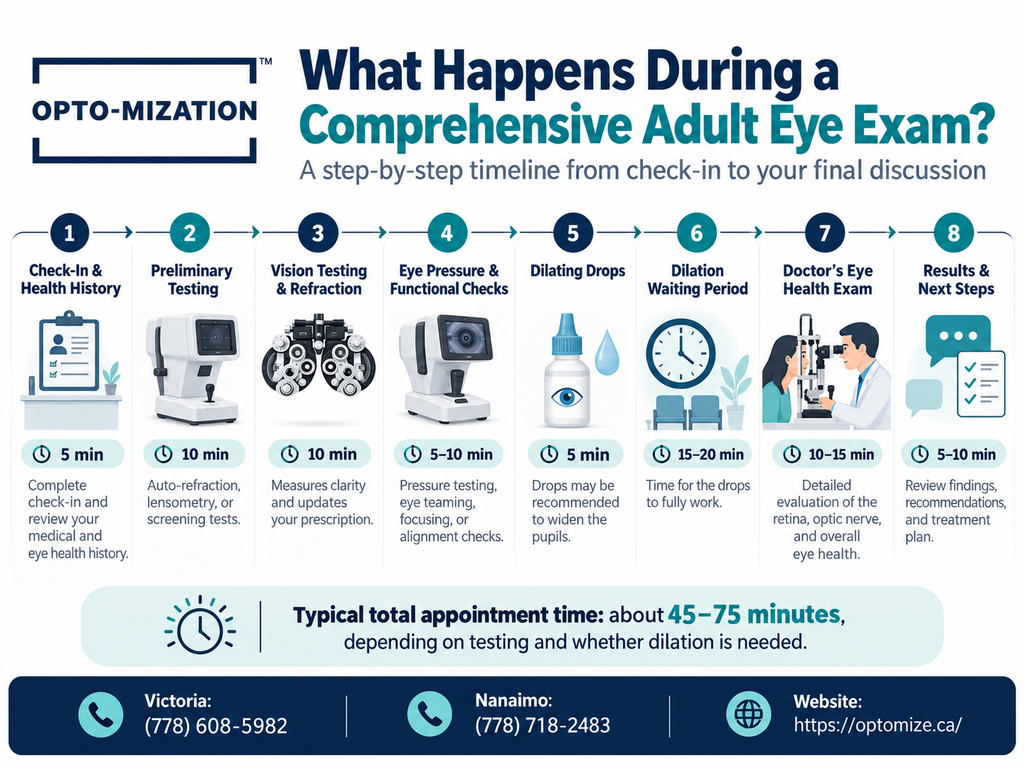
Most comprehensive adult eye exams follow a consistent structure, though the specific tests can vary based on your age, history, and the equipment available at the clinic.
The Pre-Exam Intake
Before any testing begins, you’ll be asked about your current symptoms, medications, family eye health history, and general medical history. Conditions like diabetes, high blood pressure, and autoimmune disorders all have documented links to eye health. Bringing a list of your current medications saves time and helps the optometrist flag any relevant interactions.
Refraction and Visual Acuity
This is the portion most adults recognize from previous visits. You’ll read an eye chart and work through a series of lens comparisons to determine your prescription. If your current glasses or contacts are no longer giving you clear, comfortable vision, this part of the exam will catch it.
Eye Pressure Testing
Tonometry measures the pressure inside the eye, a key screening tool for glaucoma. As peer-reviewed research on tonometry methods notes, intraocular pressure measurement is considered fundamental and should be taken in every patient undergoing a complete ophthalmic examination, particularly those with risk factors for glaucoma. Elevated intraocular pressure often presents no pain or visual disruption until the condition has advanced significantly, which is why measuring it during routine exams is considered standard practice in adult eye care.
Slit-Lamp Examination
The slit lamp lets your optometrist examine the front structures of the eye in detail, including the cornea, lens, and iris. This step helps detect cataracts, corneal abrasions, dry eye changes, and signs of inflammation.
Dilated Fundus Examination
Dilation involves eye drops that widen the pupil so the optometrist can view the retina, optic nerve head, and blood vessels at the back of the eye. According to Medical News Today, the drops typically take effect within 20 to 30 minutes, and dilation generally lasts between 4 and 24 hours, during which vision may remain blurred and light-sensitive. Bringing sunglasses to your appointment is advisable if dilation is planned.
How to Prepare for Your Eye Exam
- Gather your vision history. Bring your current glasses and, if applicable, your contact lens case with the packaging. The lens parameters printed on the box give the optometrist a useful baseline.
- Write down your symptoms. Headaches after screen time, difficulty reading in dim light, eye fatigue by mid-afternoon — these details help the optometrist decide which tests to prioritize. Many patients forget to mention these symptoms once they’re in the chair.
- Know your family history. Glaucoma, macular degeneration, and certain retinal conditions carry hereditary risk. If a parent or sibling has been diagnosed with any of these, mention it at intake.
- Remove contact lenses before your appointment. Extended contact lens wear can temporarily distort corneal shape, affecting the accuracy of measurements. Most clinics recommend removing soft lenses at least a few hours beforehand and rigid or gas-permeable lenses for a longer period. Your clinic will specify the timeframe when you book.
- Plan around dilation. If you know dilation is part of your appointment, arrange a ride or plan to wait before driving. The light sensitivity and near-vision blur that follow dilation are temporary, but driving immediately afterward is uncomfortable and can be unsafe.
- Check your insurance or MSP coverage. Knowing what’s covered before you arrive means you won’t face surprises. If you’re unsure whether your condition qualifies for MSP coverage in BC, call your clinic ahead of time.
How Often Should Adults Have Their Eyes Examined?
The Canadian Association of Optometrists recommends comprehensive eye exams every two to three years for adults between 20 and 39 with no risk factors, and every two years for adults aged 40 to 64, according to the CAO’s official exam frequency guidelines. Adults 65 and older are advised to be examined annually. Those with diabetes, a family history of glaucoma, or a personal history of eye disease may need more frequent monitoring, sometimes every six to twelve months.
The article on annual eye exam frequency on the Opto-mization blog goes deeper into how individual risk factors should shape your exam schedule.
| Age Group | Recommended Frequency | Notes |
| 19 to 39 | Every 2 years | More often if symptoms or risk factors are present |
| 40 to 64 | Every 1 to 2 years | Presbyopia, glaucoma risk increase in this window |
| 65 and older | Annually | MSP covers exams in BC for this age group |
| Adults with diabetes | Annually or as directed | Diabetic retinopathy requires regular monitoring |
Standard Eye Exam vs. Comprehensive Eye Health Assessment
A basic refraction tells you your prescription. A comprehensive exam evaluates the health of your entire visual system. For Victoria adults who spend long hours on screens, do precision work, or have been experiencing visual fatigue, headaches, or difficulty sustaining focus, a full health assessment will provide more useful information than a refraction alone.
Functional eye exams extend the standard assessment by evaluating binocular vision, eye tracking, convergence, and accommodative function. As outlined in functional vision evaluation practice guidance, deficits in these areas can produce symptoms like headaches, blurred vision when transitioning between distances, and fatigue during sustained near work — yet these components are often not tested in a routine refraction appointment.
If your symptoms point toward those kinds of issues, the functional eye exam overview on the Opto-mization site explains what distinguishes that type of assessment from a standard appointment.
| Exam Type | What It Covers | Best For |
| Basic refraction | Visual acuity, prescription update | Adults with stable vision, routine prescription check |
| Comprehensive eye health exam | Refraction + ocular health screening, pressure, retina | All adults, especially those with risk factors |
| Functional eye assessment | Above + eye teaming, tracking, focusing, coordination | Adults with fatigue, headaches, reading difficulty, or screen-related symptoms |
Common Mistakes Adults Make Before an Eye Exam
- Wearing contacts right up to the appointment. Even a few hours of lens wear before an exam can alter corneal readings. Remove them in advance as directed by the clinic.
- Not mentioning symptoms that seem unrelated. Headaches, neck tension, dizziness in busy spaces, and difficulty driving at night are all worth raising. These symptoms often have a visual component that the optometrist can investigate.
- Assuming clear vision means healthy eyes. Many serious eye conditions, including early glaucoma and macular changes, are asymptomatic in their early stages. Regular exams catch these before vision loss occurs.
- Forgetting to bring current glasses or contact prescription details. Without this information, the optometrist is starting from scratch, which takes more time and can reduce the accuracy of comparisons.
- Booking a basic screen when a comprehensive exam is what’s needed. If you’ve had ongoing symptoms or haven’t been examined in several years, ask for a full comprehensive assessment rather than a quick vision check.

Frequently Asked Questions
How often do adults need an eye exam?
Adults with no known eye conditions or risk factors are generally advised to have a comprehensive exam every one to two years. The recommendation shifts to annually for adults 65 and older, and for those managing conditions like diabetes or a documented family history of glaucoma. Your optometrist will give you a specific recommendation based on what they find during your appointment.
Is an eye test expensive?
Costs vary depending on the type of exam and your coverage. In BC, adults 65 and older and those with qualifying medical conditions have their exams covered by MSP. Adults between 19 and 64 without a covered condition typically pay out of pocket, though many extended health benefit plans cover all or part of the cost. Calling your insurer before booking will clarify what you’re entitled to claim.
What are the three types of eye tests?
The three broad categories are a vision screening or refraction, which checks your prescription; a comprehensive eye health exam, which includes refraction plus a full assessment of your ocular health; and a functional or neuro-optometric assessment, which evaluates how your eyes work together and process visual information. The right type depends on your symptoms and what you need the exam to determine.
What is a basic eye exam?
A basic eye exam typically covers visual acuity testing and a refraction to determine your prescription for glasses or contact lenses. It may not include intraocular pressure measurement, dilated retinal examination, or any assessment of binocular function. For adults who want a full picture of their eye health rather than just a prescription update, a comprehensive exam is more appropriate.
What should you not do before an eye test?
Avoid wearing contact lenses for the period specified by your clinic before the exam. Skip eye drops or medications that affect pupil size unless your optometrist has told you to continue them. If dilation is scheduled, plan not to drive yourself home. Beyond these steps, there’s no need to rest your eyes or avoid screens beforehand; just arrive with your glasses, your health history, and a note of any symptoms you’ve been noticing.
Ready to Book Your Eye Exam in Victoria?
Opto-mization offers comprehensive eye exams for adults across Victoria, BC, with a focus on finding what standard screenings often miss. Whether you’re due for a routine check, dealing with persistent visual fatigue, or haven’t had your eyes examined in a few years, a thorough assessment gives you a clear picture of where your vision health actually stands.
To book your appointment or ask about what type of exam suits your situation, call (778) 608-5982. The team at Opto-mization will help you figure out the right starting point.