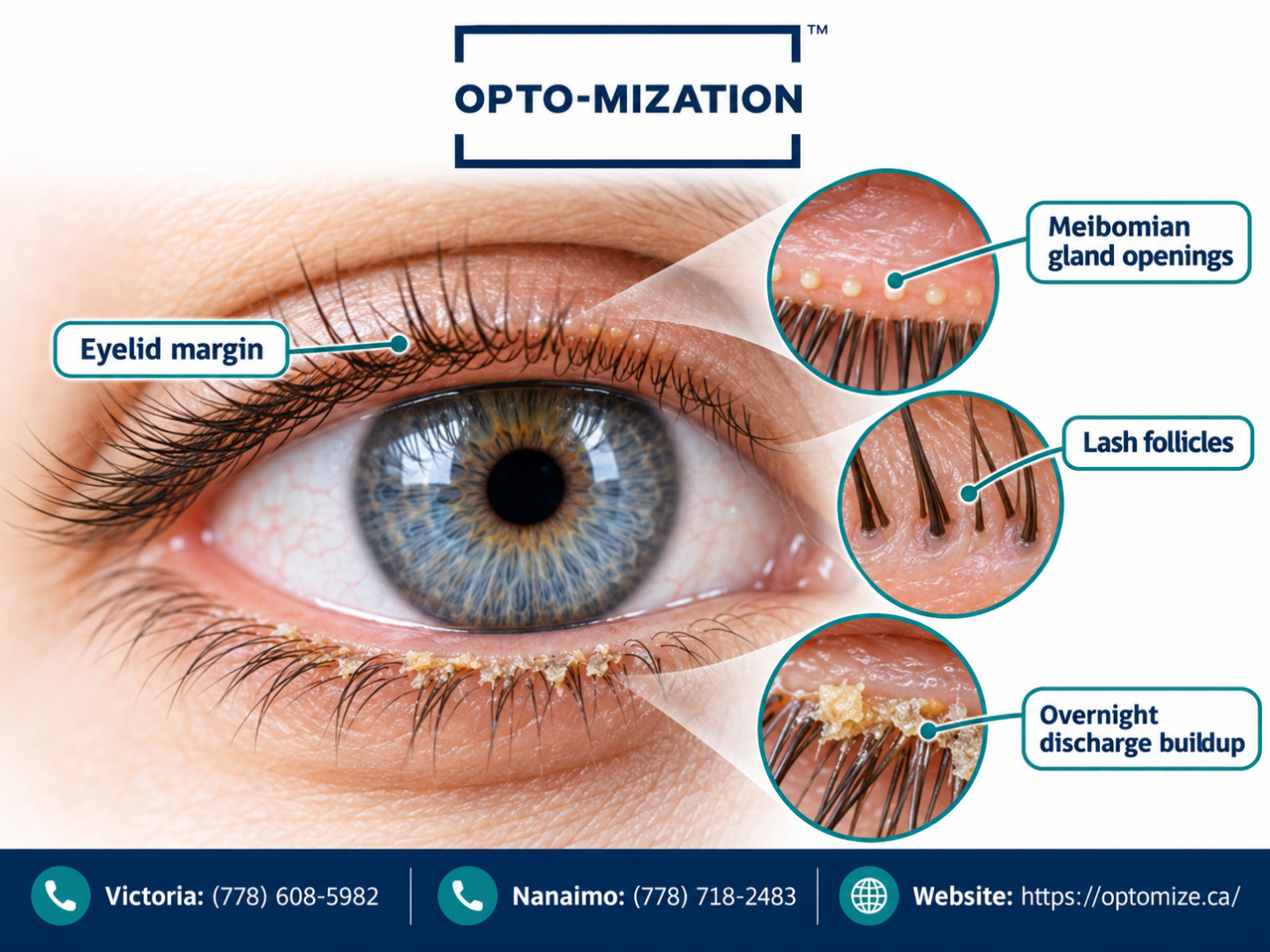
That crust on your eyelashes in the morning is discharge your eyes produced overnight, and for most people, a small amount is completely normal. While you sleep, your eyes continue making mucus, oil, and dead skin cells that collect along the lash line since you’re not blinking them away. The type of discharge, its colour, and whether it’s getting worse are what separate a harmless overnight buildup from a sign your eyes need attention.
Key Takeaways
- A small amount of clear or whitish crust each morning is a normal part of how your eyes clean themselves during sleep.
- Yellow or green discharge, especially with redness or irritation, often points to an infection like conjunctivitis and warrants a same-day assessment.
- Blepharitis (eyelid inflammation) and dry eye disease are two of the most common causes of excessive daily crust in otherwise healthy adults.
- Eyelash mites (Demodex) are more common than most people realize and often go undiagnosed because they produce subtle, chronic symptoms.
- Persistent or worsening discharge is worth discussing with an eye care provider, even if you’ve had it for years.
- Consistent lid hygiene makes a measurable difference for most causes of morning crust.
Things You Must Know
1. Colour and texture tell you a lot before you see a provider
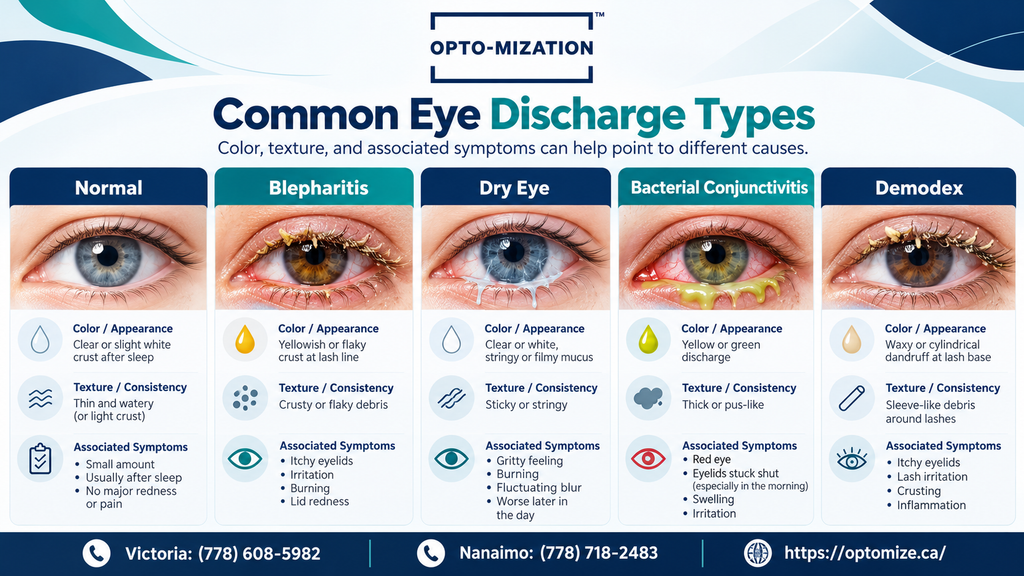
Clear or white crust that wipes away easily is the body doing its job. Yellow or green discharge that crusts heavily, makes eyelids difficult to open, or comes with burning and redness suggests bacterial involvement. Stringy, rope-like mucus that keeps reappearing through the day is a classic marker of dry eye disease. Tracking what your discharge actually looks like helps any clinician narrow down the cause much faster.
2. Chronic lid conditions are often missed in a standard eye exam
Blepharitis and Demodex infestations don’t always cause dramatic symptoms, so they’re frequently overlooked during a routine prescription check. Patients sometimes manage their discharge for years without anyone identifying the root cause. A comprehensive adult eye exam that evaluates lid margin health, tear film quality, and meibomian gland function gives a far clearer picture than a standard acuity test alone.
3. Lid hygiene is a treatment, not just a comfort measure
For conditions like blepharitis and Demodex, cleaning the lid margins consistently is part of the clinical management plan. Over-the-counter lid scrub pads or diluted baby shampoo applied to a cotton pad each morning can reduce microbial load, improve oil gland function, and decrease morning crust noticeably within a few weeks. Doing it occasionally produces little benefit; doing it daily produces real change.
What Is Eye Discharge, Exactly?
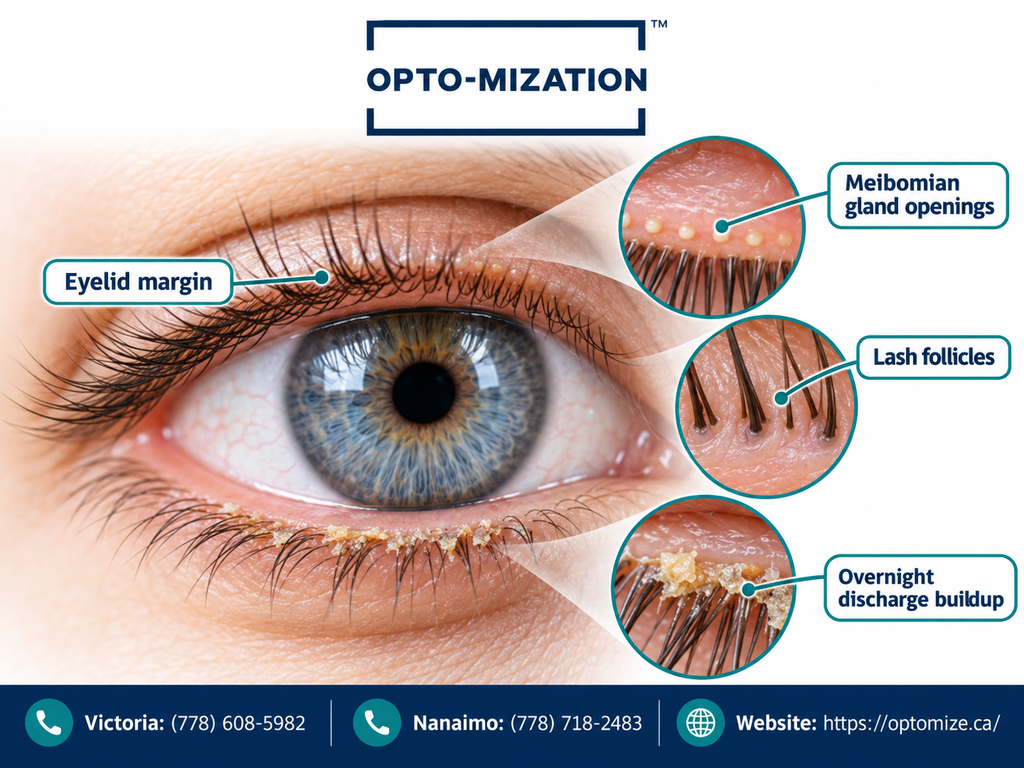
Eye discharge is a combination of mucus from the conjunctiva, oils from the meibomian glands along the lid margin, dead epithelial cells, and occasionally components of your tear film. During the day, each blink sweeps this material toward the inner corner of the eye where it drains. At night, with your eyes closed and no blinking occurring, this material dries along the lash line instead.
The medical term is “rheum” when referring to normal morning discharge. Clinicians use “ocular discharge” or “epiphora” when the volume or character suggests something pathological. The distinction matters because treatment depends entirely on what’s driving the production.
The Most Common Causes of Crusty Eyelashes in the Morning
Blepharitis
Blepharitis is inflammation of the eyelid margins, and it’s one of the leading causes of chronic morning crust. Two subtypes exist: anterior blepharitis affects the skin around the lash base, often involving bacteria like Staphylococcus or a skin condition like seborrhoeic dermatitis; posterior blepharitis affects the meibomian glands deeper in the lid, disrupting the oily layer of your tear film.
According to the American Academy of Ophthalmology Blepharitis Preferred Practice Pattern, blepharitis is estimated to affect roughly 37–47% of patients seen in general ophthalmology and optometry practices, making it one of the most frequently encountered anterior segment conditions in clinical eye care.
The hallmark symptoms are crusting or scaling at the lash base on waking, redness along the lid margin, a gritty or burning sensation, and eyelids that feel sticky or uncomfortable when first opening. Some patients also notice their eyelashes falling out more than usual or growing in irregular directions over time.
Dry Eye Disease
Dry eye produces a discharge that looks different from infection-related crust. Instead of thick yellow or green material, you typically see stringy, white or slightly grey mucus that clusters in the inner corner of the eye. Your eyes may also feel paradoxically watery at times because a compromised tear film triggers reflex tearing.
Dry eye disease affects an estimated 14–33% of adults globally, according to a Review of Optometry clinical analysis, with prevalence increasing with age and screen time exposure. Many cases remain undiagnosed because patients attribute their symptoms to tiredness or allergies rather than a tear film condition.
If your eyes burn, sting, or feel gritty during the day alongside morning discharge, dry eye disease is worth evaluating seriously rather than managing indefinitely with over-the-counter drops.
Conjunctivitis
Bacterial conjunctivitis produces thick yellow or green discharge that often seals the eyelids shut in the morning. It typically comes with visible redness, tearing, and a feeling of something in the eye. Viral conjunctivitis produces a more watery discharge alongside redness and is often associated with a recent cold or upper respiratory infection. Allergic conjunctivitis tends to cause clear, watery discharge alongside itching, and it’s often bilateral.
Bacterial and viral conjunctivitis are both contagious. If one eye clears and the other develops the same symptoms a day or two later, viral transmission from eye to eye is the likely explanation.
Demodex Eyelash Mites
Demodex folliculorum and Demodex brevis are microscopic mites that live in hair follicles and sebaceous glands, including those along the eyelid margin. A low-level Demodex population is considered normal, but an overgrowth causes a recognizable pattern of symptoms: cylindrical dandruff-like sleeves or collarettes at the base of the lashes, itching of the lid margin (especially in the morning), recurrent styes, and persistent blepharitis that doesn’t fully respond to standard lid hygiene.
Research has found Demodex mites present in over 50% of adults, with a PMC review of demodicosis across age groups reporting infestation in 84% of adults over 60 and in all adults over 70, with infestation rates correlating with age, compromised immune function, and certain skin conditions including rosacea.
Demodex is confirmed by examining epilated lashes under a microscope. Treatment has historically involved tea tree oil-based lid scrubs (specifically the terpinen-4-ol component), though a prescription topical treatment called lotilaner (Xdemvy) was approved in the United States in 2023 for Demodex blepharitis specifically. Canadian availability and prescribing guidance may differ, so confirming current options with your eye care provider is worthwhile.
Discharge Type Quick-Reference Table
| Discharge Type | Likely Cause | Other Symptoms | Urgency |
| Small amount of clear or white crust | Normal overnight buildup | None | None |
| Scales or flakes at lash base | Blepharitis | Lid redness, grittiness, burning | Routine appointment |
| Stringy white or grey mucus | Dry eye disease | Burning, tearing, fluctuating vision | Routine appointment |
| Thick yellow or green discharge | Bacterial conjunctivitis | Redness, eyelids sealed shut | Same-day assessment |
| Watery discharge with itching | Allergic conjunctivitis | Bilateral, seasonal pattern | Routine appointment |
| Collarettes at lash base, itchy lid margin | Demodex infestation | Recurrent styes, lash loss | Routine appointment |
How to Manage Morning Eyelid Crust at Home
- Use a warm compress first. Hold a clean warm cloth against closed eyelids for 5–10 minutes. This softens any crusted debris and helps loosen thickened oil from the meibomian glands before you attempt to clean the lid margin.
- Clean along the lash line. Use a dedicated lid scrub pad or a cotton pad dampened with diluted baby shampoo. Gently scrub at the base of the lashes using small horizontal strokes. Do each eye with a fresh pad to avoid cross-contamination.
- Rinse with clean water. A brief rinse helps remove any remaining cleanser or debris. Avoid rubbing your eyes dry; pat gently.
- Apply lubricating drops if prescribed or recommended. For dry eye, preservative-free artificial tears used morning and night can help stabilize the tear film and reduce the overnight mucus buildup. Consult your provider before starting any medicated drops.
- Be consistent. Lid hygiene done daily for four to six weeks produces noticeably better results than sporadic efforts. Most patients see a meaningful reduction in morning crust and lid irritation within that timeframe.
Common Mistakes People Make When Dealing with Eye Discharge
- Rubbing the eyes to clear the crust: Rubbing can introduce bacteria from your hands, irritate inflamed lid tissue, and potentially scratch the cornea if any discharge has dried into sharp flakes.
- Using the same cloth or pad on both eyes: If an infection is present in one eye, shared materials transfer it to the other.
- Assuming the problem is resolved once symptoms ease: Blepharitis and Demodex are chronic conditions. Symptoms often return when lid hygiene stops, even after weeks of improvement.
- Relying only on over-the-counter drops without addressing the lid margin: Drops can reduce discomfort temporarily, but they don’t address the underlying bacterial or mite load at the lash base.
- Delaying an assessment when discharge is yellow or green: Bacterial conjunctivitis spreads quickly and is contagious. Waiting several days to see if it resolves on its own often makes things worse and puts others at risk.
When Contact Lens Wearers Need Extra Caution
| Situation | Recommended Action |
| Any yellow or green discharge | Stop wearing lenses immediately; see a provider same day |
| Increased morning crust since starting a new lens type | Report to your provider; lens material or solution may be a factor |
| Chronic lid scaling with contact lens wear | Evaluate for blepharitis or Demodex before continuing wear |
| Dry eye symptoms worsening with lens wear | Discuss tear film assessment and scleral lens options with your provider |
Contact lens wear changes the ocular surface environment in ways that can accelerate both dry eye and blepharitis. Patients who struggle with contact lens comfort and eye health often benefit from a more detailed assessment of their tear film and lid margin health before simply switching brands.
Frequently Asked Questions
How do I stop waking up with crust in my eyelashes?
A nightly warm compress followed by lid scrubs along the lash margin addresses the most common causes of morning crust, including blepharitis and mild Demodex. Using preservative-free lubricating drops before bed can also reduce overnight mucus production for dry eye patients. If crust persists despite consistent lid hygiene, an in-person assessment is the right next step to identify whether there’s an underlying condition driving it.
How would I know if I have eyelash mites?
The most distinctive sign of Demodex is cylindrical, waxy debris called collarettes that wrap around the base of individual lashes and don’t brush away easily. Persistent itching at the lid margin (particularly in the morning), recurrent styes, and blepharitis that doesn’t respond to standard treatment are also common indicators. Definitive diagnosis requires a clinician to epilate a few lashes and examine them under a microscope, which is a quick and painless in-office procedure.
Is it normal to wake up with eye crust every day?
A small amount of clear or white crust each morning is within the normal range and simply reflects your eyes’ overnight cleaning process. If you’re waking up with significant buildup daily, if your eyelids are stuck together, or if the discharge is coloured or accompanied by irritation, that pattern deserves attention. Chronic daily crust beyond a minor residue is usually a sign of blepharitis, dry eye, or Demodex rather than a normal variation.
What kills eyelash mites naturally?
Tea tree oil-based lid scrubs with a high concentration of terpinen-4-ol are the most studied natural approach to reducing Demodex populations. Over-the-counter products formulated specifically for eyelid use are available and safer than applying raw tea tree oil, which can cause irritation and chemical injury to the ocular surface. Consistent daily use over several weeks is necessary to see a meaningful reduction in mite load, since the Demodex life cycle runs approximately 14–18 days.
Will Vaseline get rid of eyelash mites?
Vaseline (petroleum jelly) applied to the lash base has been discussed as a method for smothering Demodex mites by blocking their air supply, but the evidence for this is largely anecdotal and its effectiveness compared to terpinen-4-ol-based treatments is not well established. Applying Vaseline near the eye also carries a risk of causing a lipid-laden keratopathy if it enters the eye regularly. Discussing a clinically-supported treatment option with an eye care provider is a better approach than relying on petroleum jelly.
Persistent Eye Discharge Deserves a Proper Assessment
Most morning eye crust is manageable, but chronic or worsening discharge is your eyes communicating that something needs attention. Conditions like blepharitis, dry eye disease, and Demodex infestations are common, frequently underdiagnosed, and very treatable once identified correctly.
At Opto-mization Optometry and Vision Therapy, examinations go beyond checking visual acuity. A detailed eye exam in Victoria evaluates lid margin health, meibomian gland function, tear film quality, and other factors that routine eye exams typically don’t measure. If you’ve been managing eye discharge for a while without a clear answer, that’s exactly the kind of problem a comprehensive functional assessment is designed to uncover.
Serving Greater Victoria and Nanaimo, Opto-mization provides care for patients who want to understand what’s actually happening with their eyes rather than managing symptoms indefinitely. Book a comprehensive eye exam to get a clear picture of your eye health and a plan that addresses the root cause.