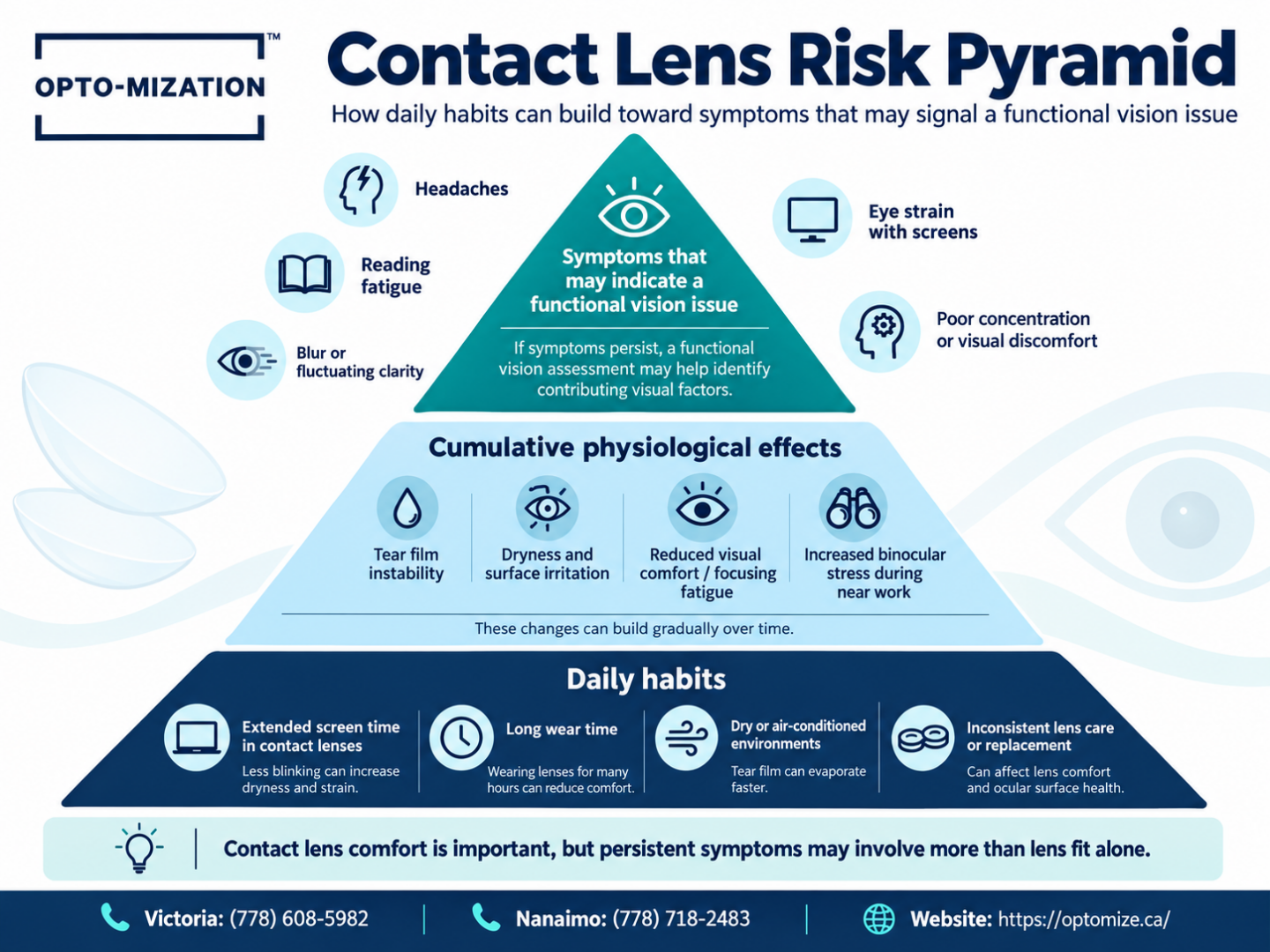
Contact lenses are safe for most people when worn correctly, but they do carry real risks that routine eye exams don’t always catch. Dry eyes, oxygen deprivation, infection risk, and subtle changes in how your eyes focus and work together can all develop gradually without obvious warning signs. Understanding how your lenses affect your eye health long-term helps you make smarter decisions about how and when you wear them.
Key Takeaways
- Contact lenses are generally safe, but daily wear habits and lens fit significantly affect long-term eye health.
- Oxygen supply to the cornea is one of the most important factors in safe contact lens use.
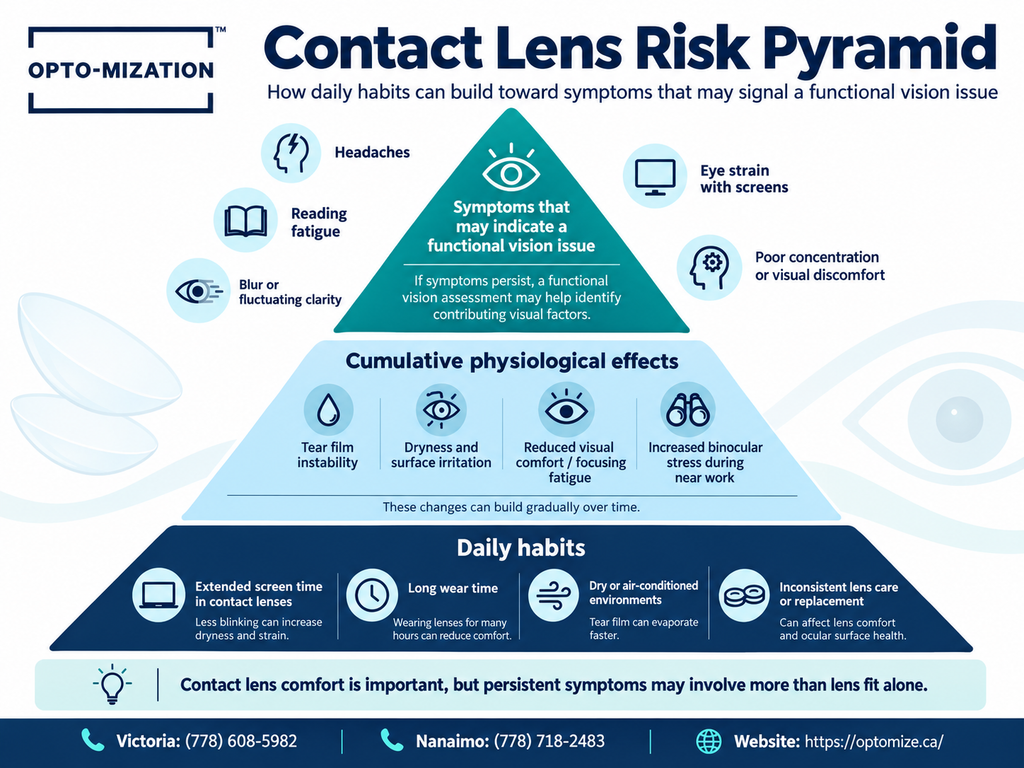
- Dry eye symptoms, eye strain, and visual fatigue from contact wear can sometimes point to a deeper functional vision issue.
- Wearing contacts does not improve or worsen your underlying prescription on its own.
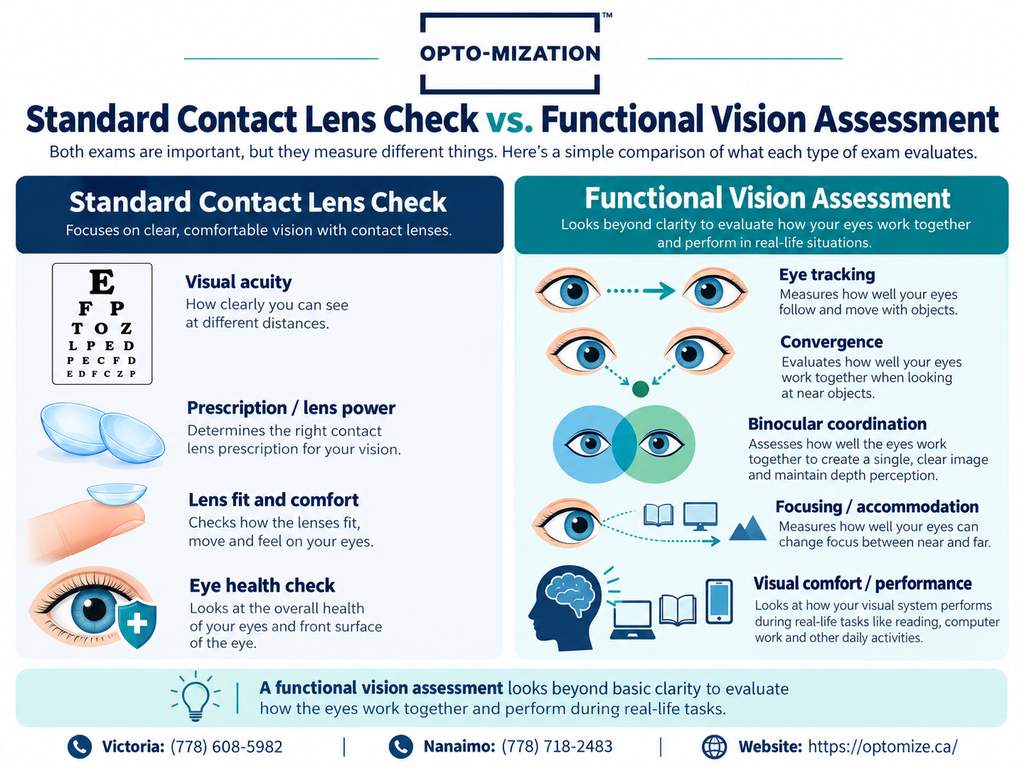
- A functional vision assessment can identify issues that a standard contact lens fitting often misses, including how your eyes track, focus, and coordinate together.
- Overnight wear and extended use carry higher infection risk, even with lenses approved for that purpose.
Things You Must Know
1. Eye Strain from Contacts Is Not Always About Lens Fit
Many people assume that if their contacts are properly prescribed and comfortable, their eyes are fine. In practice, contact lenses can mask or amplify problems with how the eyes work together. If you regularly experience headaches, blurred vision by the end of the day, or difficulty focusing during screen work while wearing contacts, a standard lens check won’t identify the cause. A functional eye exam evaluates binocular coordination, focusing flexibility, and eye tracking — the things a contact lens fitting skips entirely.
2. Corneal Oxygen Deprivation Builds Up Quietly
The cornea has no blood vessels and relies entirely on oxygen absorbed directly from the air. When contacts reduce that supply, the cornea compensates by growing new blood vessels — a process called corneal neovascularization. This typically develops without pain or obvious symptoms, and by the time it’s visible, the damage is already done. Wearing lenses for longer than recommended each day, or using older lens materials with low oxygen permeability, increases this risk significantly.
3. Not All Discomfort Has the Same Cause
Contact-related discomfort is often attributed to dryness or poor lens hygiene, but symptoms like eye pulling, strain, or fatigue that persist even after switching lens brands or solution types can indicate a binocular vision issue. If your eyes feel tired despite a correct prescription and clean lenses, that symptom deserves a closer look than a lens swap can provide.
How Contact Lenses Affect the Eye Over Time
Contact lenses sit directly on the cornea, which makes them more physiologically involved than glasses. The mechanical and chemical interaction between the lens, the tear film, and the corneal surface changes over hours of wear and over years of use.
The tear film is the first thing affected. A healthy tear film has three layers — lipid, aqueous, and mucin — that keep the ocular surface lubricated and clear. Contact lenses disrupt this layering, which is why dry eye is the most commonly reported complaint among lens wearers. The disruption is more pronounced in low-humidity environments, during screen-heavy work, and in people who already have marginal tear production.
According to a large-scale epidemiological report from the TFOS International Workshop on Contact Lens Discomfort, roughly 50% of contact lens wearers experience dry eye symptoms — a rate more than double that seen in people who do not wear lenses — significant enough to affect their daily wear comfort or hours of use.
Oxygen Permeability: Why Your Lens Material Matters
The biggest advancement in contact lens technology over the past two decades has been silicone hydrogel materials. Compared to older soft hydrogel lenses, silicone hydrogel transmits significantly more oxygen to the cornea, reducing the risk of hypoxic damage over long wear periods.
| Lens Type | Oxygen Permeability (Dk/t) | Best Suited For | Key Consideration |
| Standard soft hydrogel | Low (10–30) | Part-time wear, shorter days | Higher hypoxia risk with extended wear |
| Silicone hydrogel | High (60–175) | Full-day or extended wear | More oxygen, but not a reason to skip removal |
| Rigid gas permeable (RGP) | Very high (varies) | Irregular corneas, orthokeratology | Longer adaptation period; excellent optical clarity |
| Daily disposable soft | Varies by material | Occasional to daily wear | No overnight wear; lowest infection risk per use cycle |
Higher oxygen permeability reduces the risk of corneal neovascularization and long-term structural changes, but it does not eliminate the importance of following recommended wear schedules.
What Are the Risks of Wearing Contact Lenses for a Long Time?
Long-term contact lens use carries cumulative risks that many wearers aren’t told about during routine fittings. The most clinically significant ones include:
- Corneal neovascularization: New blood vessel growth into the normally avascular cornea, triggered by chronic low oxygen levels.
- Giant papillary conjunctivitis (GPC): An immune response to lens deposits or mechanical friction that causes bumps on the inner eyelid and increasing intolerance to lens wear.
- Reduced corneal sensitivity: Long-term contact wearers can develop lower corneal nerve sensitivity, which paradoxically makes it harder to detect early signs of irritation or infection.
- Microbial keratitis: A corneal infection that, while relatively rare, carries serious vision consequences. Risk increases with overnight wear, water exposure while wearing lenses, and extended use of a single pair.
- Dry eye progression: Chronic disruption of the tear film can worsen underlying dry eye disease over time, making lens wear less tolerable as years pass.
Microbial keratitis risk is meaningfully elevated for overnight contact lens wear compared to daily removal; peer-reviewed clinical data found that overnight soft contact lens use was associated with an odds ratio of more than 8 times the infection risk compared to daily disposable wear, with other pooled analyses placing the elevated risk for extended wear users at 10 to 15 times that of strict daily wearers.
Is It Healthier to Wear Glasses or Contacts?
From a pure ocular health standpoint, glasses carry fewer physiological risks. They don’t touch the eye, don’t affect the tear film, and don’t reduce corneal oxygen supply. For people with dry eye disease, binocular vision dysfunction, or corneal irregularities, glasses often provide clearer and more comfortable vision throughout the day.
That said, the glasses versus contacts question isn’t only about risk. Many people see more clearly with contacts due to reduced optical distortion, especially at higher prescriptions. Contacts also remain on the visual axis during eye movements, which can matter for people with active lifestyles or certain occupations.
| Factor | Glasses | Contact Lenses |
| Ocular surface impact | None | Affects tear film; can cause dryness |
| Infection risk | None | Present, especially with poor hygiene |
| Peripheral vision clarity | Reduced at lens edges | Full visual field coverage |
| Binocular vision suitability | Better for prism prescriptions | Limited prism options available |
| Maintenance burden | Low (cleaning only) | Higher (solution, replacement schedule) |
| Lifestyle flexibility | Some limitations (rain, sport) | High flexibility for active use |
For people dealing with symptoms like headaches, visual fatigue, or reading difficulties, the choice between glasses and contacts is secondary. The more important question is whether the prescription itself addresses how the eyes work together. Standard prescriptions from contact lens fittings measure visual acuity, but don’t evaluate binocular coordination or focusing flexibility, which are the skills most connected to comfort and daily performance.
How to Reduce Contact Lens Risk: A Practical Approach
- Stick to your replacement schedule. Extending lens life beyond the manufacturer’s schedule increases deposit buildup, protein accumulation, and infection risk, regardless of how the lenses feel.
- Remove lenses before sleep. Even lenses approved for extended wear carry meaningfully higher risk during overnight use. Daily removal remains the safest default for most wearers.
- Keep water away from your lenses. Tap water, swimming pools, hot tubs, and shower water all contain microorganisms that can cause serious corneal infections. Remove lenses before any water exposure.
- Replace your lens case regularly. Lens cases are a significant source of contamination. Replace the case at least monthly, and rinse it with fresh solution rather than water after each use.
- Pay attention to end-of-day symptoms. If your eyes consistently feel strained, dry, or fatigued by mid-afternoon, that pattern is worth investigating beyond a simple lens change.
- Get a comprehensive eye assessment annually. A basic contact lens check verifies fit and prescription, but doesn’t assess the functional aspects of vision. If symptoms persist, a more detailed evaluation is worth considering.
When Symptoms Signal Something Deeper Than Lens Comfort
Contact lens wearers who experience chronic headaches, eye strain, difficulty sustaining focus, or visual fatigue often cycle through lens changes, solution switches, and dry eye drops without improvement. Those symptoms can point to how the eyes coordinate with each other and with the brain, not to the lenses themselves.
Conditions like binocular vision dysfunction, convergence insufficiency, or accommodative dysfunction are common causes of these symptoms. They don’t show up on a standard acuity chart and aren’t addressed by a contact lens fitting. If symptoms like headaches and eye strain persist despite a clean bill of health from a routine exam, the issue may be functional rather than optical.
According to Cleveland Clinic, convergence insufficiency affects an estimated 2% to 13% of the general population and is frequently associated with symptoms including headaches, blurred vision, and reading-related fatigue — symptoms often attributed to dry eye or incorrect contact lens prescription before a functional assessment identifies the true cause.
Common Mistakes Contact Lens Wearers Make
- Topping off old solution in the lens case instead of emptying and refilling with fresh solution.
- Wearing lenses for more hours per day than recommended because they still feel comfortable.
- Rinsing lenses or the case with tap water instead of sterile contact lens solution.
- Ignoring intermittent blurring or redness, assuming it’s just dryness.
- Assuming that if the prescription feels right, the contact lens exam was comprehensive.
- Sleeping in lenses occasionally because “approved for extended wear” sounds equivalent to safe for overnight use.
Frequently Asked Questions
Are contact lenses healthy for the eyes?
Contact lenses are generally safe when used as directed, but they do alter the ocular environment in ways that glasses do not. They reduce corneal oxygen supply, disrupt the tear film, and introduce infection risk that glasses avoid entirely. For most healthy adults who follow care guidelines and replacement schedules, the risks remain low. People with dry eye disease, irregular corneas, or binocular vision issues may find glasses more comfortable and appropriate for their needs.
Is it healthy to wear contact lenses every day?
Daily wear is manageable for most people using modern silicone hydrogel lenses, provided lenses are removed each night and replaced on schedule. The risks increase when daily wear extends beyond recommended hours, when the same pair is used past its replacement date, or when hygiene practices slip. If you experience consistent end-of-day discomfort, dryness, or eye strain during daily wear, that pattern warrants an assessment rather than simply switching brands.
Can your eyesight get better after wearing contacts?
Standard contact lenses correct vision while worn but do not change the underlying refractive error. One exception is orthokeratology (ortho-k), which uses specially designed rigid lenses worn overnight to temporarily reshape the cornea and reduce myopia during the day. Ortho-k is also used as a myopia control tool in children to slow the progression of nearsightedness. Outside of this specialized approach, wearing contacts does not improve or worsen your prescription on its own.
What are the risks of wearing contact lenses for a long time?
Long-term contact lens use can lead to corneal neovascularization, reduced corneal sensitivity, chronic dry eye, and, in cases of poor hygiene or overnight wear, corneal infections. Most of these risks develop gradually and without obvious early symptoms, which is why regular comprehensive eye assessments matter beyond the basic prescription check. Switching to higher oxygen-permeable lens materials and following replacement schedules reduces cumulative risk considerably.
Is it healthier to wear glasses or contacts?
Glasses carry fewer physiological risks because they don’t interact with the ocular surface. For someone with dry eye, corneal sensitivity issues, or a binocular vision condition requiring prism correction, glasses are often the better long-term choice. That said, the healthiest option depends on the individual, their specific visual demands, and whether their prescription addresses the full picture of how their eyes function — not just how clearly they see a chart from six metres away.
The Bigger Picture: Vision Is More Than a Prescription
Contact lenses are a practical and effective tool for vision correction. Worn correctly, with attention to hygiene, replacement schedules, and daily wear limits, they pose minimal risk for most people. The challenge is that routine contact lens fittings focus almost entirely on refractive correction and lens fit. They measure what you can see, but not how efficiently your visual system works under real-world demands.
For patients in Greater Victoria and Nanaimo who are experiencing persistent headaches, visual fatigue, reading difficulties, or concentration problems despite a current prescription, those symptoms deserve a different level of assessment. At Opto-mization, a comprehensive adult eye exam goes beyond acuity testing to evaluate how the eyes and brain work together — the functional layer of vision that standard fittings and routine checks don’t reach.
If your contacts feel fine but your eyes don’t, that gap is worth investigating. Book a functional vision assessment with Opto-mization to find out what a standard exam may have missed.