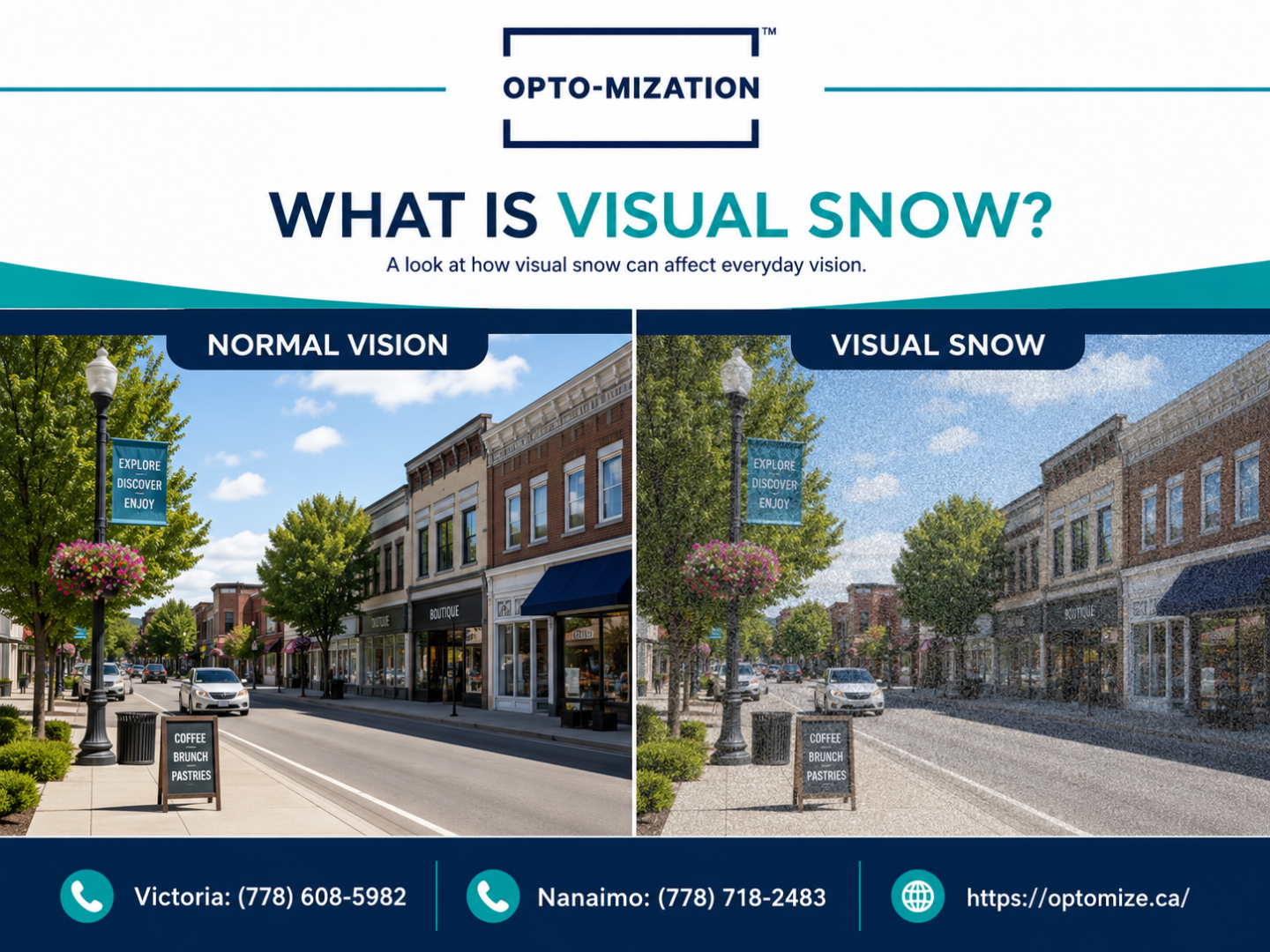
Visual snow, static, and flickering dots in your vision are often related to how your brain processes visual information, not just the health of your eyes. These symptoms can stem from neurological visual processing dysfunction, migraine activity, or binocular vision problems. A functional vision assessment can help identify the root cause and determine whether treatment is appropriate.
Key Takeaways
- Visual snow describes a persistent overlay of static, dots, or grain across your entire visual field, similar to an untuned television screen.
- It is often linked to how the brain processes visual signals, not simply to eye health or visual acuity.
- Flickering dots, afterimages, and static can accompany other symptoms like light sensitivity, headaches, dizziness, and difficulty concentrating.
- Standard eye exams often miss visual snow because they test clarity rather than how the eyes and brain work together.
- A functional vision or neuro-optometric evaluation is the most appropriate starting point for understanding these symptoms.
- In some cases, treatment through specialized lenses, prism prescriptions, or vision therapy can meaningfully reduce symptoms.
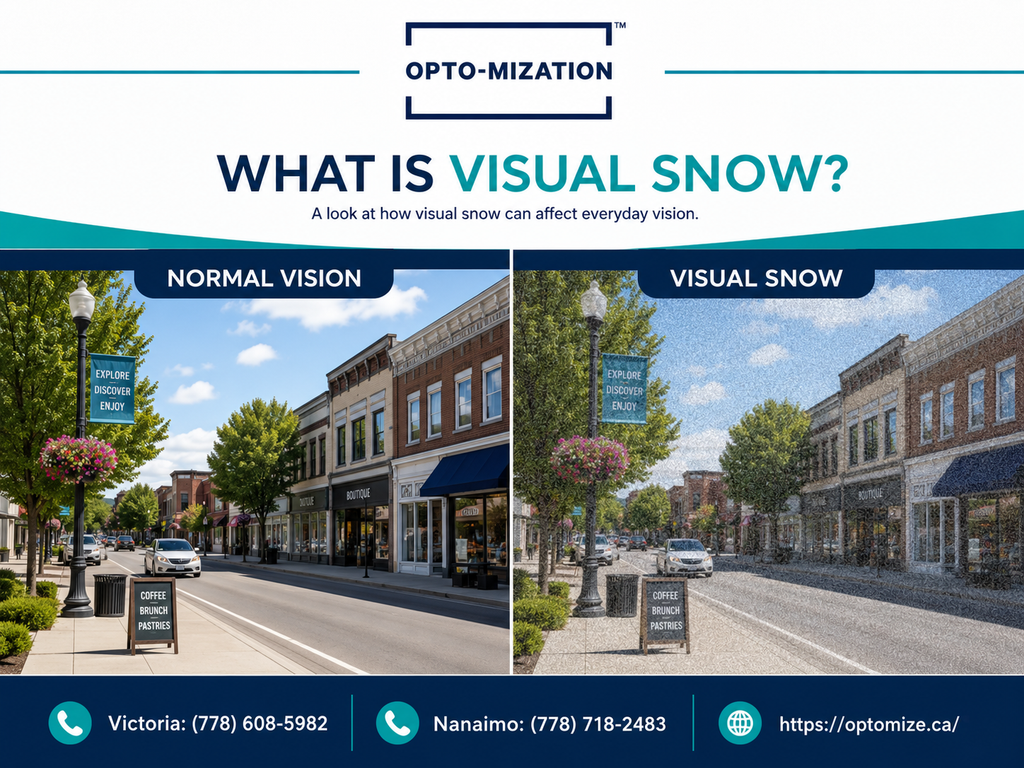
If you have ever looked at a clear blue sky or a white wall and noticed a faint layer of grain, static, or tiny flickering dots everywhere you look, you are not imagining things. This experience is real, it is more common than most people realize, and it almost never gets picked up by a routine eye exam. Understanding why it happens is the first step toward actually doing something about it.
Things You Must Know
1. A Normal Eye Exam Will Likely Not Explain This
Standard optometry appointments measure how clearly you see letters on a chart. They are designed to detect refractive errors and eye disease. Visual snow and related phenomena like flickering dots or persistent afterimages arise from how your brain interprets visual signals, which is an entirely different layer of vision. Many people with these symptoms receive a clean bill of health from a routine exam and still have no answers. A functional vision or neuro-optometric evaluation examines the brain-eye connection, which is where these symptoms typically originate.
2. These Symptoms Rarely Exist in Isolation
Visual snow almost never shows up on its own. Most people who experience it also report light sensitivity, trailing or blurring behind moving objects, difficulty reading in bright environments, halos around lights at night, or a general sense of visual overwhelm in busy spaces. If any of those sound familiar, the pattern matters. Identifying the full picture of symptoms is important for determining whether a neurological or binocular vision issue is contributing.
3. Waiting It Out Is Not Always the Right Call
Some visual disturbances resolve on their own, but persistent visual snow that affects daily life, reading, screen use, or driving is worth investigating. In some cases, an underlying visual processing issue or binocular vision dysfunction can be addressed through targeted treatment. Leaving it unexamined means living with symptoms that may be manageable with the right assessment and care.
What Exactly Is Visual Snow?
Visual snow syndrome is a neurological condition where a person perceives a continuous overlay of tiny dots, static, or grain across their entire visual field, present whether their eyes are open or closed. The dots may be white, black, or coloured, and the effect is often compared to the static on an old analogue television with no signal.
It is distinct from floaters, which are specific objects drifting across your vision. Visual snow is diffuse and constant, affecting the whole visual field rather than appearing as isolated specks or strings.
Research suggests visual snow syndrome affects an estimated 2 to 3 percent of the population, though it is likely underdiagnosed because many sufferers assume their vision is simply normal or do not know the condition has a name.
What Causes Visual Snow and Flickering Dots?
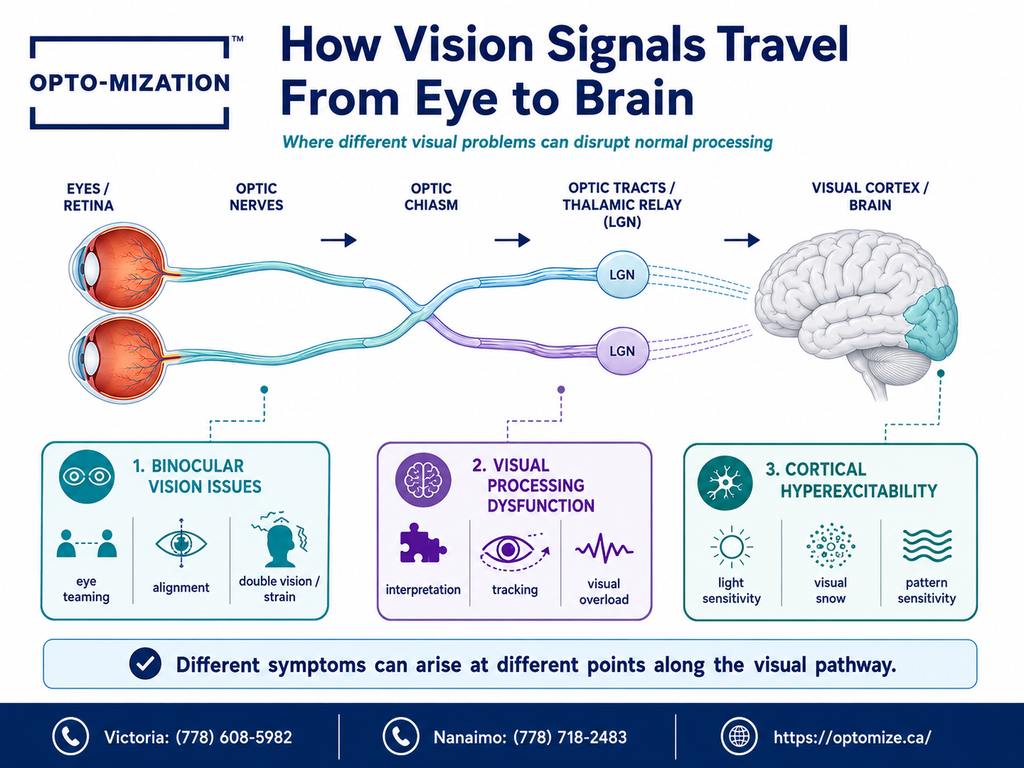
The short answer is that the brain’s visual processing system is not filtering or interpreting incoming light signals the way it should. But several distinct causes can contribute to that breakdown, and it is not always one thing in isolation.
Visual Processing Dysfunction
Your eyes capture light and send electrical signals to your brain, which then has to interpret, filter, and make sense of everything coming in. When that filtering process is disrupted, you may perceive visual “noise” that should normally be suppressed. This is one of the leading explanations for visual snow syndrome and points directly to a neurological visual processing issue rather than anything structurally wrong with the eye itself.
Binocular Vision Dysfunction
When the two eyes are not working together seamlessly, the brain receives competing or misaligned visual input. Trying to reconcile those two slightly different images creates constant neurological strain. That strain can manifest as flickering, ghosting, static, difficulty tracking text, and a visual system that never feels settled. If you also experience eye strain, headaches, or double vision, why your eyes feel like they are pulling or fighting each other may be directly connected to this.
Migraine-Related Visual Phenomena
A significant proportion of people diagnosed with visual snow syndrome also have a history of migraine, and studies have noted an overlap in the neurological mechanisms involved. Persistent visual aura, which is the light-show some people experience before or during a migraine, can in some individuals transition into a chronic state that resembles visual snow.
Hyperexcitability of the Visual Cortex
Some neurological research points to an overactive or hyperexcitable visual cortex as a central mechanism in visual snow. Essentially, the brain’s visual processing centre is amplifying signals it should be dampening, producing the constant static or grain overlay. This is not something a standard eye exam would detect, because it originates entirely within the brain’s processing pathways.
Post-Concussion Visual Disturbances
A brain injury or concussion can disrupt the precise coordination between the eyes and the visual processing centres in the brain. Visual snow, flickering, and light sensitivity are among the more commonly reported post-concussion visual symptoms, and they often persist long after other concussion symptoms have resolved if the underlying visual dysfunction is not addressed.
How Does Visual Snow Compare to Other Visual Disturbances?
| Symptom | What It Looks Like | Likely Origin | Picked Up by Standard Exam? |
| Visual Snow | Constant static or grain over entire field | Neurological / visual cortex | Rarely |
| Floaters | Drifting specks or strings | Vitreous changes in the eye | Yes |
| Migraine Aura | Zigzag lights, arc of brightness | Cortical spreading depression | Rarely |
| Afterimages | Ghost of an image that persists | Photoreceptor fatigue or processing delay | Rarely |
| Flickering Dots | Rapid flashing points of light | Binocular dysfunction or photosensitivity | Rarely |
What Other Symptoms Often Appear Alongside Visual Snow?
Visual snow rarely travels alone. Knowing the full pattern of what you are experiencing gives a clinician far more to work with.
- Light sensitivity, especially indoors under fluorescent lighting or on screens
- Trailing or smearing behind moving objects (palinopsia)
- Halos or starbursts around lights, particularly at night
- Persistent afterimages after looking at bright objects
- Difficulty reading, especially small text or text on bright backgrounds
- Headaches or migraines, sometimes without a clear trigger
- Dizziness or disorientation in busy visual environments like grocery stores or shopping centres
- Tinnitus (ringing in the ears) in some cases
If busy, visually complex environments leave you feeling overwhelmed or off-balance, that specific experience is worth exploring. Why some people feel dizzy in grocery stores and crowded rooms often comes down to how the visual system handles sensory overload, which connects directly to the same processing pathways involved in visual snow.
How Is Visual Snow Assessed?
Because standard eye exams do not measure brain-eye communication, visual snow typically goes undetected for years. A functional vision or neuro-optometric assessment takes a different approach entirely.
- Comprehensive history review: The clinician gathers a detailed picture of all symptoms, when they started, what makes them worse, and what else is happening alongside the visual disturbances.
- Binocular vision testing: How well the two eyes work together, including convergence, divergence, and alignment under different conditions.
- Eye tracking assessment: Whether the eyes move accurately and smoothly, especially during reading or tracking moving objects.
- Visual processing evaluation: How efficiently the brain interprets, organizes, and responds to visual information.
- Contrast sensitivity and photosensitivity testing: How the visual system responds to light, contrast, and low-visibility conditions.
- Functional refraction: A prescription evaluation that goes beyond standard acuity testing, looking at how lenses affect visual comfort and processing rather than just clarity.
If you are also spending significant time on screens and noticing that your symptoms worsen with digital use, it is worth exploring why screens make your eyes hurt even when you take breaks, since digital fatigue and visual processing strain can amplify symptoms like static and flickering.
What Does the Treatment Path Look Like?
Treatment depends entirely on what the assessment finds. There is no single solution for visual snow, which is one reason a proper evaluation matters so much before attempting any intervention.
| Finding | Possible Treatment Direction |
| Binocular vision dysfunction | Vision therapy, prism lenses, or convergence training |
| Visual processing difficulties | Structured visual rehabilitation program |
| Post-concussion visual disturbance | Neuro-optometric rehabilitation and functional lens prescribing |
| Light sensitivity driving symptoms | Precision tinted lenses or neurological lens prescription |
| Migraine-related visual phenomena | Combined approach with functional vision and medical management |
Vision therapy at Opto-mization is one route that has helped patients with chronic visual processing difficulties, including some who had been experiencing symptoms like visual noise or persistent afterimages for years without a clear explanation.
Common Mistakes People Make With These Symptoms
- Assuming the static is normal and something everyone experiences, so they never mention it to anyone
- Getting a standard eye exam, receiving a “your eyes are fine” result, and stopping there
- Attributing all symptoms to screen time without investigating whether a visual processing issue is involved
- Searching only for neurological causes (such as MS or brain tumour) without considering functional vision dysfunction as a possibility
- Dismissing symptoms as anxiety-related without exploring whether a sensory processing issue is driving the anxiety
- Trying to manage symptoms with sunglasses or screen filters alone, which may reduce discomfort but does not address the underlying cause
Anecdotal reports from visual snow communities suggest that many sufferers wait five years or more before receiving any kind of diagnosis, largely because the condition is not widely known among general practitioners and is not detectable through standard vision screening.
Frequently Asked Questions
Can visual snow cause flickering?
Yes. Flickering is one of the symptoms commonly reported alongside visual snow syndrome. It may appear as rapid flashing points of light, a flickering quality to the overall static, or a shimmering effect on surfaces. This is consistent with the visual cortex hyperexcitability model, where the brain’s visual processing centre is generating more signal than it should be suppressing. It is worth noting that flickering can also stem from binocular vision issues, where the two eyes are competing rather than cooperating, creating an unstable visual signal.
What causes visual snow static?
The leading explanation is that the brain’s visual cortex becomes hyperexcitable, meaning it amplifies incoming visual signals rather than filtering them appropriately. This produces the grain or static effect across the entire visual field. Migraine history, neurological factors, binocular vision dysfunction, and post-concussion changes can all contribute. Because the origin is in how the brain processes vision rather than in the physical structure of the eyes, it will not appear on standard imaging or routine eye exams in most cases.
Why do I see flashing dots in my vision?
Flashing dots can come from several sources. Photopsia, which is the medical term for perceived flashes of light, can be triggered by pressure on the retina, migraine activity, or neurological visual processing dysfunction. When flashing dots appear across the whole visual field rather than in one localised spot, it is more likely related to cortical or processing-level activity than to a retinal issue. If flashing dots appear suddenly and are accompanied by a sudden increase in floaters, that warrants prompt examination to rule out retinal involvement.
Is visual snow related to autism?
There is no established causal link between visual snow syndrome and autism. That said, autistic individuals are statistically more likely to have heightened sensory sensitivity, and some may describe visual experiences that sound similar to visual snow as part of broader sensory processing differences. The two can co-occur, but one does not cause the other, and visual snow in an autistic person still warrants the same functional vision investigation as it would in anyone else.
Can visual snow go away?
For some people, symptoms reduce or become less intrusive over time, particularly when underlying contributing factors like binocular vision dysfunction or visual processing difficulties are identified and treated. Visual snow associated with migraine activity may fluctuate with migraine management. For others, the static remains but becomes easier to live with once they understand what it is. There is no universal prognosis, which is exactly why an assessment matters: knowing what is driving the symptom is the only way to know whether it is addressable and how.
Some clinical case reports and patient outcome data from functional vision programs suggest meaningful symptom reduction is possible in cases where visual snow co-occurs with treatable binocular vision dysfunction or visual processing deficits, though large-scale clinical trial data on this specific population remains limited.
When to Stop Guessing and Get a Proper Assessment
If you have been living with visual static, flickering, or persistent dots and have not found answers through a standard eye exam, the next step is a functional vision evaluation. The question is not whether your eyes are healthy; it is whether your eyes and brain are working together efficiently.
For people in Greater Victoria and Nanaimo, Opto-mization offers a comprehensive functional vision exam that goes well beyond measuring how sharp your eyesight is. The assessment examines the full picture of how your visual system is functioning, from the precision of eye movement to how your brain processes and filters what your eyes send it.
Visual snow and its associated symptoms are real, they affect quality of life, and in many cases they are connected to something that can actually be addressed. The first step is finding out what is actually going on.
If you are based in Victoria, Saanich, Langford, Nanaimo, or anywhere across Vancouver Island and you are ready to get answers, reach out to Opto-mization to book a functional vision assessment. You deserve to know what your visual system is doing and what can be done about it.