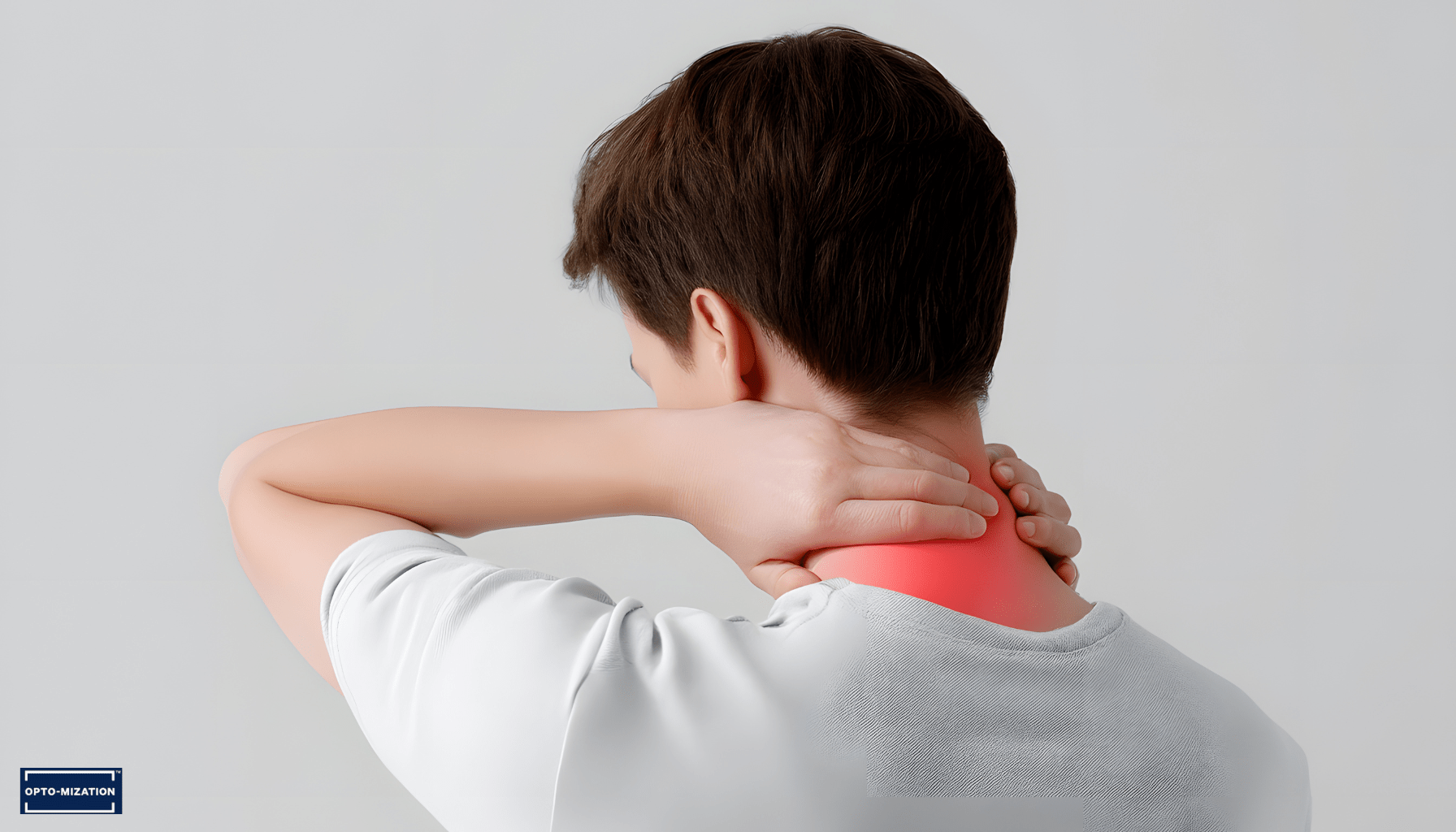
Neck pain, shoulder tension, and poor posture are often blamed on ergonomics, stress, or long hours at a desk. Many people adjust their chair, raise their screen, or stretch more, yet discomfort persists. While posture and muscle strain certainly play a role, one important factor is frequently overlooked: how the visual system is functioning.
Vision does more than allow us to see clearly. It plays a key role in how we hold our head, position our body, and orient ourselves in space. When vision is inefficient or unstable, the body often compensates in subtle ways. Over time, these compensations can contribute to chronic neck pain, muscle tension, and postural changes that are difficult to correct through physical adjustments alone.
Understanding the connection between vision and posture helps explain why some people continue to struggle with discomfort even after addressing obvious ergonomic factors.

Book a Comprehensive Eye Exam With Functional Testing
If posture issues or neck pain persist despite ergonomic changes, a comprehensive eye exam with functional testing can help identify visual contributors to physical strain.
Vision as a Driver of Posture and Alignment
The body constantly uses visual information to guide movement and maintain balance. Vision helps determine where the head should be positioned, how the eyes align with objects, and how the body stabilizes itself during near and distance tasks.
When visual input is clear and stable, posture is largely automatic. When visual input is inefficient, the body may adapt in ways that reduce visual discomfort but increase physical strain. These adaptations often happen unconsciously and become habitual over time.
Examples of visually driven postural changes include:
- Leaning forward to see more clearly
- Tilting the head to compensate for eye misalignment
- Raising or lowering the chin to reduce visual strain
- Shifting weight unevenly while standing or walking
These adjustments may help the eyes temporarily but place additional load on the neck, shoulders, and spine.
How Visual Alignment Influences Head and Neck Position
Visual alignment refers to how well the eyes work together and how efficiently visual information is integrated with body movement. When the eyes are not well coordinated, the brain may struggle to maintain a single, comfortable visual image.
To compensate, the body may reposition the head or neck to improve visual comfort. Over time, this can lead to persistent muscle tension and discomfort.
Signs that posture may be visually driven include:
- Chronic neck or shoulder pain without clear injury
- Head tilting during reading or screen use
- Difficulty maintaining upright posture during near work
- Increased discomfort during visually demanding tasks
These patterns often persist even when ergonomic setups are improved.
Visual Integration and Whole-Body Coordination
Visual integration describes how visual information works together with balance, movement, and spatial awareness. As outlined in Opto-Mization’s explanation of visual integration, vision does not operate in isolation. It is deeply connected to the vestibular system and proprioception, which help the body understand position and movement.
When visual integration is inefficient, the body may struggle to maintain alignment, especially during sustained tasks. This can result in:
- Increased muscle activation to stabilize posture
- Difficulty relaxing the neck and shoulders
- Reduced endurance during desk work
- A sense of physical fatigue that builds throughout the day
These effects are not caused by weak muscles but by increased neurological effort to maintain orientation.
Eye Fatigue and Postural Strain at Work
Prolonged screen use places significant demands on the visual system. Focusing, tracking, and maintaining eye coordination for long periods requires sustained effort. When visual efficiency is reduced, eye fatigue develops more quickly.
As described in Opto-Mization’s article on eye fatigue at work, visual strain can contribute to headaches, discomfort, and reduced productivity. What is less obvious is how this visual fatigue influences posture.
As the eyes tire, people may:
- Lean closer to the screen
- Slouch or round the shoulders
- Crane the neck forward
- Shift position frequently to stay comfortable
These adjustments may reduce visual strain temporarily but increase physical strain on the neck and upper body.
Why Ergonomic Fixes Sometimes Fall Short
Ergonomic adjustments are important, but they assume that vision is functioning efficiently. When visual issues are present, even the best ergonomic setup may not fully resolve discomfort.
Common scenarios include:
- A well-positioned monitor that still feels uncomfortable to view
- A properly adjusted chair that does not reduce neck tension
- Regular stretching that provides only temporary relief
In these cases, the body continues to compensate for visual inefficiency, overriding ergonomic improvements.
Posture Changes After Injury or Trauma
Visual-postural issues are especially common after concussions or other forms of trauma. Post-trauma vision syndrome describes a cluster of visual symptoms that can occur after injury, even when other symptoms have improved.
As Opto-Mization explains in its discussion of post-trauma vision syndrome, trauma can disrupt eye coordination, visual processing, and spatial orientation. When visual stability is affected, posture often changes as the body seeks visual comfort.
Post-trauma visual issues may contribute to:
- Persistent neck or upper back pain
- Headaches that worsen with visual tasks
- Difficulty maintaining upright posture
- Increased fatigue during reading or screen use
These symptoms are often treated as purely musculoskeletal, while the visual component remains unaddressed.

Understand How Vision Affects Posture and Comfort
Learn whether visual alignment, eye coordination, or visual endurance may be influencing posture, muscle tension, or daily discomfort.
How the Body Compensates for Visual Inefficiency
The body is remarkably adaptable. When vision is inefficient, compensation occurs automatically. While this adaptability allows people to function, it often comes at a cost.
Common compensatory patterns include:
- Excessive muscle tension in the neck and shoulders
- Reduced head movement to stabilize vision
- Altered walking or standing posture
- Increased reliance on one eye
Over time, these compensations can become ingrained, leading to chronic discomfort even when visual demands are reduced.
Why Symptoms Often Worsen Over the Day
Many people notice that posture-related discomfort worsens as the day goes on. This pattern is consistent with visual fatigue and reduced visual endurance.
As visual effort accumulates:
- Postural control becomes less efficient
- Muscle tension increases
- Head and neck positioning becomes more rigid
- Discomfort intensifies
This progression is often misattributed solely to physical fatigue rather than visual strain.
The Role of Functional Vision Assessment
Standard eye exams are designed to assess clarity and eye health. They do not evaluate how vision influences posture, movement, or endurance during sustained tasks.
Functional vision assessments look beyond acuity to evaluate:
- Eye coordination and alignment
- Focusing accuracy during near work
- Visual integration with movement and balance
- Visual endurance over time
By understanding how vision interacts with posture and movement, these assessments help identify contributors to physical discomfort that might otherwise be missed.
Addressing Vision to Support Better Posture
When visual inefficiencies are identified, addressing them can reduce the need for postural compensation. This does not replace physical therapy or ergonomic care when needed. Instead, it supports those approaches by ensuring vision is not adding unnecessary strain.
Improving visual efficiency may support:
- Reduced neck and shoulder tension
- More natural head positioning
- Improved comfort during desk work
- Greater physical endurance throughout the day
For individuals recovering from injury, addressing visual factors can be especially important for restoring overall comfort.
Seeing the Body as an Integrated System
Posture, neck pain, and vision are closely connected. When vision is inefficient, the body adapts in ways that can lead to discomfort over time. Addressing posture without considering vision may leave an important piece of the puzzle unresolved.
At Opto-Mization in Victoria and Nanaimo, functional and neuro-optometric assessments help uncover visual factors that contribute to postural strain and physical discomfort. By understanding how vision supports alignment and movement, patients can gain a more complete picture of what may be affecting their comfort and overall well-being.