
Feeling dizzy in grocery stores, uncomfortable while driving, or nauseated when scrolling on a phone is often brushed off as stress, motion sickness, or an inner-ear issue. Some people avoid busy environments altogether because movement feels overwhelming or disorienting. Others notice symptoms that worsen after a concussion or persist long after other symptoms have resolved. While these experiences are commonly attributed to balance problems or anxiety, vision is frequently a missing piece of the puzzle.
Vision plays a central role in how the brain understands movement, space, and orientation. When the visual system is not working efficiently, the brain may struggle to process motion accurately. This mismatch can result in motion sensitivity, nausea, dizziness, and a feeling of visual overload, even when standard eye exams or medical tests appear normal.
Understanding how vision contributes to motion tolerance can help explain why these symptoms occur and why they are often misunderstood.

Book a Comprehensive Eye Exam With Functional Testing
If motion, dizziness, or visual overload affects daily life, a comprehensive eye exam that includes functional testing can help uncover visual contributors that often go undetected.
How Vision Supports Balance and Motion
Balance is not controlled by a single system. It relies on constant communication between vision, the vestibular system in the inner ear, and proprioception, which provides information about body position and movement. Vision is often the dominant sense in this system, helping the brain determine where the body is in space and how it is moving.
When vision is functioning efficiently, the brain can rely on consistent visual input to stabilize movement. When visual input is unstable or inefficient, the brain must work harder to interpret motion, increasing the likelihood of discomfort.
As Opto-Mization explains in its discussion of dizziness and balance problems in adults, visual inefficiencies can disrupt spatial orientation and balance, leading to symptoms such as dizziness, disorientation, and difficulty tolerating visually complex environments. When vision does not provide reliable information, the balance system becomes less efficient overall.
What Is Motion Sensitivity?
Motion sensitivity occurs when the brain has difficulty processing movement in the visual environment. This can include movement of the body, movement within the environment, or visual motion such as scrolling screens or passing traffic.
People with motion sensitivity may experience:
- Dizziness or lightheadedness
- Nausea without a clear gastrointestinal cause
- Discomfort in busy or crowded environments
- Difficulty with escalators, elevators, or driving
- A sense of visual overwhelm or fatigue
These symptoms are not imaginary and are not a sign of weakness. They are signs that the brain is receiving conflicting or unreliable information from the visual system.
Visual Overload and the Brain
Visual overload occurs when the brain is presented with more visual information than it can comfortably process. This often happens in environments with constant movement, changing light, or multiple visual stimuli competing for attention.
Common triggers of visual overload include:
- Grocery store aisles with repeating patterns
- Busy sidewalks or shopping centres
- Driving in busy places with lots going on
- Scrolling on phones or watching fast-moving video
- Flickering sunlight through trees or other patterns that flicker
- Open office spaces with constant motion
When visual processing is inefficient, the brain must work harder to make sense of these environments. Over time, this effort can lead to nausea, headaches, dizziness, or a strong desire to escape the environment altogether. Interestingly, many people with motion sensitivity notice that symptoms improve when they are the driver rather than a passenger, because being in control helps the brain better predict and organize visual motion.
Why Nausea Often Accompanies Visual Motion Issues
Nausea related to motion sensitivity is often misunderstood. It is not caused by illness or digestion. Instead, it occurs when the brain receives conflicting signals from the visual and balance systems.
For example, when the eyes detect motion but the body is not moving in the expected way, or when visual input is unstable, the brain struggles to reconcile the information. This sensory mismatch can trigger nausea as a protective response.
Visual causes of nausea are especially common in people who:
- Feel sick while reading in a moving vehicle
- Experience discomfort when watching fast-paced screens
- Become nauseated in visually busy environments
- Feel worse when focusing on near tasks during movement
These patterns often point toward a visual contribution rather than a primary medical condition.
The Role of Brain Pathways in Visual Motion Processing
Vision is not limited to the eyes themselves. It relies on complex brain pathways that process movement, depth, timing, and spatial relationships. When these pathways are disrupted, visual stability can be affected even if the eyes are healthy.
As Opto-Mization explains in its overview of how brain injuries affect vision, concussions and other brain injuries can interfere with eye coordination, visual processing speed, and motion integration. In many cases, visual symptoms persist even after other concussion symptoms improve.
This disruption can result in:
- Difficulty tolerating motion
- Increased sensitivity to visual environments
- Slower visual processing
- A sense of being overwhelmed by movement
Importantly, motion sensitivity is not limited to people with a known brain injury. Similar visual processing challenges can occur without a clear history of trauma, making symptoms harder to explain or diagnose.
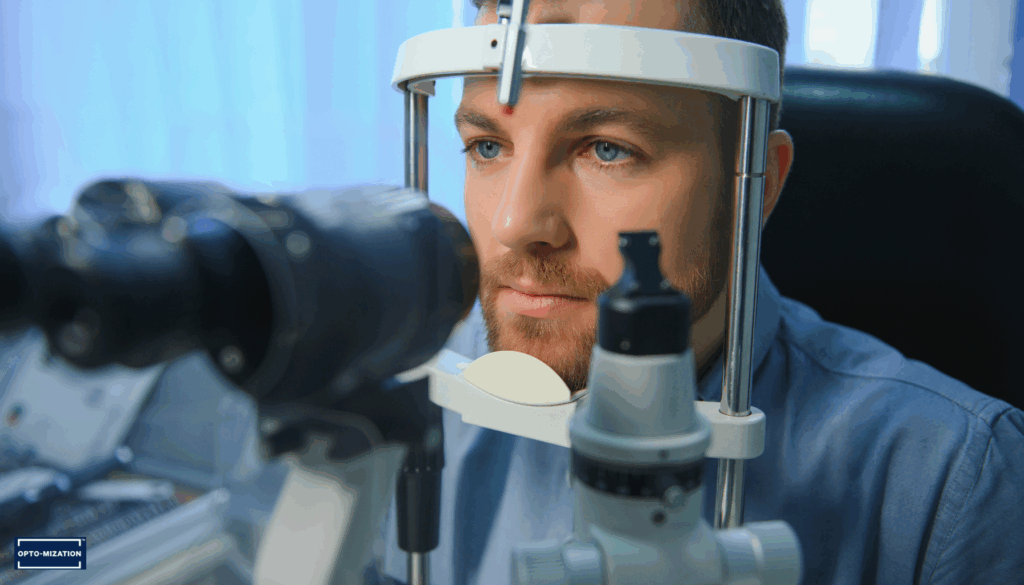
Get Clear Answers About Motion-Related Vision Symptoms
Learn how visual processing, eye coordination, and even your glasses prescription may influence motion tolerance and comfort.
Motion Sensitivity Without a Concussion
While concussions are a well-recognized cause of motion sensitivity, many people experience visually driven motion discomfort without any known injury. In these cases, inefficient visual skills or long-standing visual processing issues may be the underlying cause.
People without a concussion history may still experience:
- Dizziness in visually complex spaces
- Difficulty driving or navigating crowds
- Visual fatigue after prolonged screen use
- Motion-related nausea
Because these symptoms often develop gradually, they are frequently attributed to stress, aging, or inner-ear issues, while vision remains unexamined beyond basic clarity.
Why Standard Eye Exams Often Miss Motion-Related Vision Problems
Traditional eye exams are essential for eye health and visual clarity, but they are not designed to evaluate how vision performs during movement or under sensory load. A person may pass a standard eye exam and still struggle with motion sensitivity.
Standard exams typically assess:
- Visual acuity
- Eye health
- Refractive needs
They do not evaluate how well the eyes work together during motion, how efficiently visual information is processed, or how the brain integrates vision with balance.
Functional vision assessments look beyond clarity to evaluate how the visual system performs in real-world conditions, including tasks that involve movement, coordination, and sustained visual demand.
How Motion Sensitivity Affects Daily Life
Motion sensitivity can significantly impact daily activities, even when symptoms are subtle. People may begin avoiding situations that trigger discomfort, leading to changes in routine and reduced quality of life.
Motion sensitivity may affect:
- Driving confidence and independence
- Participation in social or public activities
- Work performance in visually demanding environments
- Physical activity and exercise
- Overall comfort and energy levels
These changes often happen gradually, making it difficult to identify the underlying cause.
Addressing Visual Contributors to Motion Sensitivity
When visual inefficiencies are identified, targeted care can help improve visual stability and reduce motion sensitivity. Vision-based approaches focus on improving how efficiently the eyes and brain work together rather than treating symptoms in isolation.
Goals may include:
- Improving eye coordination and alignment
- Enhancing visual processing speed
- Increasing tolerance for motion and visual complexity
- Reducing visual fatigue and discomfort
This approach does not replace medical evaluation when needed. Instead, it ensures that vision is properly assessed as part of the balance and motion system.
A More Complete Understanding of Motion-Related Symptoms
Motion sensitivity, nausea, and visual overload are often misunderstood because they do not fit neatly into a single category. Vision, balance, and brain processing are deeply interconnected, and disruption in one system can affect the others.
At Opto-Mization in Victoria and Nanaimo, comprehensive eye exams include functional and neuro-optometric testing to uncover visual factors that contribute to motion intolerance and visual overload. These assessments go beyond clarity to evaluate how visual skills interact with balance and movement in real-world situations. In many cases, this includes assessing how a person’s glasses prescription affects motion processing and visual-vestibular integration, an area that is rarely evaluated in standard eye care.
By understanding how vision supports stability and movement, patients can gain clearer answers and a more complete explanation for symptoms that may have gone unexplained for years.