
Contact lenses offer a convenient and effective solution for many people who need vision correction. Unlike glasses, contact lenses sit directly on the eye and provide a wider field of vision, making them a popular choice for those with active lifestyles or for anyone who prefers the freedom of going glasses-free. However, while contact lenses are safe when properly used, poor fit, improper care, or overuse can lead to eye health problems and discomfort.
Understanding how to choose the right contact lenses and properly care for them is essential to maintaining optimal eye health. In this article, we’ll discuss the importance of proper contact lens fit, how to care for your lenses, and common risks associated with improper use.
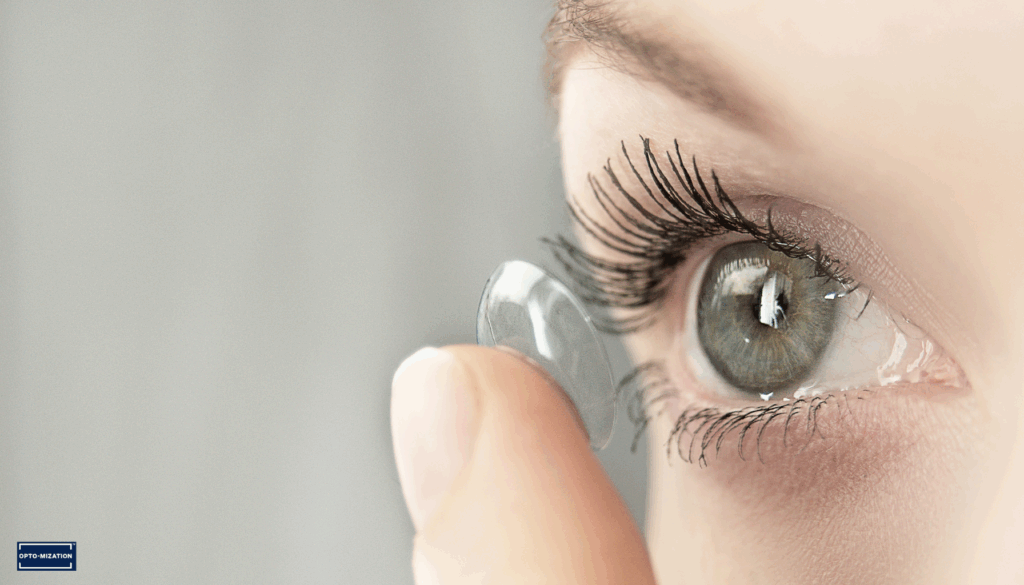
Book your comprehensive eye exam at Opto-Mization to ensure your contact lenses fit properly and support long-term eye health.
Choosing the Right Contact Lenses for Comfort and Eye Health
Not all contact lenses are the same. There are many types of lenses available, and selecting the right type for your eyes is crucial to ensure both comfort and safety. The most common types of contact lenses include:
- Soft contact lenses: These are the most common and are made from flexible, breathable material. They are comfortable and easy to wear, making them a good option for most people.
- Rigid gas permeable (RGP) lenses: These lenses are more durable than soft lenses and provide sharper vision for some users. They can take time to adjust to but may be recommended for people with specific vision problems, such as astigmatism.
- Extended wear lenses: Designed for continuous wear, these lenses can be worn for up to a week or longer, depending on the material. However, they must be cleaned thoroughly and may not be suitable for everyone.
- Specialty lenses: People with specific conditions, such as astigmatism, presbyopia, or dry eyes, may require custom lenses tailored to their needs.
The right lens for you depends on several factors, including your eye shape, the type of vision correction you need, and your lifestyle. A visit to your optometrist will help determine the best type of contact lenses for your individual needs.
In our article on Contact Lenses and Your Eye Health, we emphasize the importance of selecting contact lenses that suit your specific eye structure. Your optometrist will take measurements of your cornea, eyelids, and overall eye shape to ensure a proper fit.
The Importance of Proper Fit and Vision Correction
Contact lenses must be fitted properly to avoid irritation, discomfort, and even long-term eye health problems. Poorly fitted lenses can lead to abrasions, infection, or dryness, causing symptoms like red eyes, blurred vision, or painful irritation. The goal is to achieve a perfect fit where the lenses comfortably sit on the eye without causing pressure or restricting oxygen flow.
A professional eye exam ensures that your optometrist can recommend the correct lens curvature and size. This is particularly important if you have irregular corneal shapes, astigmatism, or other vision needs. Lenses that do not fit well can move too much on the eye, making it difficult to focus or causing irritation.
Your optometrist will also evaluate the material of the lenses, considering your tear film and overall eye health. The material of the lenses will affect their breathability (oxygen permeability), which is crucial for the long-term health of your eyes. Without adequate oxygen flow, the cornea can become damaged, leading to more serious conditions such as corneal hypoxia.
The Risks of Improper Contact Lens Care
One of the most significant risks associated with wearing contact lenses is poor hygiene. Failing to properly clean and disinfect your lenses can lead to eye infections, dry eyes, and even vision loss in extreme cases. Here are some of the most common risks:
1. Infections
Contact lenses can trap bacteria, fungi, and other harmful microorganisms against the surface of the eye. This can lead to infections like keratitis (an infection of the cornea), which can cause permanent damage to the eye. To avoid infections, always follow proper cleaning protocols and avoid wearing lenses while swimming or showering.
2. Dry Eyes
Extended wear of contact lenses can cause dry eyes due to the reduced tear exchange beneath the lens. This can lead to discomfort, redness, and blurred vision. To alleviate dryness, consider switching to lenses with higher water content, or use lubricating eye drops as recommended by your optometrist.
3. Corneal Damage
Improper contact lens fit, long wear times, or failure to clean the lenses properly can lead to abrasions and damage to the cornea, which may result in infection or scarring. It’s important to replace your lenses as directed and never wear them longer than recommended.
4. Decreased Oxygen to the Eye
Contact lenses need to allow oxygen to pass through to the cornea. If the lenses are not breathable enough, this can lead to corneal hypoxia, causing discomfort, redness, and a higher risk of infection.
To reduce the risk of these complications, follow proper cleaning procedures, and only wear lenses for as long as recommended. Regular eye exams are essential to ensure that your lenses fit correctly and that your eyes are healthy.
For more information on the risks of improper contact lens use, check out our article on How Contact Lenses Can Be a Danger to Your Eyes.
Schedule your contact lens consultation at Opto-Mization to ensure the right fit, clear vision, and long-term eye health.
Keeping Your Contact Lenses Clean
Proper lens hygiene is essential for maintaining eye health while wearing contact lenses. Below are the key steps for cleaning and caring for your lenses:
- Wash your hands thoroughly before handling your lenses to avoid transferring dirt and bacteria to your eyes.
- Clean your lenses daily using an appropriate solution (never use water to clean them).
- Store your lenses in a clean case and replace the case every 3 months.
- Never sleep in your contact lenses unless they are specifically designed for overnight wear.
- Follow your optometrist’s guidelines for how long to wear your lenses and when to replace them.
Cleaning your lenses regularly and properly can prevent eye infections and help maintain the health of your cornea.
For more tips on how to keep your contact lenses clean and safe, read our article on Keeping Your Contact Lenses Clean.
Conclusion
Contact lenses provide a convenient and comfortable option for vision correction, but it’s crucial to ensure they are properly fitted and cared for to maintain eye health. A proper fit, good hygiene, and following your optometrist’s recommendations are essential steps in preventing eye infections, dryness, and other complications.
If you’re considering contact lenses or if you’ve been experiencing discomfort or vision issues with your current lenses, schedule a visit to Opto-Mization for a comprehensive eye exam. Our team of experienced optometrists can help you select the right lenses for your eyes and ensure that they fit properly and support your long-term eye health.
Visit our Contact Lenses and Your Eye Health page to learn more about how to choose the right contact lenses and maintain eye health while wearing them.