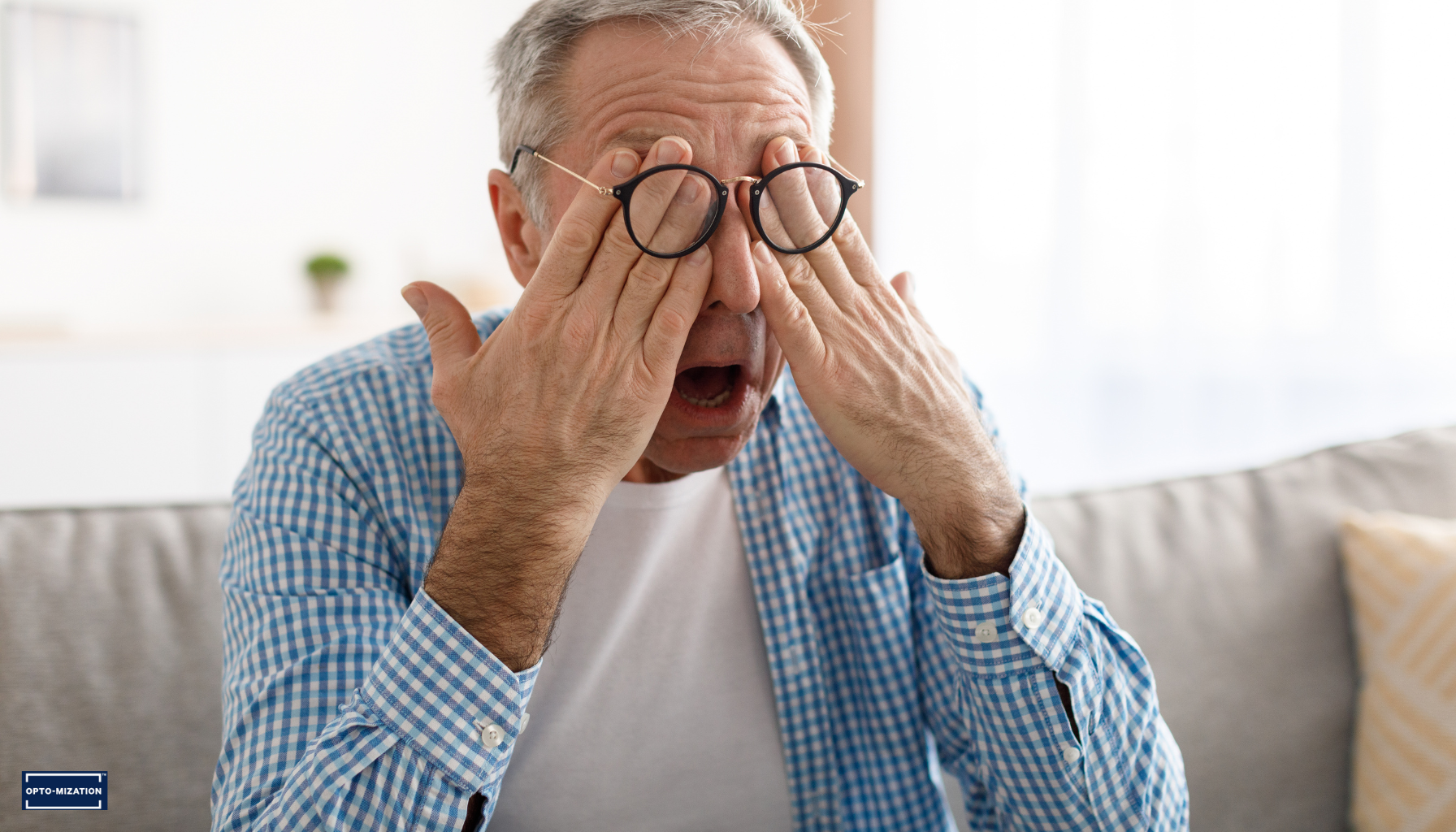
Many adults expect vision changes to be simple and predictable. Reading glasses become necessary, prescriptions change more frequently, and screens feel harder on the eyes than they used to. The common assumption is that stronger or updated glasses should resolve these issues. Yet for many adults, discomfort persists even after prescriptions are adjusted.
Headaches, eye strain, fatigue, and difficulty sustaining focus often remain. This leads to frustration and confusion. If vision is technically “corrected,” why does it still feel uncomfortable?
The answer often lies not in what the eyes see, but in how the visual system functions.
Clarity Is Only One Part of Vision
Glasses and contact lenses play an essential role in vision care. They correct refractive error and improve clarity, which is foundational for daily tasks. As Opto-Mization explains in its overview of glasses and lenses, eyewear is designed to support clear and comfortable vision when it is properly matched to an individual’s needs.
However, clarity alone does not determine how comfortable or efficient vision feels throughout the day. Vision also depends on how well the eyes work together, how accurately they focus, and how efficiently visual information is processed over time.
As adults age, these functional aspects of vision often change, even when eyesight remains relatively clear.
Subtle Binocular Vision Changes Many Adults Don’t Expect
As adults age, changes in vision are often attributed solely to clarity or focusing, such as needing reading glasses or stronger prescriptions. What is less commonly recognized is that binocular vision: how well both eyes work together as a coordinated team, can also change over time.
Even small disruptions in eye coordination can place extra strain on the visual system. When the eyes are no longer aligning or teaming as efficiently as they once did, the brain must work harder to maintain a single, stable image. This pattern is commonly referred to as Binocular Vision Dysfunction (BVD). While BVD is often associated with childhood vision issues, it can also develop or worsen in adulthood due to aging, prolonged screen use, stress on the visual system, or changes in prescription needs.
Because these binocular changes do not always cause obvious double vision, they are frequently overlooked. Instead, adults may experience subtle but persistent symptoms such as eye strain, headaches, difficulty with prolonged reading, discomfort in busy visual environments, or a general sense that vision feels “off” despite updated glasses. These symptoms are often attributed to aging, fatigue, or stress, rather than changes in how the eyes are working together.
Understanding binocular vision as part of functional vision helps explain why glasses alone do not always resolve visual discomfort as we age. When eye coordination is addressed alongside clarity, many adults experience improved comfort, stability, and visual endurance in daily life.

Book a Comprehensive Eye Exam With Functional Vision Testing
If visual discomfort persists despite updated glasses, a comprehensive eye exam that includes functional vision testing can help uncover why.
Why Aging Eyes Feel Different Than They Used To
Aging does not simply affect near vision. It affects the flexibility and endurance of the visual system. Tasks that once felt automatic may begin to require more effort.
Common age-related functional changes include:
- Reduced ability to shift focus easily between distances
- Decreased visual stamina during prolonged tasks
- Increased sensitivity to visual stress
- Slower recovery after sustained near work
These changes are subtle at first. Many adults compensate without realizing it, leaning closer to screens, adjusting posture, or taking frequent breaks. Over time, compensation becomes less effective, and symptoms become harder to ignore.
The Modern Visual Environment Makes Aging Vision More Noticeable
Today’s visual demands are very different from those of previous generations. Adults now spend hours switching between screens, paperwork, phones, and distance tasks. As Opto-Mization explains in its discussion of computer glasses and the digital age, standard glasses are not always designed for sustained near or intermediate viewing distances.
This mismatch often leads to:
- Eye fatigue during computer use
- Headaches after screen-heavy days
- Difficulty maintaining focus on digital tasks
- Increased discomfort late in the day
As visual flexibility decreases with age, these mismatches become more noticeable. What once felt tolerable may now feel exhausting.
Why Stronger Glasses Don’t Always Solve the Problem
When discomfort appears, many adults assume they simply need a stronger prescription. While updated prescriptions are sometimes necessary, they do not address all visual challenges.
As Opto-Mization explains in its article on why glasses are not the solution for progressive myopia, glasses correct clarity but do not change how the visual system behaves. This principle extends beyond myopia and applies broadly to aging vision.
Glasses can:
- Improve sharpness
- Reduce blur
They do not automatically improve:
- Eye coordination
- Visual endurance
- Focusing flexibility
- Visual processing efficiency
This is why some adults continue to experience symptoms even when their prescription is technically accurate.
When Glasses Help — and When They Contribute to Discomfort
A common misconception is that glasses are either the solution or the problem. In reality, it depends on how well the lenses support functional vision. As Opto-Mization explains in its article asking whether glasses are part of the problem or part of the solution, discomfort often arises from a mismatch between visual demands and visual support.
For example:
- Glasses designed primarily for distance may strain near vision
- Single-vision lenses may not support frequent distance changes
- Lenses that once worked well may no longer match daily tasks
This does not mean glasses are wrong or harmful. It means they may no longer be sufficient on their own.
Functional Vision Changes That Often Go Unrecognized
Many adults attribute visual discomfort to aging without realizing that specific functional changes are involved. These changes often develop gradually and are easy to normalize.
Unrecognized functional vision changes may include:
- Difficulty sustaining focus during reading or screen use
- Visual fatigue that builds throughout the day
- Headaches linked to near work
- Feeling visually overwhelmed in busy environments
Because these symptoms fluctuate, they are often dismissed as stress or fatigue rather than vision-related.

Understand Why Glasses Alone May Not Be Enough
Learn how binocular vision, visual endurance, and coordination can change with age—and how they can be supported.
Why Standard Eye Exams May Not Provide Answers
Routine eye exams are essential for monitoring eye health and updating prescriptions. However, they are not designed to evaluate how vision performs under sustained, real-world demands.
Standard exams typically focus on:
- Visual acuity
- Eye health
- Refractive correction
They do not assess:
- How efficiently the eyes work together
- How vision holds up over time
- How visual demands affect comfort and endurance
As a result, adults may be told their vision is “fine” even while symptoms persist.
Functional Vision Assessment Looks Beyond the Prescription
Functional vision assessment evaluates how the visual system performs during everyday tasks. It focuses on how the eyes and brain work together, rather than only what the eye chart shows.
A functional assessment may look at:
- Eye coordination and alignment
- Focusing accuracy and flexibility
- Visual endurance
- Comfort during sustained near and intermediate work
This approach helps identify why symptoms persist despite updated glasses.
Aging Vision Is Not a Failure — It’s a Signal
Visual discomfort with age is not a sign of weakness or inevitable decline. It is often a signal that the visual system is being asked to do more with less flexibility.
When vision is supported appropriately, many adults experience:
- Improved comfort during daily tasks
- Reduced fatigue and headaches
- Better tolerance for screens
- Greater confidence in visual performance
Importantly, this does not mean abandoning glasses. It means understanding how glasses fit into a broader functional vision strategy.
Seeing the Full Picture
Aging eyes require more than stronger lenses. They require thoughtful evaluation of how vision functions in the real world. Glasses remain an essential part of vision care, but they work best when matched to how the visual system is actually being used.
At Opto-Mization in Victoria and Nanaimo, every comprehensive eye exam includes functional vision testing to help adults understand why visual discomfort persists and how vision can be supported more effectively. By looking beyond clarity alone, these exams identify functional changes that many adults don’t expect—but experience every day.
Book a comprehensive eye exam to better understand how vision may be contributing to ongoing discomfort.