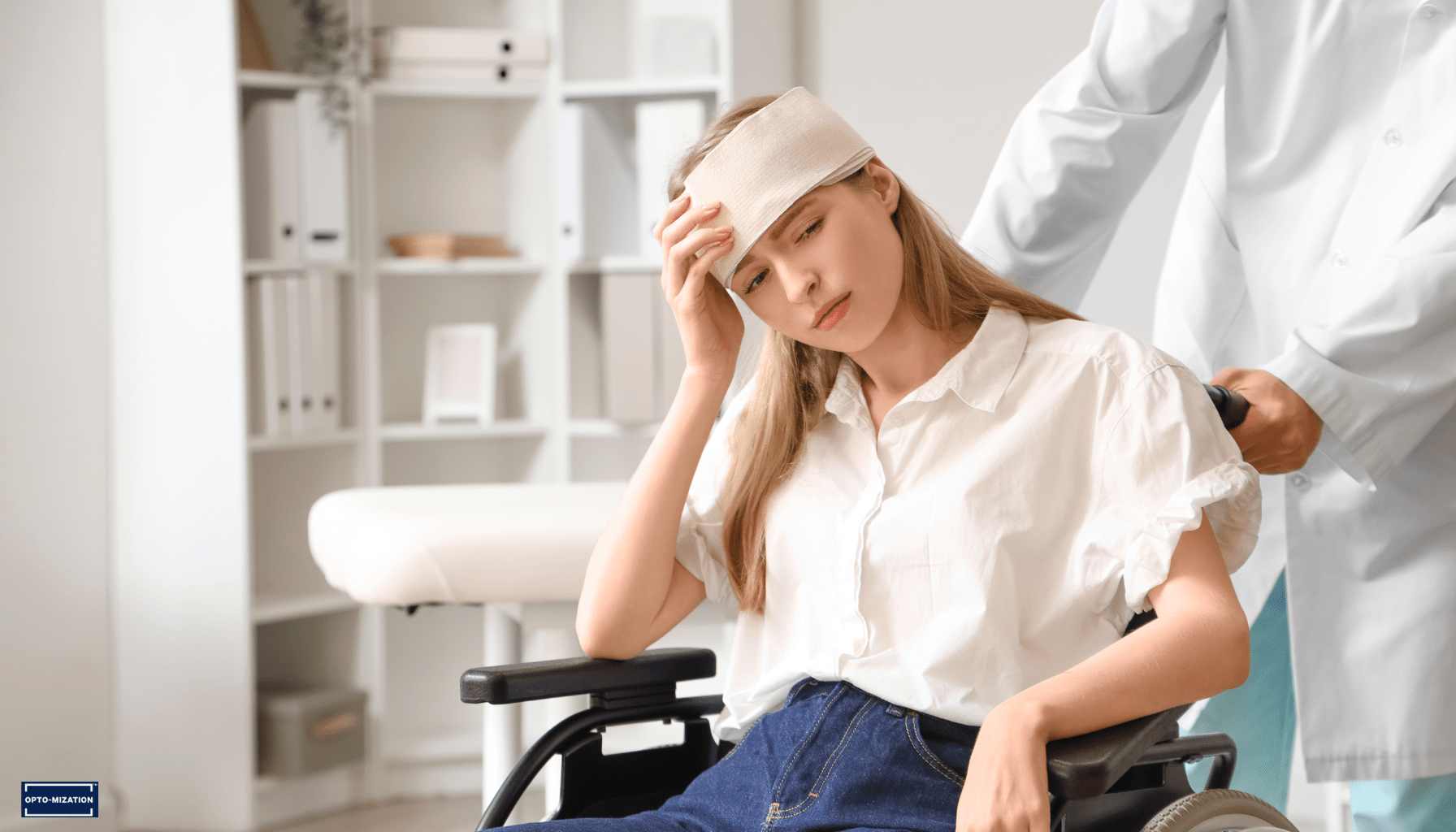
A concussion can change the way your brain processes visual information, even when imaging tests show everything is normal. Many people in Victoria experience lingering symptoms after a concussion that do not improve with rest alone. These include dizziness, blurred vision, headaches, difficulty reading, light sensitivity, and trouble focusing. Because more than half of the brain is involved in visual processing, even mild head injuries can disrupt the coordination between the eyes and the brain.
Neuro-optometric rehabilitation is a specialized form of care that helps restore visual comfort and performance after concussion. At Opto-Mization in Victoria, functional vision exams identify how the injury has affected visual skills, and personalized therapy programs help retrain the visual system for stability, clarity, and confidence. This guide explains why concussion-related vision problems occur, what symptoms to watch for, and how vision therapy supports recovery.
Why Concussions Affect Vision
Concussions disrupt communication between different parts of the brain. Since vision is integrated across many brain regions, injuries often affect visual skills even when the eyes themselves are healthy. Visual tasks such as tracking, focusing, and coordinating both eyes require precise communication between the visual cortex, brainstem, and vestibular system. After a concussion, these connections can become unstable.
Common disruptions include:
- Difficulty aligning the eyes for clear, comfortable vision
- Problems maintaining focus during near tasks
- Reduced ability to track moving objects
- Weakness in the connection between visual and balance systems
- Trouble processing visual information quickly
These challenges make everyday tasks feel difficult. Reading, working on screens, walking in busy environments, and driving may all trigger symptoms.
Book a Comprehensive Vision Exam for Concussion Recovery
If symptoms persist after a concussion, a comprehensive vision exam can identify visual disruptions and guide personalized neuro-optometric rehabilitation.
Signs Your Vision Has Been Affected by a Concussion
Many visual problems after a concussion are subtle. People often notice discomfort but do not realize it is caused by changes in visual coordination. Some symptoms appear immediately, while others develop slowly over weeks.
Common signs of post-concussion vision problems include:
- Headaches or pressure behind the eyes
- Blurred or double vision
- Difficulty shifting focus between distances
- Dizziness or imbalance
- Motion sensitivity
- Trouble reading or following lines of text
- Sensitivity to light or screen glare
- Fatigue during visual tasks
- Difficulty concentrating or maintaining attention
- Feeling overwhelmed in visually busy environments
These symptoms often indicate that the eyes and brain are no longer communicating efficiently. Our vision self test can help identify early warning signs that functional vision may be affected. A standard eye exam may not detect these disruptions, because visual clarity can remain unchanged even when visual function is impaired.
Why Standard Eye Exams Miss Post-Concussion Issues
Traditional eye exams evaluate clarity and prescription needs. While important, these tests do not measure the visual skills most affected by concussion. You may see the letter chart perfectly while still having difficulty reading a paragraph or maintaining balance while walking.
Concussion-related visual problems come from disruptions in:
- Eye teaming
- Tracking movements
- Focusing flexibility
- Visual processing
- Visual-vestibular stability
These abilities are not assessed in routine vision screenings. Only a functional vision exam can reveal how a concussion has affected the system that controls eye movements, focus, and integration with balance and cognitive function.
The Importance of a Functional Vision Exam in Victoria
A functional vision exam at Opto-Mization provides a detailed evaluation of visual performance. This type of exam focuses on how your eyes and brain work together, which is essential for concussion recovery.
During the assessment, the optometrist measures:
- Eye alignment and teaming ability
- Focusing stamina and flexibility
- Smooth and accurate tracking movements
- Depth perception and spatial judgment
- Integration between visual and balance systems
- Visual processing speed and comfort
These tests help identify the root cause of symptoms rather than simply describing them. Because functional vision testing is included in all of our comprehensive eye exams, the underlying visual inefficiencies can be accurately identified from the start. With this information, a personalized rehabilitation plan is developed to restore visual efficiency, comfort, and confidence in daily activities.
How Neuro-Optometric Rehabilitation Helps
Neuro-optometric rehabilitation is a structured program that retrains visual skills through guided activities. It strengthens the communication between the eyes and brain, helping you regain stability, focus, and comfort. Because every concussion affects the brain differently, therapy is personalized and based on your functional exam results.
Therapy may include:
- Activities to improve eye teaming and alignment
- Training to restore smooth tracking control
- Exercises to improve focusing endurance
- Integration work that connects vision and balance
- Visual processing activities for cognitive efficiency
- Use of lenses or prisms to stabilize the visual environment
These activities gradually rebuild the pathways that support comfortable, efficient vision.
How Vision Therapy Supports Everyday Recovery
Many daily activities rely on skills that can be weakened after a concussion. Vision therapy helps adults and teens return to tasks that once felt natural, such as:
Reading and Near Work
After a concussion, near tasks may cause discomfort because the eyes struggle to maintain alignment. Therapy strengthens the systems that support tracking, reading endurance, and comprehension.
Screen Use
Screens are especially challenging after a concussion. Vision therapy helps rebuild focus flexibility and visual stamina so you can tolerate digital tasks more comfortably.
Driving and Motion
Depth perception, awareness of motion, and spatial stability are often affected by concussion. Therapy improves these skills so patients feel safer and more confident when driving or walking in busy environments.
Balance and Coordination
The eyes and balance system work together. When this relationship is disrupted, everyday movements can feel unsteady. Neuro-optometric rehabilitation strengthens visual-vestibular integration to support smoother, more stable movement.
Schedule a Comprehensive Vision Exam in Victoria
A comprehensive vision exam evaluates how your eyes and brain work together and helps determine whether vision therapy can support your recovery.
Why Some Symptoms Persist Without Treatment
Rest is important after a concussion, but it does not retrain the visual system. Many people wait weeks or months for symptoms to improve, only to realize that the discomfort persists. This happens because the brain’s visual pathways need active rehabilitation to rebuild strong, coordinated function.
Without treatment, adults may continue to experience:
- Difficulty reading
- Ongoing headaches
- Motion sensitivity
- Reduced focus during work
- Emotional frustration from visual overload
- Anxiety in visually complex environments
Functional vision therapy addresses the root cause by improving how the brain processes visual information, giving patients the tools they need for long-term recovery.
Why Opto-Mization in Victoria Is a Strong Choice for Concussion Recovery
Opto-Mization provides specialized concussion care through functional vision exams and personalized therapy programs. Their approach focuses on restoring the visual skills essential for daily comfort and performance.
The clinic is recognized for:
- Detailed functional vision assessments
- Training in neuro-optometric rehabilitation
- Personalized therapy programs for adults and teens
- Support for balance, motion, and visual endurance
- Evidence-based treatment for post-concussion symptoms
- Clear communication with patients and families
By targeting the visual systems most affected by concussion, Opto-Mization helps patients rebuild confidence and return to daily activities comfortably.
What to Expect During Your Concussion Vision Assessment
Your appointment begins with a conversation about your symptoms, medical history, and the challenges you face in daily life. The optometrist then performs a detailed evaluation of your visual coordination, balance integration, and processing abilities. These measurements help identify the specific skills disrupted by the concussion.
After the assessment, the optometrist explains your results clearly and outlines a personalized therapy plan. This plan may include in-office sessions, home activities, and specific tools to support comfort during work, reading, and movement. Progress is monitored carefully to ensure steady improvement.
Book a Concussion Vision Assessment in Victoria
If you are experiencing lingering symptoms after a concussion, schedule a comprehensive vision exam at Opto-Mization in Victoria. Our team can identify how your visual system has been affected and create a personalized therapy plan to help you regain clarity, comfort, and confidence.