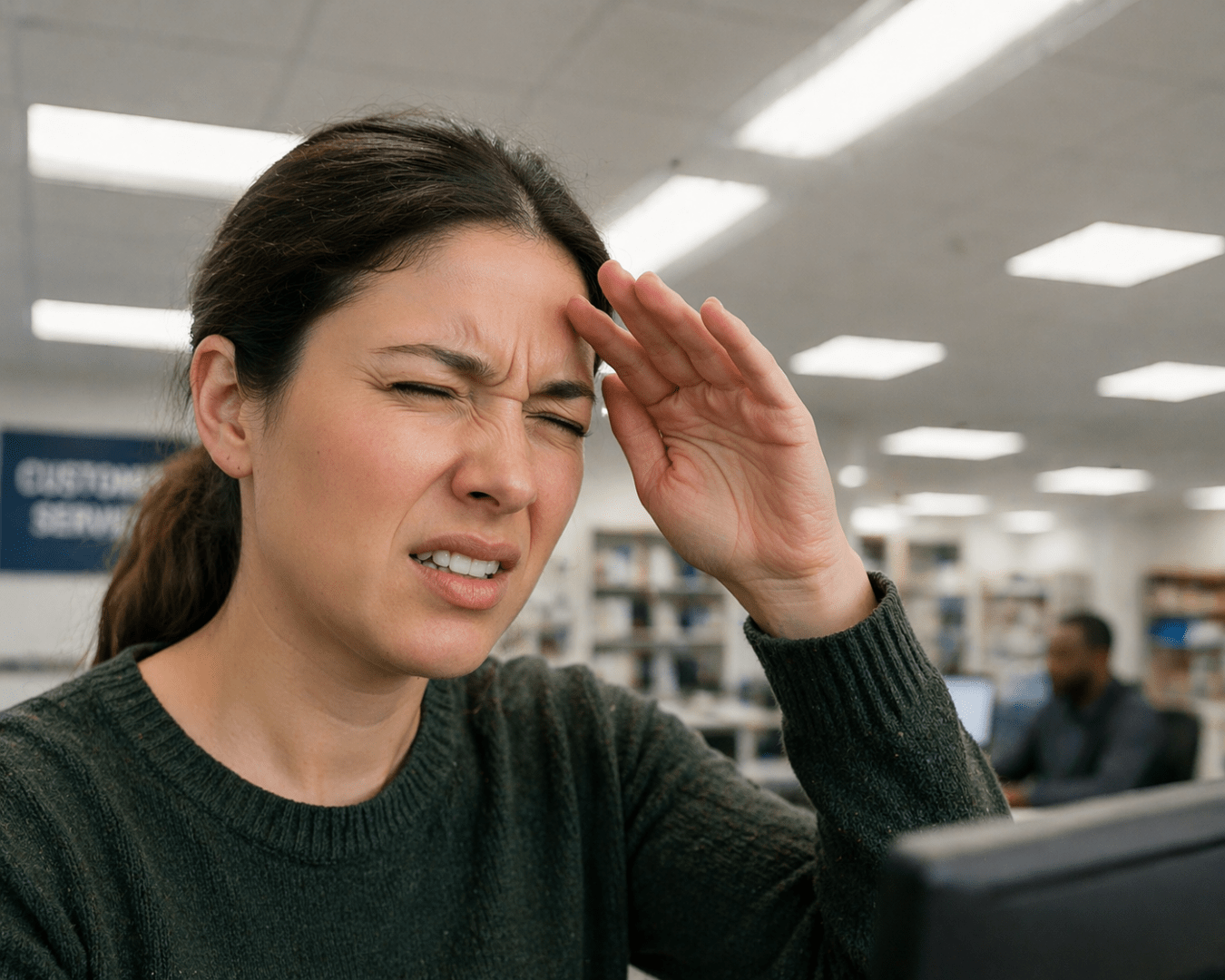
Light sensitivity, known medically as photophobia, occurs when the eyes react abnormally to light levels that most people find comfortable. It can stem from neurological conditions, eye disorders, migraines, medications, or even the way your visual system processes input. Understanding the underlying cause is the essential first step toward meaningful relief.
You walk into a grocery store and the fluorescent lights feel like they’re drilling into your eyes. Sunlight through a car window becomes almost unbearable. You find yourself squinting indoors, wearing sunglasses on cloudy days, and dreading screen time. If this sounds familiar, you’re not imagining it and you’re not alone. Light sensitivity is one of the most commonly reported visual complaints, yet it’s also one of the least understood.
Key Takeaways
- Light sensitivity (photophobia) is a symptom, not a diagnosis — the underlying cause determines the right treatment.
- Common triggers include migraines, dry eye disease, concussion, binocular vision dysfunction, and certain medications.
- Fluorescent and blue-spectrum light sources tend to provoke stronger reactions than warm or natural light.
- Tinted lenses, particularly FL-41 tints, are one of the most evidence-supported tools for managing tinted lenses.
- Persistent or worsening light sensitivity should always be evaluated by a professional, as it can signal serious underlying conditions.
- Behavioral and environmental adjustments can meaningfully reduce symptom burden while the root cause is being addressed.
What Is Light Sensitivity and Why Does It Happen?
Photophobia literally means “fear of light,” but the experience is less about fear and more about pain. The eyes — and more specifically the brain’s processing of visual signals — react to light input in a way that generates genuine discomfort, headaches, or even nausea.
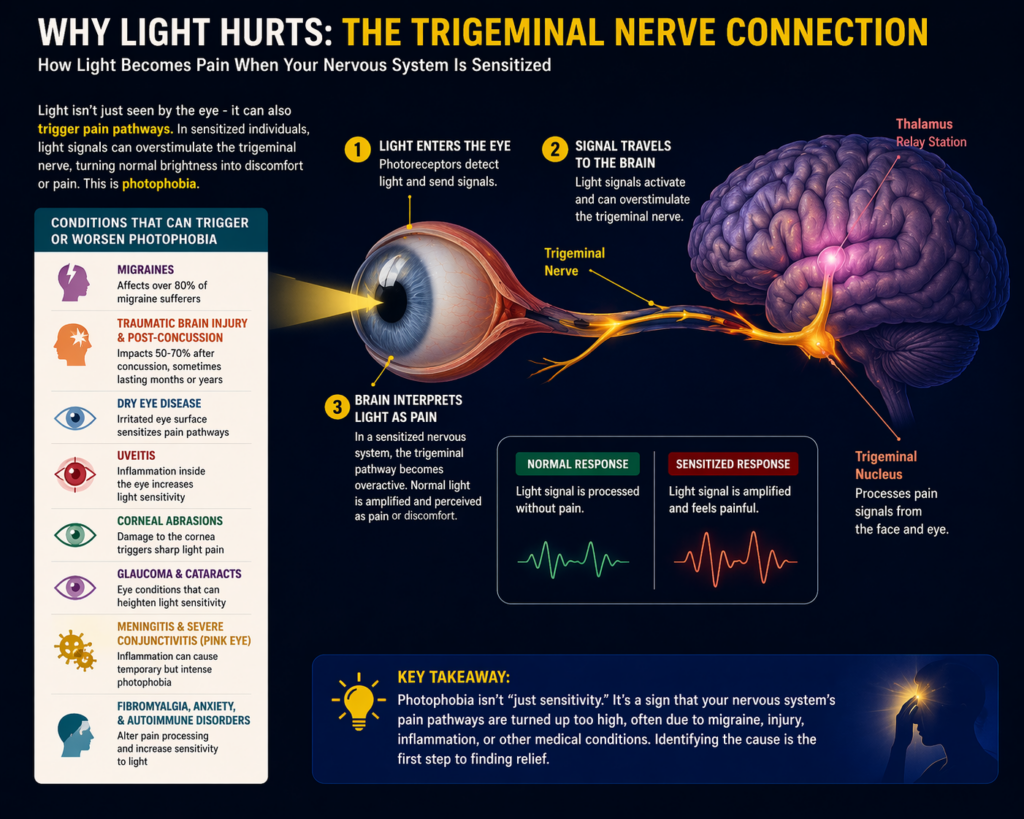
The mechanism behind this involves a pathway in the eye called the intrinsically photosensitive retinal ganglion cells (ipRGCs). These cells detect light intensity and connect directly to pain-processing areas of the brain via the trigeminal nerve. When this pathway is sensitized or disrupted, ordinary light levels register as threatening, and the brain responds accordingly with discomfort or pain signals.
It’s worth understanding that photophobia is rarely a standalone condition. It almost always appears as a symptom of something else going on in the visual system or nervous system, which is why identifying the underlying trigger matters far more than simply reaching for darker sunglasses.
What Conditions Commonly Cause Light Sensitivity?
Migraines are the most commonly recognized condition associated with photophobia, with over 80% of sufferers experiencing light sensitivity during an attack. However, many individuals with migraines also have binocular vision dysfunction (BVD), which can act as a trigger for both the migraine itself and the associated visual sensitivities. In these cases, photophobia may not just be a symptom of the migraine, but a response to underlying visual strain that contributes to the onset of an attack.
Beyond migraines, the list of conditions that can cause or worsen light sensitivity is broad. These include dry eye disease, traumatic brain injury and post-concussion syndrome, uveitis (inflammation inside the eye), corneal abrasions, glaucoma, cataracts, and meningitis. Even a severe case of pink eye (conjunctivitis) can cause temporary but significant photophobia.
Post-concussion photophobia is a particularly underdiagnosed problem. Studies indicate that light sensitivity affects between 50 and 70 percent of individuals following a concussion, and in some cases it persists for months or years after the initial injury. This prolonged sensitivity is now understood to reflect changes in how the brain regulates its own pain and sensory processing systems.
Neurological conditions including fibromyalgia, anxiety disorders, and even certain autoimmune diseases have also been linked to heightened light sensitivity, pointing to how broadly the nervous system influences our visual experience.
Does Eye Color Play a Role in How Sensitive Your Eyes Are?
Eye color does influence baseline light sensitivity. People with lighter irises (blue, green, or grey eyes) have less pigment in their iris and therefore less natural light-filtering capacity compared to those with brown or dark eyes. Research has found that lighter-eyed individuals report higher rates of light sensitivity and are more prone to discomfort in bright outdoor environments, particularly in high-glare settings like snow or open water.
This doesn’t mean that dark-eyed individuals are immune to photophobia. When a medical condition or neurological trigger is present, eye color provides very little protection. The underlying pathway overrides any natural filtering the iris provides.
Why Do Screens and Fluorescent Lights Feel Worse Than Other Light Sources?
Not all light is equal in how it interacts with the human visual system. The type of light, its flicker rate, and its spectral composition all influence how the eyes and brain respond.
| Light Source | Why It Can Trigger Sensitivity | Severity of Trigger |
| Fluorescent lighting | High-frequency flicker, strong blue-spectrum output | High |
| LED screens (phones, computers) | Blue light concentration, proximity, sustained exposure | High |
| Bright sunlight | Intensity and glare, especially with reflective surfaces | High |
| Incandescent / warm bulbs | Lower blue content, no significant flicker | Low to Moderate |
| Candle or firelight | Warm spectrum, very low intensity | Very Low |
Fluorescent lights are particularly problematic because they flicker at a rate that, while imperceptible to most people, is detected by the visual system and can create constant low-level neural strain. For someone whose photophobia stems from binocular vision dysfunction or post-concussion sensitivity, this flicker compounds the underlying problem significantly.
Digital screens deliver a concentrated dose of short-wavelength blue light directly at close range. When combined with reduced blink rates during screen use and the sustained demand on eye teaming to maintain focus on a flat digital surface, screen exposure can become one of the most disruptive daily triggers for photophobic individuals.
How to Manage Light Sensitivity: A Step-by-Step Approach
- Identify and document your triggers. Keep a simple log noting when photophobia flares up, what light source was involved, and what else was happening (hydration, sleep, screen time). Patterns often emerge within two weeks that point toward a specific cause.
- Get a comprehensive eye and visual function exam. Before trying remedies, rule out or identify any structural eye problems, refractive errors, or visual processing issues. Dry eye, uncorrected prescriptions, and visual misalignment are all treatable causes of binocular dysfunction.
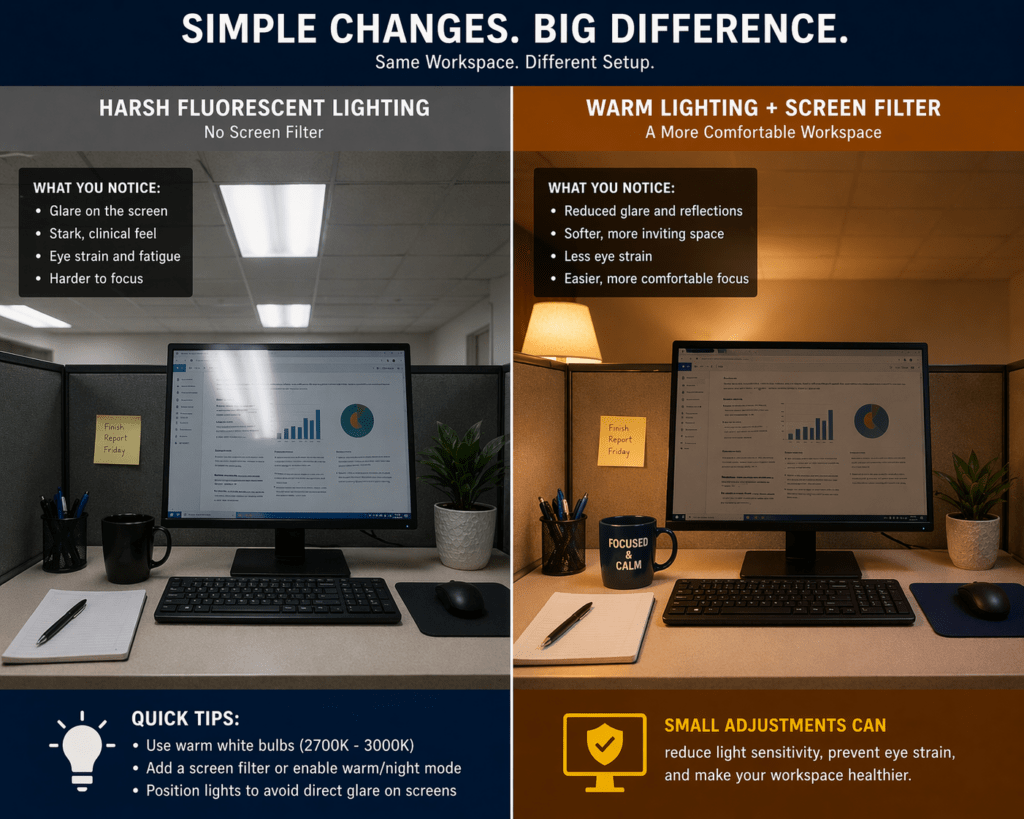
- Adjust your environment strategically. Replace fluorescent bulbs with warm LED alternatives (2700–3000K color temperature). Add glare filters to screens. Use blackout curtains in sleep and work areas where overhead lighting is harsh.
- Consider tinted lenses or specialty eyewear. FL-41 tinted lenses are specifically designed to filter the wavelengths most associated with migraine and photophobia. They can be prescribed in standard glasses or as clip-ons. Discuss with your eye care provider which tint suits your specific sensitivity profile.
- Address the root cause with a specialist. If sensitivity is linked to migraines, neurological factors, or visual alignment issues, targeted treatment delivers results that environmental adjustments alone cannot. A vision therapy program or medical management of the underlying condition often produces the most lasting improvement.
- Avoid overusing dark sunglasses indoors. While counterintuitive, wearing very dark lenses indoors can actually make photophobia worse over time by dark-adapting the visual system, causing eyes to become even more reactive to normal light levels when the sunglasses come off.
Common Mistakes People Make When Dealing With Light Sensitivity
- Treating only the symptom, not the cause. Reaching for sunglasses or dimming every screen addresses discomfort in the moment but doesn’t resolve why the sensitivity exists. Without addressing the underlying trigger, symptoms tend to persist or worsen.
- Assuming it will resolve on its own. Light sensitivity following a concussion, uveitis, or an unmanaged dry eye condition won’t typically self-resolve. Delaying care can allow the problem to become entrenched or more complicated to treat.
- Choosing the wrong lens tint. Not all tinted lenses are appropriate for photophobia. Grey or dark brown tints reduce overall brightness but don’t specifically target the high-energy wavelengths that drive the worst sensitivity responses. Specialty tints like FL-41 are designed with the neuroscience of photophobia in mind.
- Ignoring the link between posture and vision. Many patients are surprised to learn that neck tension, spinal alignment, and even jaw clenching can contribute to visual discomfort. If you sit with your head forward at a screen all day, it places strain on the visual system that amplifies sensitivity.
- Over-relying on screen dimming alone. Reducing brightness helps, but the blue light spectrum remains problematic even at low display brightness settings. Blue-light filtering modes or physical screen filters provide more targeted protection.
The Connection Between Visual Processing and Photophobia
One underappreciated cause of light sensitivity involves how the brain integrates visual information, not just how the eyes receive it. When there’s a disruption in how the two eyes work together or how the brain processes depth, contrast, or motion, the visual system can go into a kind of low-level chronic overload.
Research into binocular vision disorders has found that patients with convergence insufficiency and other eye teaming problems frequently report photophobia as a secondary symptom, even when their basic eye health is otherwise normal. The extra neural effort required to maintain stable single vision creates a kind of system-wide strain that lowers the threshold for light-triggered discomfort.
This is why a standard eye exam, while important, sometimes misses the root cause of photophobia. A functional vision assessment that evaluates how both eyes coordinate, track, and sustain focus under load provides a more complete picture. Some practitioners also examine whether presbyopia eye drops or pupil-related factors are contributing to sensitivity, particularly in patients over 40 who are experiencing age-related changes in their near vision.
| Type of Photophobia | Likely Cause | Recommended Assessment |
| Sensitivity during or before headaches | Migraine or tension headache | Neurological + eye exam |
| Sensitivity after head injury | Post-concussion syndrome | Functional vision + neuro exam |
| Sensitivity with dry, gritty eyes | Dry eye disease | Ocular surface + tear film exam |
| Sensitivity with eye redness or pain | Uveitis, corneal issue, glaucoma | Urgent eye exam |
| Sensitivity with reading difficulty or eye strain | Binocular vision dysfunction | Functional vision assessment |
Frequently Asked Questions
What are the most common causes of light sensitivity?
The most common causes include migraines, dry eye disease, concussion or traumatic brain injury, eye inflammation (uveitis), and binocular vision dysfunction. In many cases, more than one factor is present simultaneously. A thorough eye and vision evaluation is the most reliable way to identify which cause is driving the symptoms.
Why do my eyes feel sensitive, specifically to screens or fluorescent lights?
Screens and fluorescent lighting emit a higher concentration of short-wavelength blue light compared to warm incandescent or natural daylight sources. Fluorescent lights also produce a subtle flicker that, while not consciously noticed, creates additional neural load. Both characteristics make them disproportionately triggering for people whose visual or nervous systems are already sensitized. Blue-light filters and warmer lighting alternatives can reduce the impact meaningfully.
Can medications or eye color affect light sensitivity?
Yes to both. Several medications cause pupil dilation as a side effect, which increases the amount of light entering the eye and intensifies sensitivity. These include certain antihistamines, antidepressants, and bladder medications. Eye color also plays a role, as lighter irises contain less pigment to naturally filter incoming light, making blue- and green-eyed individuals more baseline-sensitive to bright conditions.
When should I see a doctor for light sensitivity?
You should seek prompt evaluation if light sensitivity comes on suddenly, is accompanied by eye redness or pain, follows a head injury, or is paired with fever and neck stiffness (which can indicate meningitis). Gradual or chronic photophobia that interferes with daily activities also warrants professional assessment, even without acute symptoms. Persistent sensitivity that doesn’t improve with basic accommodations is unlikely to resolve without identifying and treating the underlying cause.
How can I manage or treat light sensitivity?
Management depends on the underlying cause, but practical strategies include switching to warm-toned lighting at home and work, using blue-light screen filters, and wearing FL-41 tinted lenses when exposed to bright or triggering environments. For individuals with underlying binocular vision dysfunction (BVD), treatment may also involve specialized prism glasses prescribed by an eye care professional, which help reduce visual strain and can significantly improve light sensitivity and related symptoms.
Conclusion: Light Sensitivity Deserves More Than a Darker Pair of Sunglasses
Photophobia is one of those symptoms that’s easy to accommodate around without ever actually solving. You close the blinds, turn down the screen, and carry sunglasses everywhere. But when light sensitivity is affecting your ability to work, drive, or simply move through the world comfortably, it’s signaling that something in your visual system needs attention.
The good news is that when the underlying cause is properly identified, most forms of light sensitivity respond well to treatment. Whether it’s managing dry eye disease, correcting a binocular vision problem, recovering from a concussion, or addressing migraine triggers, there are real, evidence-based paths to relief beyond just shielding your eyes.
If you or someone in your family is dealing with persistent light sensitivity, the team at Opto-Mization specializes in functional vision assessments that go beyond the standard eye exam. They also guide patients through simple screening tools—such as using pattern glare as a self-test—to help identify signs of binocular vision dysfunction (BVD) that may be contributing to symptoms. With a thorough understanding of how the visual system processes light and how systemic factors play a role in photophobia, Opto-Mization helps patients find answers and build effective, lasting treatment plans.
Reach out today to book a comprehensive evaluation: +1 778-608-5982. You deserve to be comfortable in the light.