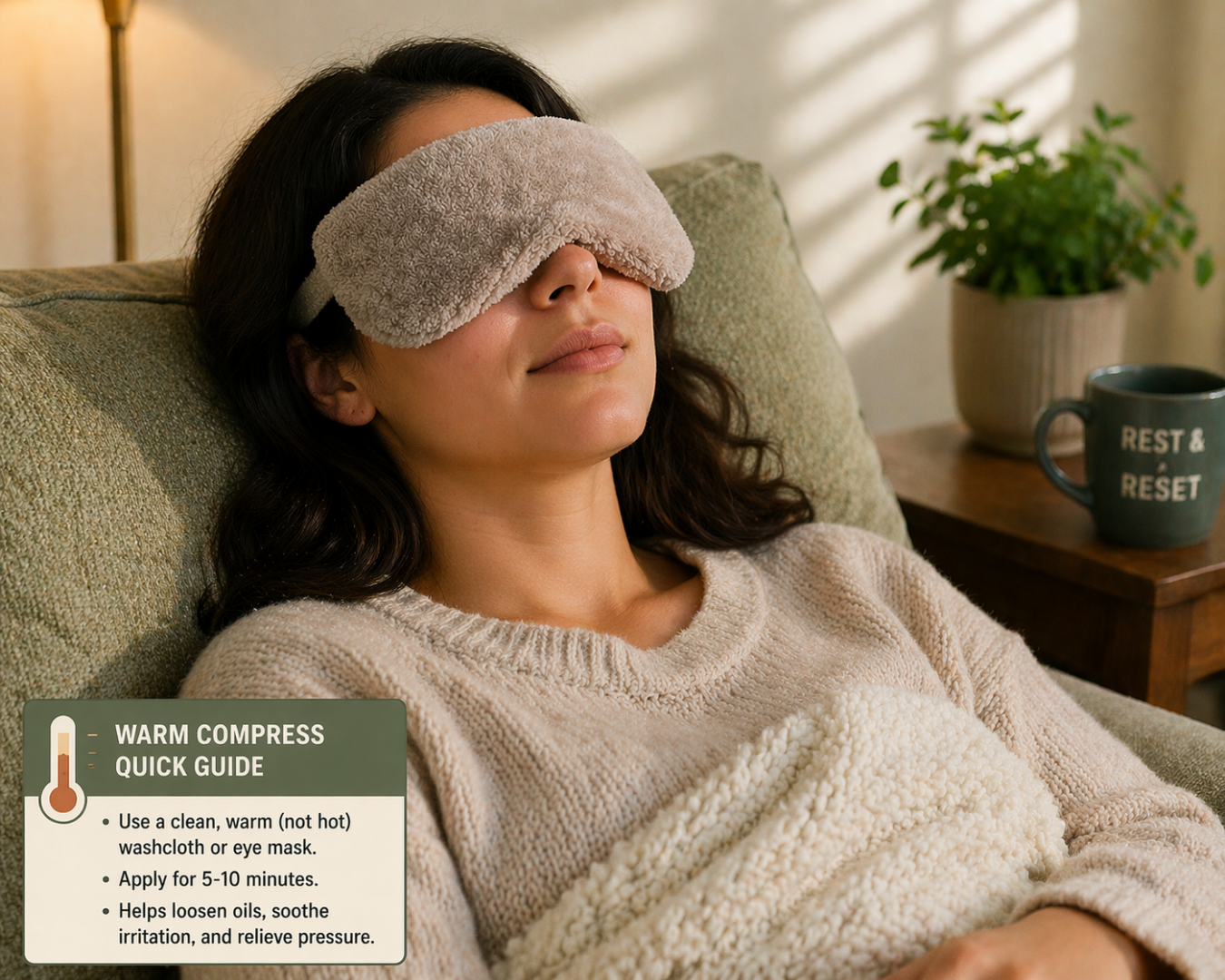
Pressure behind the eyes is most commonly caused by sinus congestion, tension headaches, digital eye strain, or increased eye pressure from conditions like glaucoma. While many cases are mild and manageable at home, persistent or worsening pressure warrants a professional eye exam to rule out serious underlying conditions affecting your vision or overall health.
That deep, dull ache sitting just behind your eyes is hard to ignore. It can show up after a long day at a screen, during allergy season, or seemingly out of nowhere. The sensation ranges from a vague heaviness to a throbbing pressure that makes it difficult to concentrate. Understanding what’s driving it is the first step to finding real relief.
Key Takeaways
- Sinus pressure, tension headaches, and eye strain are among the most frequent culprits behind this discomfort.
- Conditions like glaucoma or optic neuritis can also cause eye pressure and require prompt professional evaluation.
- Digital eye strain from prolonged screen use is a growing contributor, especially in adults who work long hours on computers.
- Home remedies like rest, warm compresses, and hydration often relieve mild cases tied to fatigue or congestion.
- Sudden, severe pressure behind one or both eyes is a red flag that needs immediate medical attention.
- A comprehensive eye exam can identify vision-related causes, including binocular vision dysfunction, that standard checkups often miss.
What Actually Causes That Pressure Feeling?
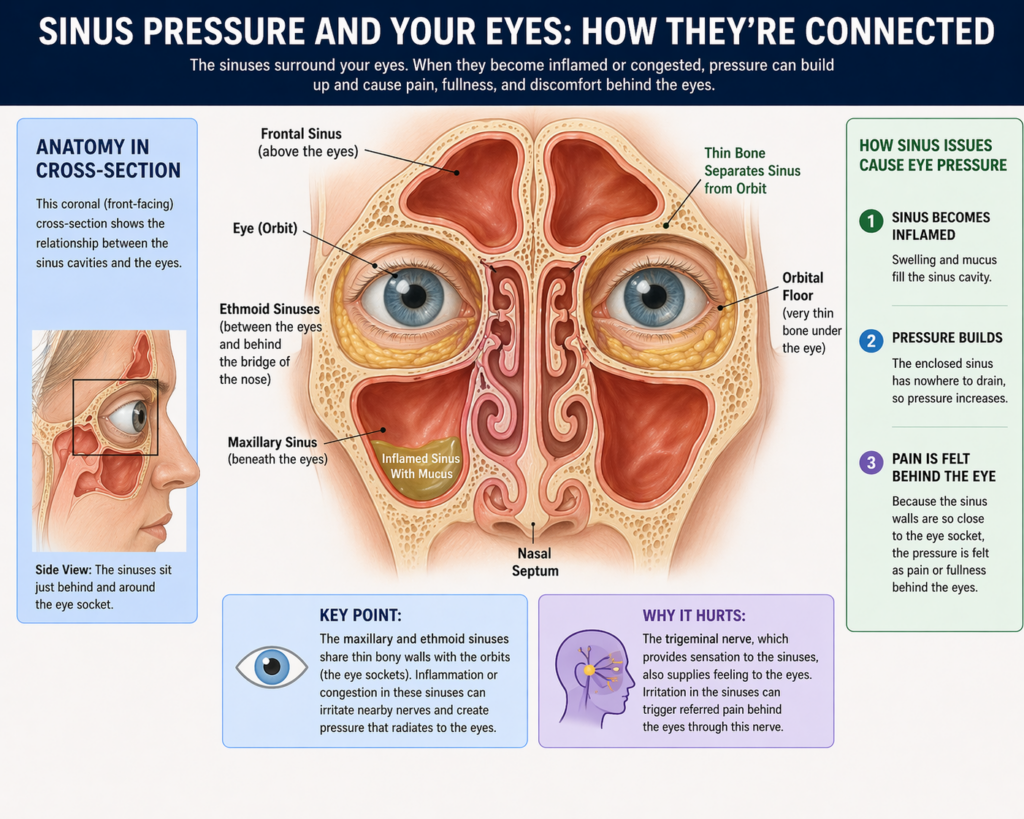
The sensation of pressure behind the eyes doesn’t always originate from the eyes themselves. Nerves, sinuses, and muscles in the surrounding area all share close anatomical real estate, so inflammation or tension in one zone can radiate into others. That’s what makes this symptom both common and sometimes confusing to pin down.
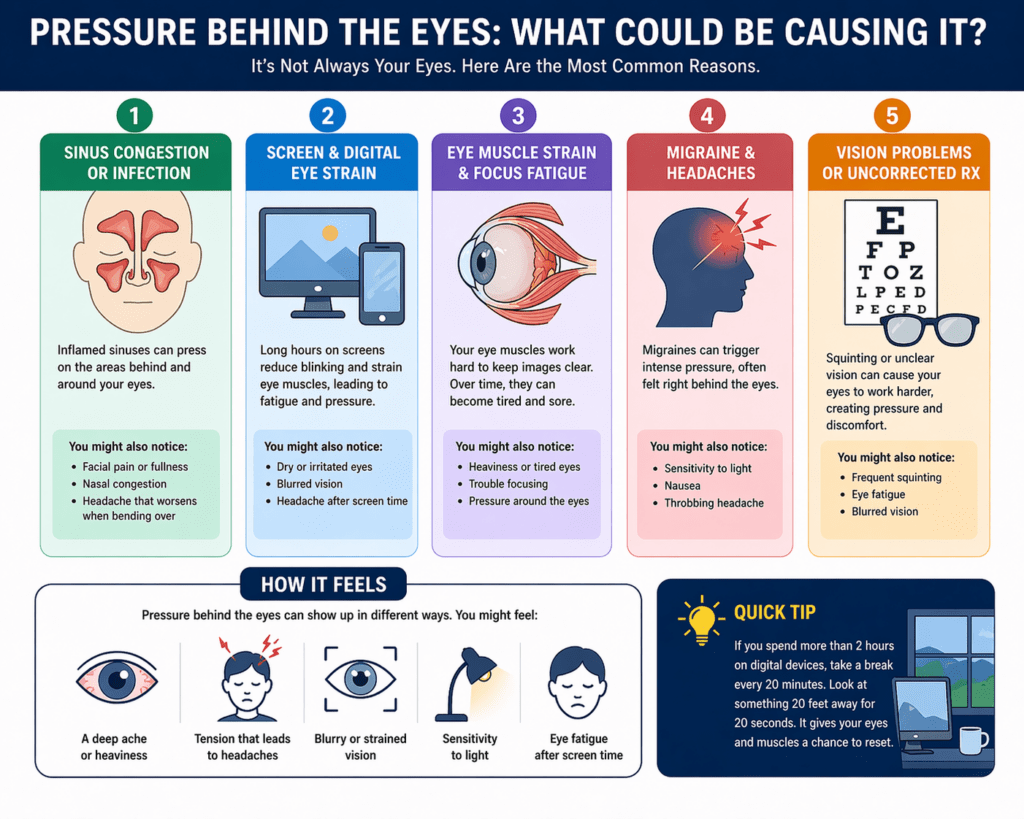
The most important distinction to make early is whether the pressure is bilateral (both eyes) or unilateral (one eye). Bilateral pressure tends to point toward systemic causes like sinus infections or tension headaches. Pressure isolated to one eye more often signals a localized concern, including elevated intraocular pressure.
Sinus Congestion and Infection
Your sinuses sit directly above, below, and around your eye sockets. When they become inflamed due to allergies, a cold, or a bacterial infection, the resulting swelling creates physical pressure that pushes against the tissues surrounding the eye. The pain often intensifies when you bend forward or lie down.
Acute sinusitis affects roughly 31 million people in North America each year, and facial pain or pressure around the eyes is one of its most reported symptoms alongside nasal congestion and reduced sense of smell.
Tension Headaches and Muscle Strain
Tension headaches are the most common headache type in adults, and they frequently produce a squeezing or pressing sensation that concentrates around the forehead and behind the eyes. The pain usually builds gradually and doesn’t throb the way a migraine does. Poor posture, jaw clenching, and prolonged screen use are common triggers.
There’s also a direct connection between neck and shoulder tension and visual discomfort. Tight muscles in the cervical region can alter how the eyes coordinate with each other, a relationship explored in depth through research into visual alignment and its full-body effects.
Digital Eye Strain
Studies estimate that over 60% of adults who regularly use digital devices for more than two hours daily experience symptoms of computer vision syndrome, which includes eye pressure, blurred vision, and headaches.
When you stare at a screen, your blink rate drops significantly and your eye muscles work harder to maintain focus. Over hours, this sustained effort creates fatigue that feels exactly like pressure or heaviness sitting behind the eyes. It’s a muscular and neurological response to sustained near-point stress.
Is It Ever a Vision Problem Causing the Pressure?
Yes, and this is where many people are surprised. Visual processing inefficiencies can generate real physical discomfort. When the eyes struggle to work together seamlessly, the brain and surrounding eye muscles compensate by working overtime, which produces fatigue and pressure that builds throughout the day.
Conditions like binocular vision dysfunction fall into this category. When the two eyes aren’t perfectly aligned in how they aim and focus together, the brain receives conflicting signals and must constantly suppress or override one of them. The strain from that ongoing effort can produce chronic headaches and pressure that conventional eye exams don’t always catch.
Uncorrected refractive errors, including astigmatism, farsightedness, and in older adults, the lens stiffening associated with presbyopia, also force the eye muscles to work harder than they should. If you’re noticing the pressure worsens while reading or doing close work, a vision-related cause is worth exploring seriously.
When Pressure Behind the Eyes Is a Medical Warning Sign
Some causes of eye pressure are genuinely urgent. Knowing the difference between “I need rest” and “I need a doctor today” is important.
| Condition | Key Symptoms | Urgency Level |
| Acute Angle-Closure Glaucoma | Sudden severe pressure, halos around lights, nausea | Emergency |
| Optic Neuritis | Pain with eye movement, vision loss in one eye | Urgent — Same Day |
| Open-Angle Glaucoma | Gradual pressure, peripheral vision loss over time | See Eye Doctor Soon |
| Sinusitis | Bilateral pressure, congestion, facial tenderness | Non-Urgent / GP |
| Digital Eye Strain | Pressure after screen use, dry eyes, blurred vision | Manage at Home |
| Tension Headache | Band-like pressure, both eyes, stress-related | Manage at Home |
Glaucoma is a leading cause of irreversible blindness globally, affecting an estimated 80 million people worldwide. Because open-angle glaucoma progresses slowly and painlessly in its early stages, many patients don’t notice vision loss until significant optic nerve damage has already occurred.
How to Relieve Pressure Behind Your Eyes at Home
When the cause is fatigue, mild eye strain, or sinus congestion, there are practical steps you can take to reduce the discomfort before it becomes your whole day.
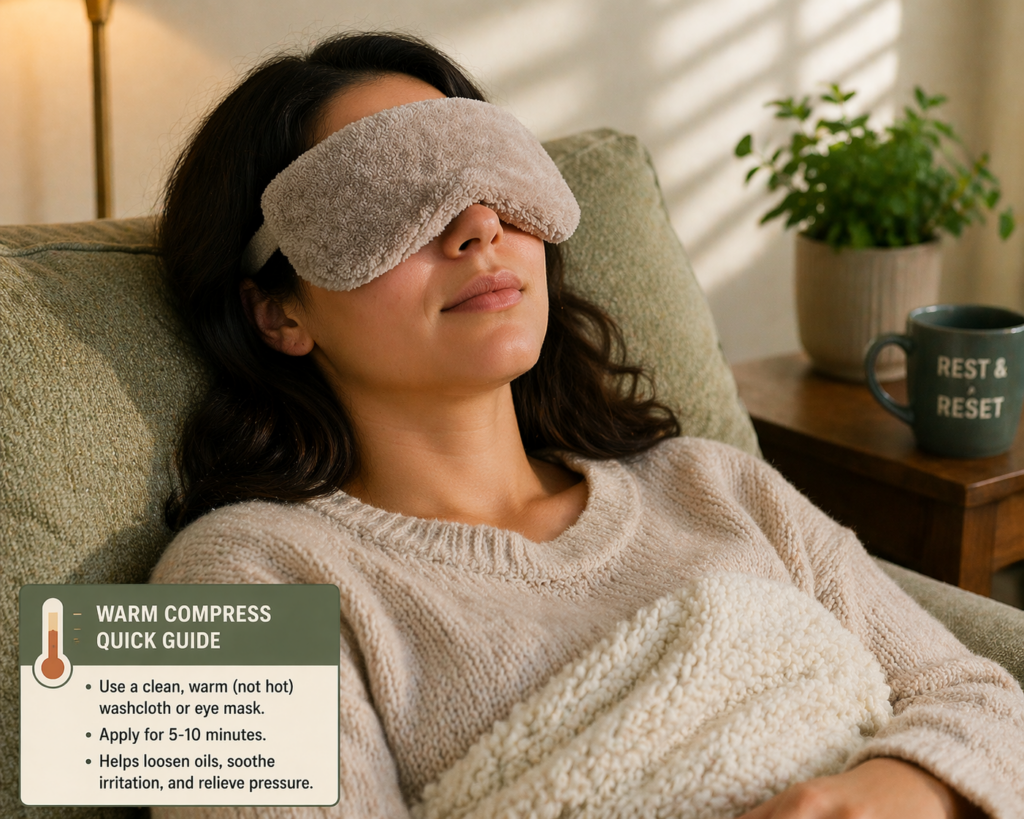
- Apply a warm compress: A warm, damp cloth placed over closed eyes for 10 minutes helps relax the muscles around the eye socket and can relieve pressure linked to both dry eyes and sinus tension. The gentle heat encourages blood flow and eases inflammation in the surrounding tissue.
- Follow the 20-20-20 rule: Every 20 minutes of screen time, look at something 20 feet away for 20 seconds. This resets the focus system, gives the ciliary muscles a break, and significantly reduces strain buildup over a long workday.
- Stay hydrated: Dehydration thickens mucus secretions and can worsen sinus congestion. Drinking adequate water throughout the day supports both sinus drainage and the tear film that keeps your eyes comfortable.
- Adjust your screen setup: Position your monitor about an arm’s length away and slightly below eye level. Reducing screen brightness to match your environment and using a blue light filter in the evening also takes meaningful pressure off your visual system.
- Try a nasal saline rinse: If congestion is the primary driver, a saline rinse can help flush out allergens and reduce sinus inflammation without the side effects of decongestant medications. Relief often comes within minutes for congestion-related eye pressure.
- Rest in a dark, quiet room: For tension headaches and migraines, reducing sensory input lets your nervous system reset. Even 20 to 30 minutes lying down with eyes closed can interrupt a pressure cycle before it peaks.
- Use specialty prism glasses to reduce BVD symptoms and eye strain.
What Are the Common Mistakes People Make?
- Assuming it will pass on its own: Mild eye pressure often does resolve, but recurring or escalating pressure that you’ve dismissed for weeks deserves a proper evaluation. Glaucoma, in particular, progresses silently.
- Only checking distance vision: Many standard vision screenings test how well you see far away, but miss near-point strain, convergence insufficiency, or eye teaming problems that are directly linked to chronic eye pressure and headaches.
- Over-relying on pain medication: Frequent use of over-the-counter pain relievers for eye pressure headaches can actually cause rebound headaches, creating a cycle that worsens the problem rather than solving the root cause.
- Ignoring posture as a factor: Most people don’t connect their neck and shoulder tension to eye discomfort, but poor ergonomics can contribute to muscle strain and visual stress that create pressure around the eyes. In addition, improper eyewear use—such as wearing progressive lenses for extended periods, especially during screen work—can force unnatural head and eye positioning, further increasing strain and discomfort.
- Assuming glasses eliminate the problem: Even people with corrected vision can experience eye strain if their prescription isn’t precisely tuned, if they have underlying binocular vision dysfunction, or if their lenses aren’t optimized for tasks like screen work. That’s why it’s not just about getting annual exams—it’s about having comprehensive evaluations that include functional vision testing and specialized prescriptions. Glasses should be carefully fine-tuned to the individual’s visual demands and how their eyes work together.
Research into convergence insufficiency suggests that it affects approximately 5% of the population and is frequently misdiagnosed or overlooked in routine eye exams, contributing to unexplained headaches, reading difficulties, and sustained eye pressure in children and adults alike.
How a Specialist Evaluates Pressure Behind the Eyes
When home management isn’t resolving the issue, a functional eye exam goes well beyond reading the letters on a chart. A thorough assessment measures intraocular pressure, evaluates the optic nerve, tests binocular coordination, and checks how the eyes perform under the sustained demands of reading and near work.
| Test or Assessment | What It Detects |
| Tonometry (IOP Test) | Intraocular pressure / glaucoma screening |
| Optic Nerve Imaging | Damage patterns consistent with glaucoma or optic neuritis |
| Cover Test / Prism Assessment | Eye alignment and binocular coordination |
| Near Point of Convergence | Convergence insufficiency and eye teaming weakness |
| Refraction + Prescription Review | Uncorrected or poorly corrected refractive errors |
For patients in midlife and beyond, lens changes related to age can also be a factor. Understanding newer options for managing these changes, including exploring whether presbyopia eye drops are appropriate, is increasingly part of modern vision care discussions.
Frequently Asked Questions
What are the most common causes of pressure behind the eyes?
The most common causes include sinus congestion (from colds, allergies, or sinusitis), tension headaches, digital eye strain from prolonged screen use, and increased intraocular pressure. Less frequently, conditions like optic neuritis, migraines, or binocular vision dysfunction are responsible. Because several of these causes can overlap, identifying which one is driving your symptoms sometimes requires a professional evaluation rather than guesswork.
How can I relieve pressure behind my eyes at home?
Warm compresses, rest in a dark room, practicing the 20-20-20 rule during screen use, and staying well hydrated are effective first-line approaches. Saline nasal rinses can help significantly when sinus congestion is the trigger. If the pressure follows a pattern tied to screen time, adjusting monitor height, distance, and brightness while taking regular breaks will address the root cause more effectively than symptomatic relief alone.
When should I see a doctor for this pressure?
Seek same-day or emergency care if the pressure comes on suddenly and severely, especially if accompanied by vision changes, halos around lights, nausea, or pain with eye movement. For pressure that’s recurring, building over time, or paired with gradual vision changes, schedule a comprehensive eye exam promptly rather than waiting. Any pressure isolated to one eye that doesn’t improve within a day or two is also worth evaluating.
Can allergies or a cold cause this feeling?
Absolutely. Both allergies and the common cold cause nasal and sinus inflammation that directly generates pressure around the eye socket. The ethmoid and maxillary sinuses sit in particularly close proximity to the orbital area, so swelling there translates quickly into that heavy, pressured feeling behind and around the eyes. Antihistamines, decongestants, or saline rinses typically reduce this type of pressure as the congestion clears.
Is pressure behind the eyes a sign of something serious?
Most of the time, no. The majority of cases are caused by benign, manageable conditions like eye strain, sinusitis, or tension headaches. However, persistent or worsening pressure, particularly when it’s unilateral or accompanied by visual disturbance, can indicate elevated intraocular pressure or optic nerve issues that require prompt attention. The key is not dismissing chronic or escalating symptoms simply because they’ve been present for a while without resolving.
Take the Pressure Seriously
That persistent weight behind your eyes is your body signaling that something needs attention. Whether it’s the strain of long screen days, a visual processing issue your last eye exam didn’t catch, or the early sign of elevated eye pressure, getting a thorough evaluation gives you real answers instead of months of guessing.
At Opto-Mization, our team specializes in comprehensive vision assessments that go deeper than standard screenings, identifying causes of eye pressure, headaches, and visual fatigue that are often overlooked. If you’ve been living with recurring pressure behind your eyes, you don’t have to keep managing it alone. Call us at +1 778-608-5982 to book your assessment and find out what’s actually driving your symptoms.