Victoria +1 778-608-5982
Nanaimo +1 (778) 718-2483

Vision Care Insights: Explore Our Optometry Blog at Opto-Mization

Keep up to date on the latest vision-related news and vision therapy studies at Opto-mization.
Opto-Mization optometry clinic exterior at 775 Topaz Ave, featuring large signage and a welcoming entrance.

Latest Insights and Articles on Vision Care and Eye Health

Driving and Vision: What Functional Eye Exams Reveal Beyond the Chart

September 1, 2025

Driving and Vision: What Functional Eye Exams Reveal Beyond the Chart

Whether you are navigating Victoria’s busy streets during rush hour, heading north on the Island Highway from Nanaimo, or setting…
Vision Care
Learning
Read More
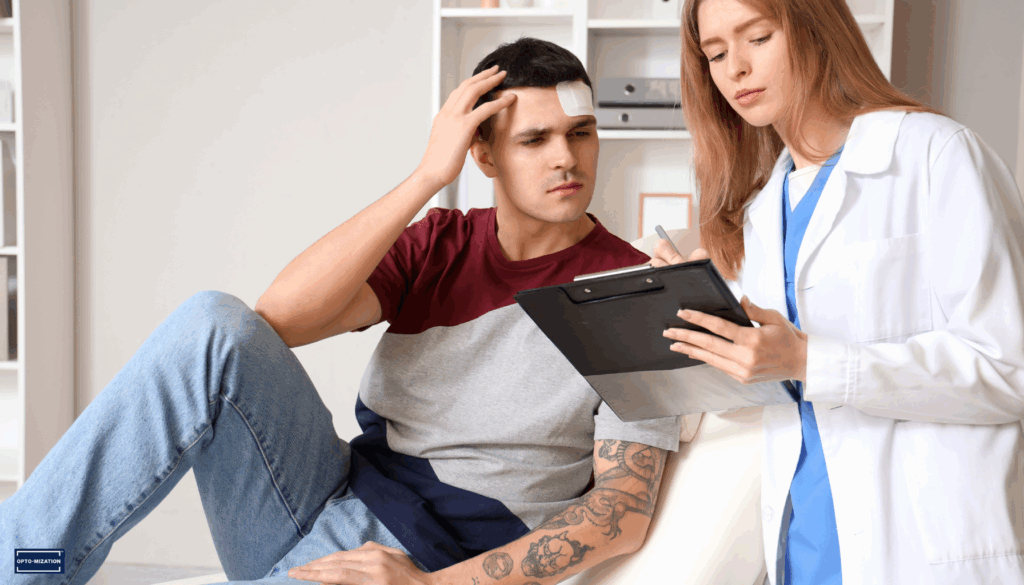
Concussions are among the most common types of brain injury, and yet their full impact is often underestimated. When most people think of a concussion, the first symptoms that come to mind are headache, dizziness, or temporary confusion. While these are indeed typical signs, research shows that a very high percentage of concussion patients also experience vision problems. These visual challenges can begin right away, or they can appear gradually in the weeks and months that follow. At Opto-Mization, with clinics located in both Victoria and Nanaimo, we work every day with patients across Vancouver Island who are living with lingering symptoms after a head injury. Many of these individuals have already been told that their eyes are healthy or that they have twenty-twenty vision. Yet they continue to struggle with blurry or double vision, fatigue when reading, or sensitivity to light. The reason for this is that concussions do not simply affect the eyes themselves. Instead, they disrupt the way the eyes and the brain work together as a single system. Understanding this vital connection is the first step toward a proper recovery. With the right assessment and treatment, patients can regain clarity, comfort, and confidence in their vision. How a Concussion Changes the Visual System A concussion occurs when a sudden force or blow causes the brain to move within the skull. This movement can stretch delicate cranial nerves, disturb blood flow, and interrupt communication between different parts of the brain. Because vision is not located in one single place in the brain but relies on many regions working in harmony, even a mild concussion can cause a significant disruption. The result is often referred to as post trauma vision syndrome. This condition can lead to a wide variety of symptoms that affect day to day life, such as: Blurred or double vision Headaches/Migraines Dizziness/Balance PRoblems Sensitivity to light or bright environments Screen Sensitivity Reduced depth perception, which makes judging distance more difficult Losing place when reading or tracking text on a page Difficulty with peripheral vision A sense that the eyes are not aligned or not working together These symptoms can be debilitating. Reading may become tiring within minutes, driving can feel unsafe, and workplaces or classrooms can feel overwhelming. For many patients, these issues are compounded by dizziness, headaches, nausea, or increased sensitivity to motion. What may seem like a relatively minor concussion can in fact leave lasting disruptions to vision if the underlying functional skills are not addressed. Why Traditional Eye Exams Often Miss the Problem One of the most frustrating experiences for patients is being told that their vision is normal when they know something is wrong. A traditional eye exam is designed to measure clarity of sight, such as how well you can read letters on a chart across the room. However, concussion related vision problems rarely affect clarity. Instead, they affect coordination, tracking, depth, and processing. As a result, many patients may be able to read the chart perfectly but still experience strain, confusion, or fatigue in real life situations. This is why functional vision testing is so important. At Opto-Mization, every comprehensive functional eye exam is designed to look at how the visual system works under real conditions. We assess eye teaming, tracking, depth perception, and visual processing to reveal the hidden problems that standard tests overlook. This allows us to provide treatment that directly addresses the root cause of post concussion vision symptoms. Measuring Recovery with Vision-Based Testing At Opto-Mization, we use advanced vision-based assessments such as the King Devick test and RightEye to support both baseline measurement and concussion recovery. These tests evaluate eye movements, tracking ability, and visual processing speed, which are functions often disrupted after a concussion. By completing a baseline assessment before a sports season or other high-risk activity, athletes and students create a clear record of their functional vision when healthy. If a concussion occurs, post-injury results can be compared with the baseline to identify changes, monitor progress, and guide safe return to play or return to learning. This vision-centered approach allows us to design personalized rehabilitation plans that include functional vision therapy and other treatments, ensuring recovery is safe, effective, and complete. Vision Therapy as a Path to Recovery When patients experience persistent symptoms after a concussion, one of the most effective treatment options is neuro-optometric rehabilitation therapy, often referred to simply as vision therapy. This approach is based on the principle that the brain and eyes can be trained to work together again through structured and individualized exercises. Vision therapy programs are tailored to each patient’s specific needs. They may include therapeutic or prism lenses to reduce double vision, customized exercises to strengthen visual processing, or filters and light-based therapies to reduce sensitivity. The goal is always the same: to restore comfortable, efficient, and coordinated vision. At Opto-Mization, therapy is guided by optometrists who have advanced training in neuro-optometry and functional vision care. Many of our patients begin to notice improvements in clarity, stamina, and balance within weeks of beginning therapy. With consistent effort and professional support, these improvements often extend to school performance, work productivity, driving confidence, and overall quality of life. How Long Do Concussion-Related Vision Problems Last The duration of visual symptoms after a concussion varies widely. Some people recover within days, while others continue to struggle for months or even years. In many cases, symptoms only become noticeable later, once the patient resumes normal activities. This delay often leads patients to believe that their vision problems are unrelated to the original injury. In reality, the concussion may have disrupted their visual system in ways that were not immediately obvious. The encouraging news is that improvement is possible even long after the injury. Patients who seek a neuro-optometric evaluation months or years after their concussion can still benefit from treatment. The key is to identify the functional vision problems through specialized testing rather than relying on a basic sight exam alone. The research shows that the majority of people still struggling with concussion symptoms after several months have problems with how their eyes track or work together. Why a Team Approach Matters Concussion recovery is most effective when multiple healthcare providers work together. A family doctor or neurologist may oversee medical aspects of the injury, while physiotherapists or occupational therapists may address balance and physical rehabilitation. The role of the neuro optometrist is to focus on the visual system, which is often a missing piece in the overall recovery plan. When all of these providers collaborate, patients receive more complete care. Vision therapy becomes one part of a broader strategy that helps individuals return to learning, working, and living with confidence. Taking the Next Step in Your Recovery Life after a concussion does not need to be defined by visual strain, dizziness, or discomfort. Whether your goal is to return to sport, succeed in school, or simply feel comfortable reading and driving again, functional vision care can make an important difference. If you or someone you care about has experienced a concussion and is now struggling with vision symptoms, it is essential to seek an evaluation. At Opto-Mization, our clinics in Victoria and Nanaimo provide comprehensive functional vision exams, baseline testing with King Devick and RightEye, and customized neuro optometric therapy. We are proud to serve patients across Vancouver Island who are ready to move forward with their recovery. Book your post-concussion vision assessment today and take the next step toward clearer and more comfortable vision.

September 1, 2025

Concussion Recovery and Vision: How Therapy Supports Healing

Concussions are among the most common types of brain injury, and yet their full impact is often underestimated. When most…

Vision Care
Learning
Read More
Eye Teaming and Depth Perception: Why 20/20 Isn’t the Whole Story

August 19, 2025

Eye Teaming and Depth Perception: Why 20/20 Isn’t the Whole Story

At Opto-Mization, we often meet patients who tell us, “But my child sees 20/20. How can vision be the problem?”…

Vision Care
Learning
Read More
Double Vision (Diplopia) Treatment in Victoria and Nanaimo: How Vision Therapy Can Help

August 8, 2025

Double Vision (Diplopia) Treatment in Victoria and Nanaimo: How Vision Therapy Can Help

Double vision, clinically known as diplopia, is more than just a visual inconvenience. For many people, it can disrupt daily…

Vision Care
Learning
Read More
Screen Time and Your Eyes: How to Prevent Digital Eye Strain in Victoria and Nanaimo

August 7, 2025

Screen Time and Your Eyes: How to Prevent Digital Eye Strain in Victoria and Nanaimo

In today’s world, screens are everywhere, from smartphones and tablets to laptops and smartboards. Whether you’re working from home, learning…

Vision Care
Learning
Read More
Vision and Attention: How Visual Skills Affect Focus and Concentration in Children

August 7, 2025

Vision and Attention: How Visual Skills Affect Focus and Concentration in Children

For many families in British Columbia, concerns about a child’s ability to focus on school can be overwhelming. Whether it’s…

Vision Care
Learning
Read More

July 19, 2024

Fun Home-Based Activities to Strengthen Your Child’s Vision

Although 20/20 clarity is important, it’s not enough. You see, the visual system is made up of the eyes and…

Vision Care
Learning
Read More

March 9, 2024

Who is a Candidate for Vision Therapy

It may be difficult to understand that someone can see very clearly yet experience vision-related challenges. But that’s the reality…

Vision Care
Learning
Read More

March 9, 2024

Vision Therapy for Anisometropia

What is Anisometropia? Anisometropia is a condition in which the eyes have significantly different refractive power: One eye sees very…

Vision Care
Learning
Read More

March 9, 2024

Patching or Vision Therapy for Lazy Eye?

Amblyopia, commonly referred to as ‘lazy eye’, occurs when the brain and the eye are not working in perfect unison.…

Vision Care
Learning
Read More
Human eyes in convergence diagrams for vision therapy, depicting near and far focus. Optometry education graphics.

March 9, 2024

Vision Therapy for Convergence Insufficiency

Research shows that Convergence Insufficiency (CI) can affect up to 15% of all school-age children – that’s approximately 1 in…

Vision Care
Learning
Read More
Adult male and young girl drawing with crayons in a cozy room, highlighting a nurturing bond for Vision Therapy insights.

March 9, 2024

Exercises and Tools Used In Vision Therapy

Vision therapy uses a wide range of tools and exercises that aid in the therapeutic process. Here, you’ll find a…

Vision Care
Learning
Read More

February 24, 2021

10 Things About Vestibular Disorders You Probably Didn?t Know

The vestibular system is what helps us feel balanced and stable. People with vestibular disorders may experience symptoms like frequent…

Vision Care
Learning
Read More
Young man in casual clothing showing distress in bedroom, reflecting internal conflict related to vision care issues.

January 26, 2021

Experiencing Headaches? Visual Problems May Be the Cause

We?ve all had it. A sudden headache that seems to pop up out of nowhere, rendering the most routine tasks…

Vision Care
Learning
Read More
Woman in a blue shirt, expressing stress with a stop gesture, reflecting themes of visual therapy at Opto-Mization.

December 28, 2020

Does Your Head Hurt? You Might Have Binocular Vision Dysfunction

Have you been struggling with headaches or migraines with little to no relief? If so, you might  be suffering from…

Vision Care
Learning
Read More
Contemplative man in baseball cap against a blue sky, reflecting on vision care and therapy advancements at Opto-Mization.

October 12, 2020

TBIs Can Be Caused by Even the Mildest of Head Injuries

Traumatic Brain Injury (TBI) is a disruption in the normal function of the brain. Most are caused by a blow,…

Vision Care
Learning
Read More
Profile of a man in a cap, reflecting tranquility against clouds, symbolizing Opto-Mization's vision health focus.

September 30, 2020

Traumatic Brain Injuries Can Harm the Visual System ? And Self Esteem

A traumatic brain injury (TBI) can harm vital communication between the brain and the visual system, bringing on disabling symptoms.…

Vision Care
Learning
Read More
Young woman in cozy setting with laptop and coffee, focused on eye care and vision therapy blog insights for Opto-Mization.

August 18, 2020

Prism Glasses for Post-Concussion Patients

Concussions Can Affect the Visual System Concussions are brain injuries resulting from physical trauma, such as a car accident, a…

Vision Care
Learning
Read More